
You cannot see all of Tokyo in one day, but one day is enough to understand its rhythm. Cross the city from east to west, beginning in historic Asakusa and ending amid the contemporary energy of Harajuku and Shibuya.
Allow 9–10 hours and several subway journeys. For a route tailored to your starting point, interests and available time, use our personal tour creator.
Tokyo in one day: route at a glance
- Morning: Asakusa, Kaminarimon, Nakamise and Sensō-ji.
- Late morning: Sumida River and Ueno.
- Lunch: Ueno or Ameyoko.
- Afternoon: Meiji Jingu and Harajuku.
- Evening: Shibuya and dinner.
This is not a race between landmarks. It is a story that begins in old Edo, passes through everyday Tokyo and finishes in the modern cityscape.
1. Asakusa before the crowds
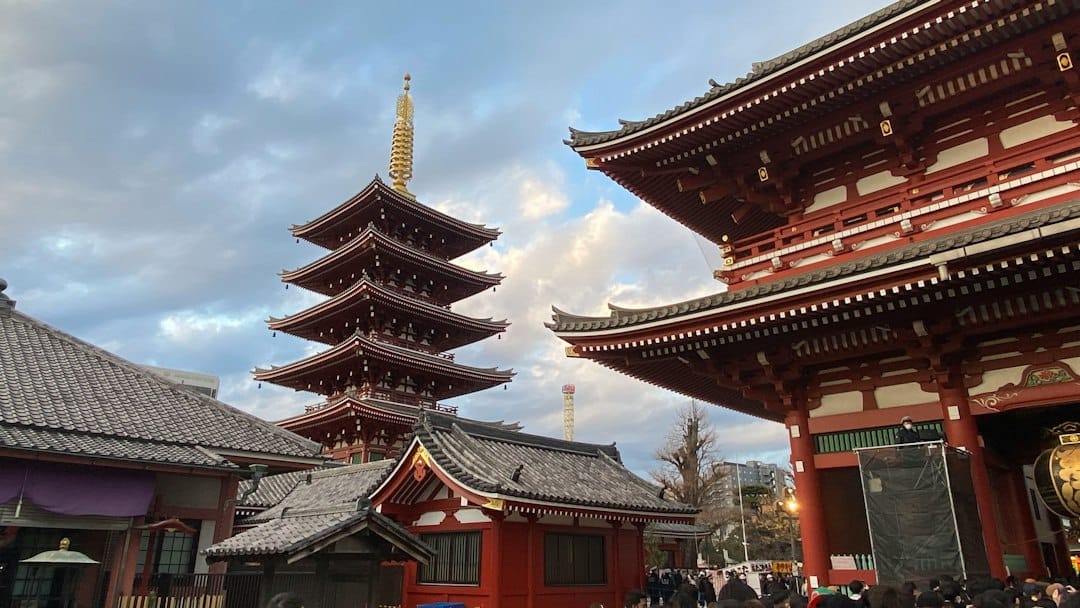
Arrive between 7:30 and 8:00. Many Nakamise shops will still be closed and the neighbourhood has a rare calm. Pause at Kaminarimon, then continue towards Hōzōmon, the five-storey pagoda and Sensō-ji. The official temple website identifies it as the oldest temple in Tokyo; its history begins with the discovery of a Kannon statue in the Sumida River in 628.
Sensō-ji is an active place of worship. Keep your voice low, avoid blocking worshippers and observe local customs. Afterwards, walk to Sumida Park for views of the river and Tokyo Skytree.
2. Ueno and Ameyoko
Take the subway to Ueno, cross part of the park and descend towards Ameyoko, the lively market beside the railway tracks. The atmosphere changes immediately: traders, compact signs, small restaurants and commuters replace the temple setting.
Where to have lunch
Choose a place specialising in one dish: soba, tonkatsu, Japanese curry, sushi or donburi. A short menu, visible prices and a mix of local and visiting customers are useful signs. Compare free walking tours or browse bookable experiences.
3. Meiji Jingu and Harajuku
Travel to Harajuku and enter Meiji Jingu. The huge torii marks the change from traffic to a wooded avenue. Follow the posted guidance and watch any ceremony quietly from a respectful distance.
Choose Takeshita Street for youthful pop culture or Omotesando and its side streets for architecture, cafés and fashion. Rushing through both makes the experience superficial.
4. Shibuya at sunset
Walk or take a short train ride to Shibuya. Cross the famous junction once, then watch it from the side or above. Its appeal lies in the spontaneous choreography of hundreds of paths meeting without becoming chaos. The Hachikō statue is nearby, although queues can be long.
Dinner choices
Choose an izakaya for shared plates, ramen for something quick, or a teishoku restaurant for a complete set meal. Check service charges and keep some cash available.
Getting around efficiently
- Read the line name and operator, not only its colour.
- Follow numbered exits in large stations.
- Compare day-pass coverage with your actual journeys.
- Keep conversations quiet on public transport.
- Allow time inside major stations.
When to follow this route
Spring and autumn bring comfortable temperatures but larger crowds. In summer start earlier, take indoor breaks and carry water. Winter days are shorter, yet clear air and evening illuminations can be especially atmospheric.
Check current details on GO TOKYO, the official Sensō-ji website and Tokyo Metro.
Make the itinerary your own
History enthusiasts can stay longer in Asakusa and Ueno; design lovers can extend Omotesando. Enter your location, time and interests in the Best Free Tour matcher to receive a route with an audio guide, walking tours and compatible experiences.
Frequently asked questions
Can you see Tokyo in one day?
Not all of it, but Asakusa, Ueno, Harajuku and Shibuya create a meaningful introduction.
Where should you start?
Start in Asakusa early and save Shibuya for late afternoon and evening.
Do you need a day pass?
It depends on the operators used. Compare the coverage of Tokyo Metro, Toei and JR tickets.
Audio guide or walking tour?
An audio guide gives you freedom; a walking tour allows questions and personal interaction. They work well together.
Information checked on 19 September 2026.