
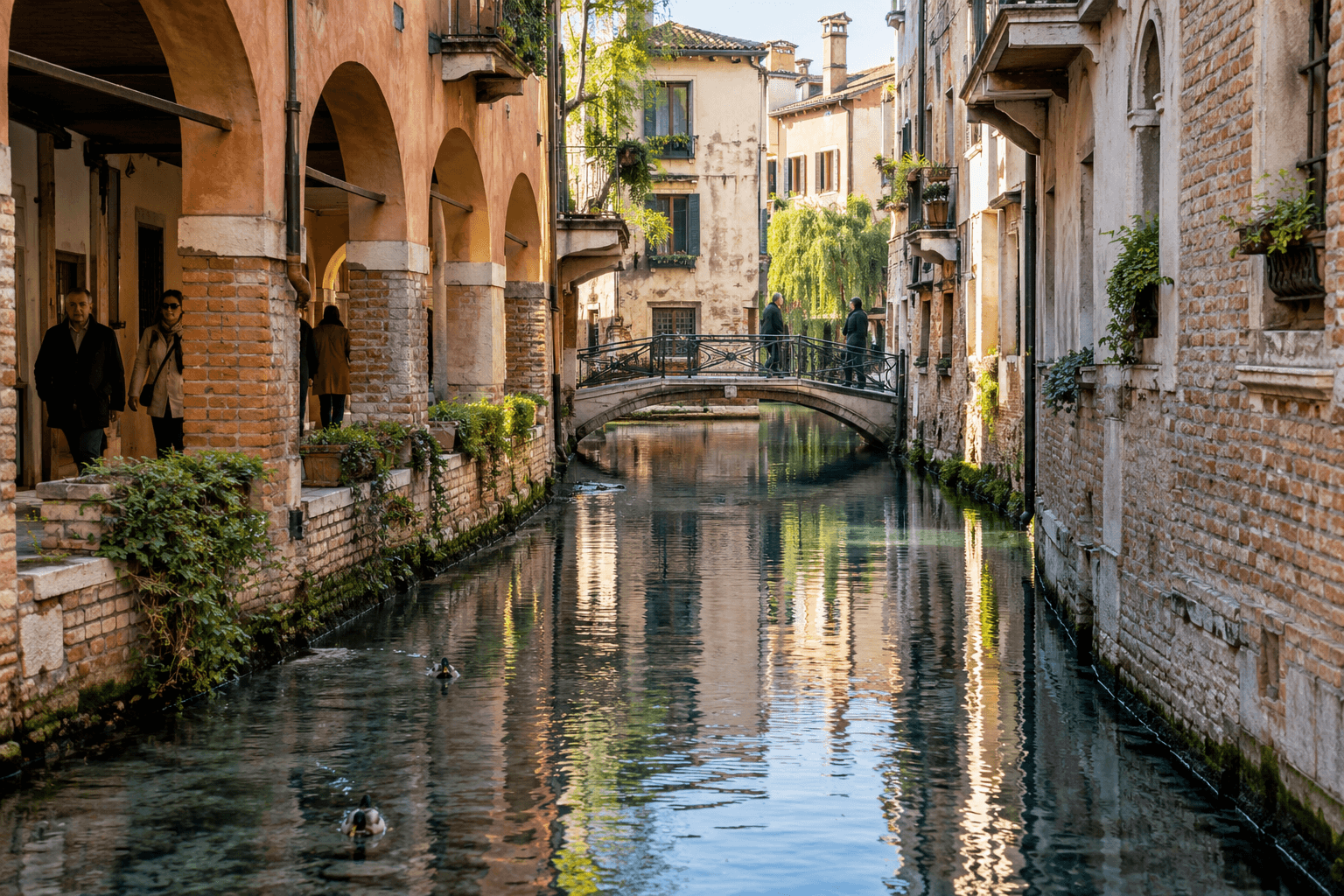
Treviso is often treated as a gateway to somewhere else, yet its compact centre is made for a slow day on foot. Water slips behind houses, arcades frame everyday shopping streets and fragments of painted façades appear when you stop looking only at monuments. This route links the railway station, the Sile, Piazza dei Signori and the northern walls in roughly four kilometres.
A half-day walking route through Treviso
1. Begin beside the Sile
From the station, head toward the river before entering the historic core. The Sile and its branches explain why Treviso developed as a city of water and trade. Follow the banks briefly, then turn toward the narrow canals of the centre. Keep your route flexible: the pleasure comes from bridges and side streets rather than a single grand viewpoint.
2. Pescheria and the water lanes
The fish-market island is one of the clearest examples of Treviso’s relationship with water. Visit in the morning for market activity, or later for a calmer look at the Cagnan channels. Continue through Buranelli, where brick walls, overhangs and reflections create the city’s most intimate urban scene. These are working streets, so leave doorways and bridges clear.
3. Piazza dei Signori and the civic centre
Piazza dei Signori is Treviso’s social and political centre. Look beyond the café tables to Palazzo dei Trecento, the civic tower and the arcades. From here, Via Calmaggiore leads toward the cathedral, connecting the medieval civic square with the religious centre. Along the way, search for surviving frescoes above shopfronts.
4. Cathedral, San Nicolò or Santa Caterina
Do not try to fit every interior into a short visit. Choose the cathedral for its central role, San Nicolò for scale and Gothic atmosphere, or the Santa Caterina museum complex for a deeper art stop. Check current opening times on official pages, especially on Sundays and around services.
5. Taste Treviso without turning lunch into a tour
Order one regional anchor: radicchio when in season, pasta with duck ragù, cicchetti or tiramisù. Treviso is one of the places associated with the dessert’s modern story, but quality matters more than a loud claim of invention. A glass of local wine can fit the route; the Prosecco hills are a separate excursion, not a substitute for seeing the city.
6. Finish on the Renaissance walls
Walk north toward Porta San Tomaso and the walls. Their green embankments and water channels provide a different rhythm from the centre. This is a good final section in late afternoon, when residents use the paths and the city feels lived-in rather than staged.
How long do you need?
Allow four to five hours with one interior and lunch. Treviso is flat and compact, but arcades, bridges and cobbles still reward comfortable shoes. In rain, the porticoes make the route manageable; museums provide a natural pause.
Build a route around your interests
Photographers can prioritise Buranelli and the walls; food travellers may add a market visit; families can keep more time by the river. Compare compatible routes with the AI Tour Matcher, browse free walking tours and add a local activity from our experiences. An autonomous audio guide makes the small details easier to notice without fixing your pace.
Frequently asked questions
Is Treviso walkable from the station?
Yes. The historic centre is close and the main route is flat.
Is Treviso only a day trip from Venice?
No. It works well as a day trip, but its canals, markets and evening atmosphere also reward an overnight stay.
Do I need to book attractions?
Usually not for a simple walk, but check museums, guided visits and special exhibitions in advance.
Official sources checked
Municipality of Treviso, including its cultural walking initiatives, and official tourist information centres for the Treviso area. Verify current access and events before travelling.