
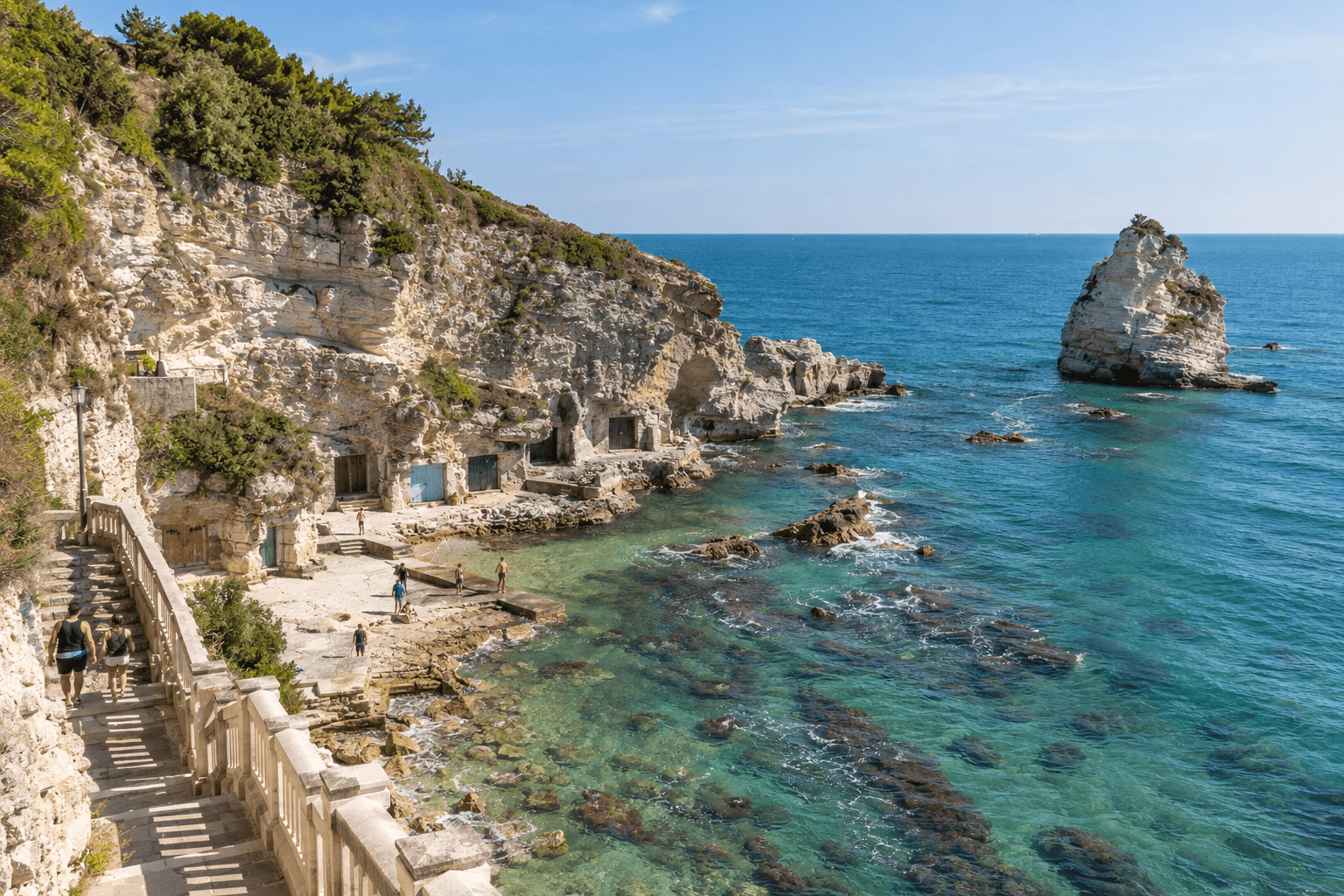
Ancona is a city with sea on both sides of its daily life. The harbour presses against the historic centre, while the Passetto opens onto the Adriatic beyond the eastern ridge. Walking between them reveals Greek and Roman origins, Romanesque churches, military landscapes and the caves that local families have used for generations.
Why take the sea-to-sea route
The official city itinerary links the port with the Passetto through Ancona’s steep historic fabric. It is more varied than a simple waterfront walk: expect stairways, paved climbs, shaded park paths and broad coastal views. Use the AI Tour Matcher before departure to compare a local guide with an independent audio-led visit.
Walking from Ancona’s port to the Passetto
Trajan’s Arch and Santa Maria della Piazza
Begin near the ancient port and Trajan’s Arch, the white-marble monument erected in honour of the emperor who improved the harbour. Continue through the Portella Santa Maria to Santa Maria della Piazza. Its sculpted Romanesque façade introduces the layered history hidden beneath modern Ancona.
Piazza del Plebiscito and San Ciriaco Cathedral
Climb towards Piazza del Plebiscito, known locally as Piazza del Papa, then continue to Guasco Hill. The Cathedral of San Ciriaco stands over earlier sacred buildings and uses pale Conero stone with red Verona marble. Its forecourt gives one of the finest views across the port. Confirm current church hours, since access may pause around services and midday.
Cardeto Park: history in the landscape
Cross into Cardeto Park, the city’s largest central green space. Trails connect viewpoints, nineteenth-century military structures, the old lighthouse and the historic Jewish cemetery. The park has seasonal closing times, so check the official Ancona tourism page before planning a late walk.
Viale della Vittoria and the Passetto caves
Descend towards Viale della Vittoria and follow it to the Monumento ai Caduti. The monumental staircase leads to the Passetto’s pebble shore and distinctive caves cut into the rock. An elevator can provide an alternative when operating; verify its current timetable. Find a guided city introduction in the free walking tour directory, then add museums or coastal activities from the experiences collection.
Practical planning
Allow four to five hours with pauses, more if visiting museums. Wear shoes with grip and carry water: the route includes significant climbing. Morning gives gentle light at the harbour; the Passetto is especially atmospheric later in the day. In hot weather, reverse the route or use local transport for one section.
Frequently asked questions
How difficult is the walk?
It is moderate rather than long. The main challenge is elevation, with repeated stairs and uphill streets.
Can the Passetto be reached without the staircase?
A public elevator normally links the upper pine grove and coast, but operating periods vary. Check the transport operator’s current schedule.
What is the best panorama?
San Ciriaco’s forecourt overlooks the port, while Cardeto and the Passetto reveal the open Adriatic. Together they explain Ancona’s unusual relationship with two maritime horizons.