
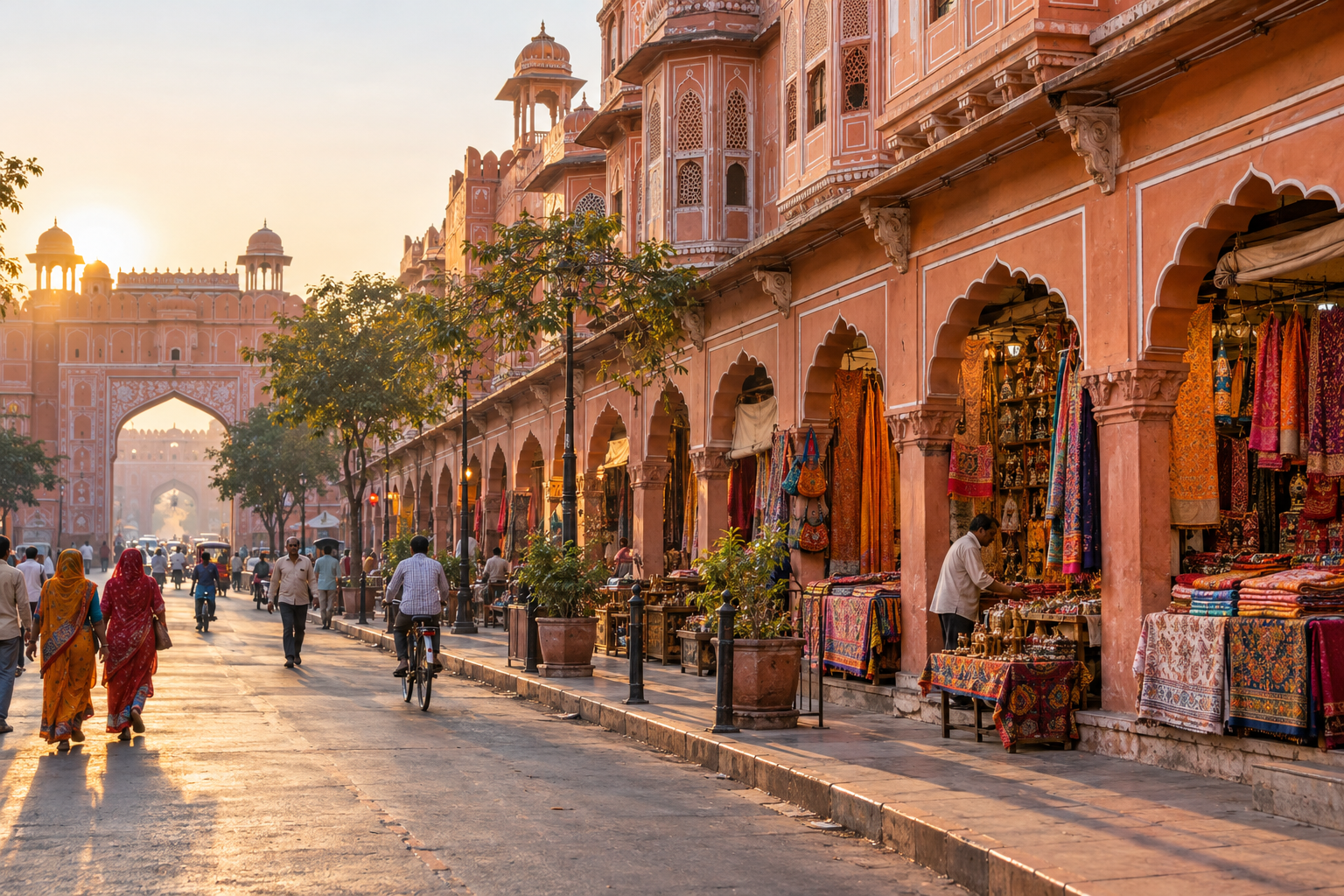
Jaipur is easiest to understand on foot inside its old walls. Founded in 1727 by Sawai Jai Singh II, the city was laid out on the plain as an ordered grid rather than growing around a hill fort. Its broad commercial streets, monumental gates and large crossroads still connect royal architecture with everyday trade. This morning route follows that design from Hawa Mahal to the palace quarter and through the bazaars.
Why start early in Jaipur’s Pink City?
Begin around 7:30–8:00 a.m., before traffic and heat intensify. The soft light brings out the terracotta-pink façades, while shopkeepers prepare jewellery, textiles and lac bangles. The route takes roughly three hours without museum interiors, or four to five hours if you enter Hawa Mahal, Jantar Mantar and City Palace. Check official opening hours and ticket rules on the day.
Wear modest, breathable clothing and secure shoes, carry water and use sun protection. For local historical context, compare available guides with the AI Tour Matcher for free walking tours.
A morning route through the planned old city
1. Hawa Mahal and Badi Chaupar
Start opposite Hawa Mahal, where the five-storey façade is best read from across the road. Rajasthan Tourism explains that its lattice windows allowed royal women to observe street life while helping air circulate through the building. Look carefully, then cross only at a safe point: this is a busy urban street, not a pedestrian plaza.
Continue to Badi Chaupar, one of the large public intersections that reveal Jaipur’s grid. UNESCO highlights these chaupars, continuous shopfronts and market streets as essential parts of the walled city’s heritage.
2. Jantar Mantar and City Palace
Walk toward Jantar Mantar, the astronomical observatory created by the city’s founder. Its monumental instruments measured time and tracked celestial bodies; an expert guide makes the geometry far more meaningful. Next door, City Palace combines Rajput and Mughal forms in courtyards, gateways and museum rooms. If you enter both sites, allow at least two additional hours.
3. Tripolia and Johari Bazaar
Return to the commercial axis near Tripolia Gate and follow the arcaded streets toward Johari Bazaar. This is not simply a shopping stop: Jaipur was designed as a trading capital, and craft traditions remain part of its living identity. Ask before photographing artisans, do not handle delicate work without invitation and bargain respectfully where appropriate.
4. Bapu Bazaar and Sanganeri Gate
Continue south toward Bapu Bazaar for textiles, leather footwear and everyday colour, then finish near Sanganeri Gate. Instead of trying to buy everything, choose one craft and ask about its materials and process. A thoughtful purchase from a credible local shop is more useful than a rushed bag of souvenirs.
How to make the walk comfortable
The old city is flat, but traffic, noise and uneven pavements require attention. Keep valuables discreet, use official transport for longer connections and agree on an auto-rickshaw fare or app booking before departure. Amber Fort lies about 11 kilometres away and should be a separate half-day trip, not squeezed into this walk.
If you prefer independent narration, explore self-guided experiences and audio-tour ideas. For other destinations and city guides, begin at Best Free Tour.
Responsible visiting
Jaipur’s old city is a workplace, home and religious landscape. Keep temple entrances clear, dress appropriately, avoid intrusive portraits and reduce single-use plastic. Market streets are most rewarding when visitors slow down and treat vendors as people rather than scenery.
Frequently asked questions
Is the old city walk free?
The streets, gates and bazaars are free to explore. Hawa Mahal, Jantar Mantar, City Palace and museums require separate tickets.
What is the best time to start?
Around 7:30–8:00 a.m. offers cooler conditions and calmer streets. Monument opening times may determine the final order.
Can I include Amber Fort?
Not comfortably in the same walking route. Reserve another half day and travel by official taxi, app cab or organised transport.
Is the route suitable for children?
Yes with close supervision, but busy roads, crowds and limited pavement space require extra care.