
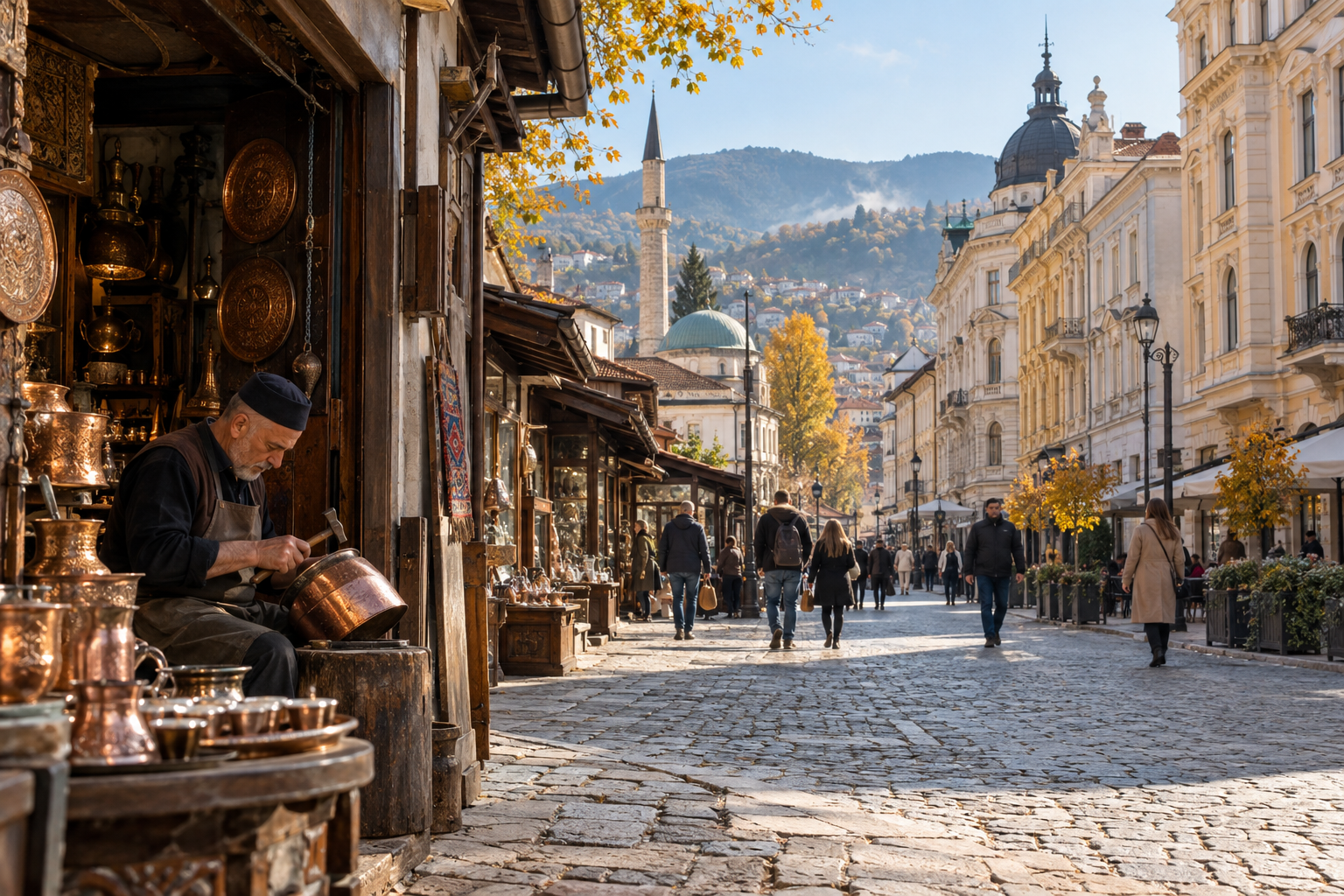
Few European city walks compress so many layers into such a short distance. In central Sarajevo, Ottoman lanes, Austro-Hungarian façades, places of worship and twentieth-century memorials meet along a compact east-to-west route. The aim is not to “collect” monuments, but to understand how the city’s geography, trade and communities created a distinctive urban culture.
A practical east-to-west route
1. Begin at Sebilj and Baščaršija
Start early at the wooden Sebilj fountain, when the square is quieter. Baščaršija grew as Sarajevo’s Ottoman commercial core, and the names of nearby lanes still recall specialised crafts. Walk through Kazandžiluk, traditionally associated with coppersmiths, without blocking workshops. Ask before photographing artisans and remember that working shops are not staged attractions.
2. Gazi Husrev-beg precinct
Continue through Sarači toward the mosque, bezistan and historic commercial buildings. Dress respectfully, keep voices low and check visitor access before entering religious spaces. Public fountains are part of the old city’s water tradition. To compare guided and self-guided options that fit your schedule, use our AI Tour Matcher.
3. Find the Meeting of Cultures line
Near the transition into Ferhadija, an urban marker highlights the visual change between the Ottoman bazaar and the straighter Austro-Hungarian streets. Pause and look both ways: eastward are low shopfronts and minarets; westward are larger façades and a different street rhythm. It is a useful orientation point, not a literal border between communities.
4. Latin Bridge and the river
Detour south to the Miljacka and Latin Bridge. The nearby museum explains the 1914 assassination of Archduke Franz Ferdinand and the wider period. Avoid reducing Sarajevo to this single event: the bridge also belongs to a much longer history of trade and urban life. Walk along the river briefly, then return to Ferhadija.
5. Ferhadija to the Eternal Flame
Continue west past religious and civic buildings that gave Sarajevo its “European Jerusalem” reputation. Be considerate during services and avoid photographing worshippers. End at the Eternal Flame, a memorial to the liberation of Sarajevo in 1945. If you want another layer, visit a museum rather than trying to absorb every period from outdoor plaques alone.
Time, terrain and accessibility
The core route is about 2.5–3 km and takes two to three hours with pauses. Baščaršija has cobbles and uneven paving; Ferhadija is flatter and easier. Wheelchair users may prefer to approach the old bazaar from its lower streets and avoid steep side lanes. Check individual museums and religious buildings for step-free access.
Food, coffee and etiquette
Traditional cafés and restaurants are part of the route, but do not order more stops than you can enjoy. Bosnian coffee is served as a small ritual rather than a drink to rush. Agree prices clearly, tip according to local practice and choose established businesses. Respect Ramadan routines and prayer times when relevant.
Safety and planning
Central Sarajevo is easy to navigate on foot, but normal city precautions apply: keep valuables secure, use well-lit streets after dark and check weather because rain or snow makes cobbles slippery. For hillside viewpoints or outlying memorials, use public transport or an official taxi rather than improvising a long walk.
Extend your visit
Pair this route with a bookable Sarajevo experience focused on food, history or neighbourhood life. Browse Best Free Tour city guides and walking ideas for a second-day route that does not duplicate the same landmarks.
FAQ
How long does the route take?
Two to three hours for the central 2.5–3 km, longer with a museum or meal.
Where does East meet West?
The best-known marker stands near the change from Sarači/Baščaršija into Ferhadija, where the streetscape shifts visibly.
Is Baščaršija free to visit?
Yes, the public streets and squares are free. Museums, interiors and guided tours may charge admission.
Can I visit places of worship?
Often yes outside services, but access rules vary. Dress modestly and follow instructions at each entrance.
Reviewed against official Visit Sarajevo information in October 2026.