
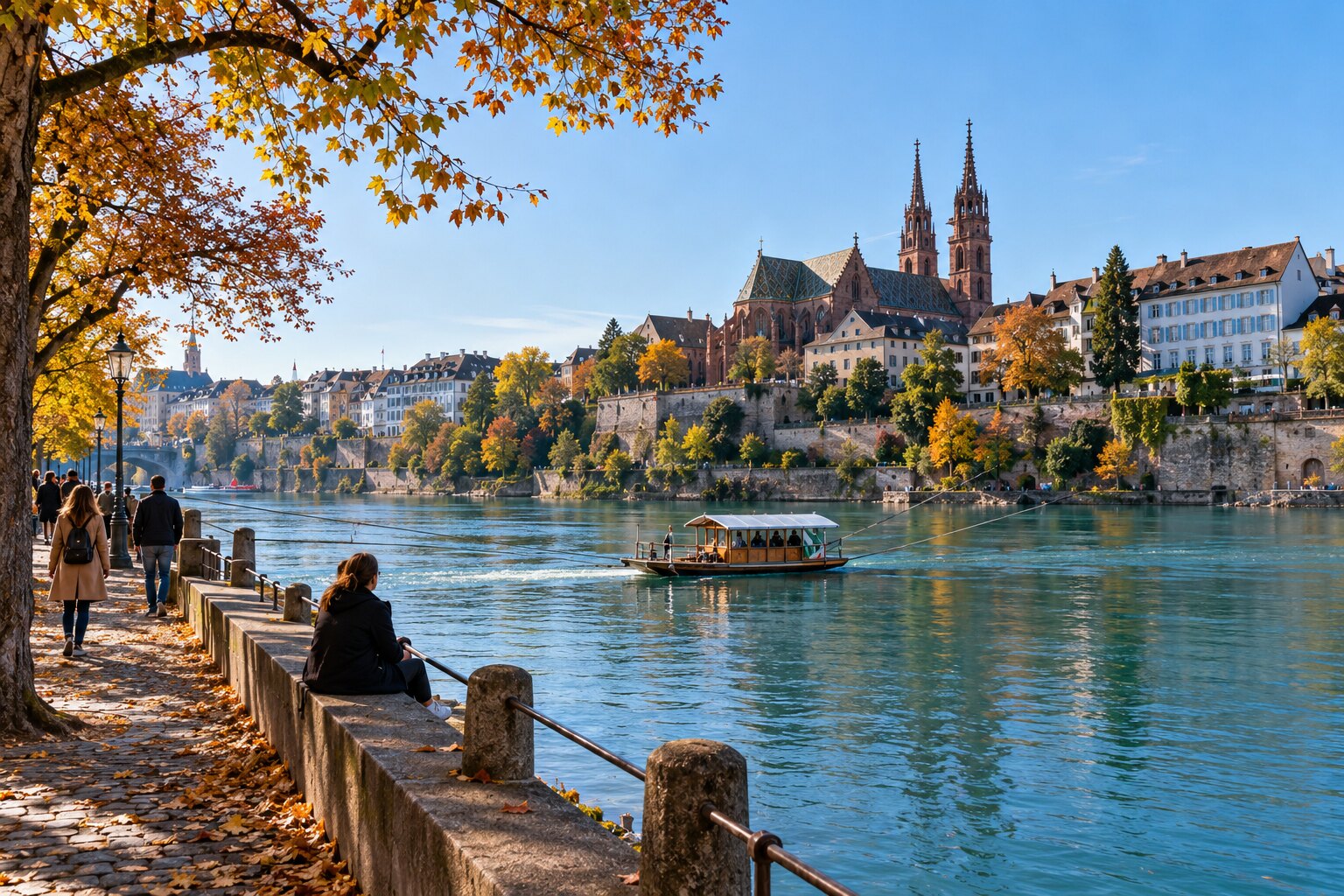
Basel’s best-known museums sit on land, but the Rhine explains how the city feels. This self-guided route links the Münster terrace, a traditional current-powered ferry and the relaxed Kleinbasel promenade. It is compact, mostly flat after the descent to the river, and easy to adapt to weather or ferry operating conditions.
Why walk Basel along the Rhine?
The river separates Grossbasel from Kleinbasel while also connecting them. Basel Tourism confirms that four cable ferries cross without engines, using only the Rhine’s current. The official ferry information is the best place to check current operation before relying on a crossing.
Self-guided route: Münster to Kleinbasel
1. Start at Basel Münster and the Pfalz
Begin by the cathedral and step onto the Pfalz terrace behind it. The viewpoint looks across the Rhine to Kleinbasel and toward the distant hills. Spend a few minutes reading the river before descending: the opposite promenade is the second half of your walk.
2. Descend to the Münster ferry
Follow the signed streets down toward the landing stage. Basel’s ferries hang from a long cable and angle against the current, which pushes them silently across. Ring the bell if instructed and follow the ferryman’s directions. Carry a small amount of Swiss cash and check the displayed fare, as prices and service can change.
3. Walk the Kleinbasel promenade
On the north bank, turn along the Rheinpromenade. This is where locals sit by the water, stroll and meet friends. The official promenade page highlights views back to the Münster, green spaces, pebble beaches and ferry piers. Stay on the path and keep clear of cycle traffic.
4. Continue to Mittlere Brücke
Approach Basel’s central bridge with the old-town façades across the water. Cross back into Grossbasel here, or keep walking to another ferry and make a second short crossing. Ferry schedules can be reduced by weather, water conditions or seasonal decisions, so always keep a bridge as your backup.
Practical planning
- Time: about 90 minutes to 2 hours without long stops.
- Distance: roughly 3–4 km depending on the chosen ferry and return bridge.
- Best light: morning for a quieter promenade; late afternoon for warm views of Grossbasel.
- Swimming: do not enter the Rhine casually. Strong currents require local knowledge, official safety guidance and suitable conditions.
For more destination ideas, browse Free Tours Around the World, compare guided walks on Our Free Tour, and add bookable river or cultural activities from Experiences.
Frequently asked questions
Do Basel ferries use motors?
No. The four traditional ferries are attached to cables and use the river current to move between banks.
Do I need to book a ferry?
Ordinary short crossings generally work as local transport rather than scheduled cruises. Check current information and payment instructions at the pier.
Is the route wheelchair accessible?
The promenades are mostly level, but steep approaches, cobbles and individual ferry landings can be difficult. Check an accessible route before setting out.
Can I walk the route in winter?
Yes, but daylight is shorter and ferry service may vary. Bridges provide a reliable alternative when a ferry is not running.