
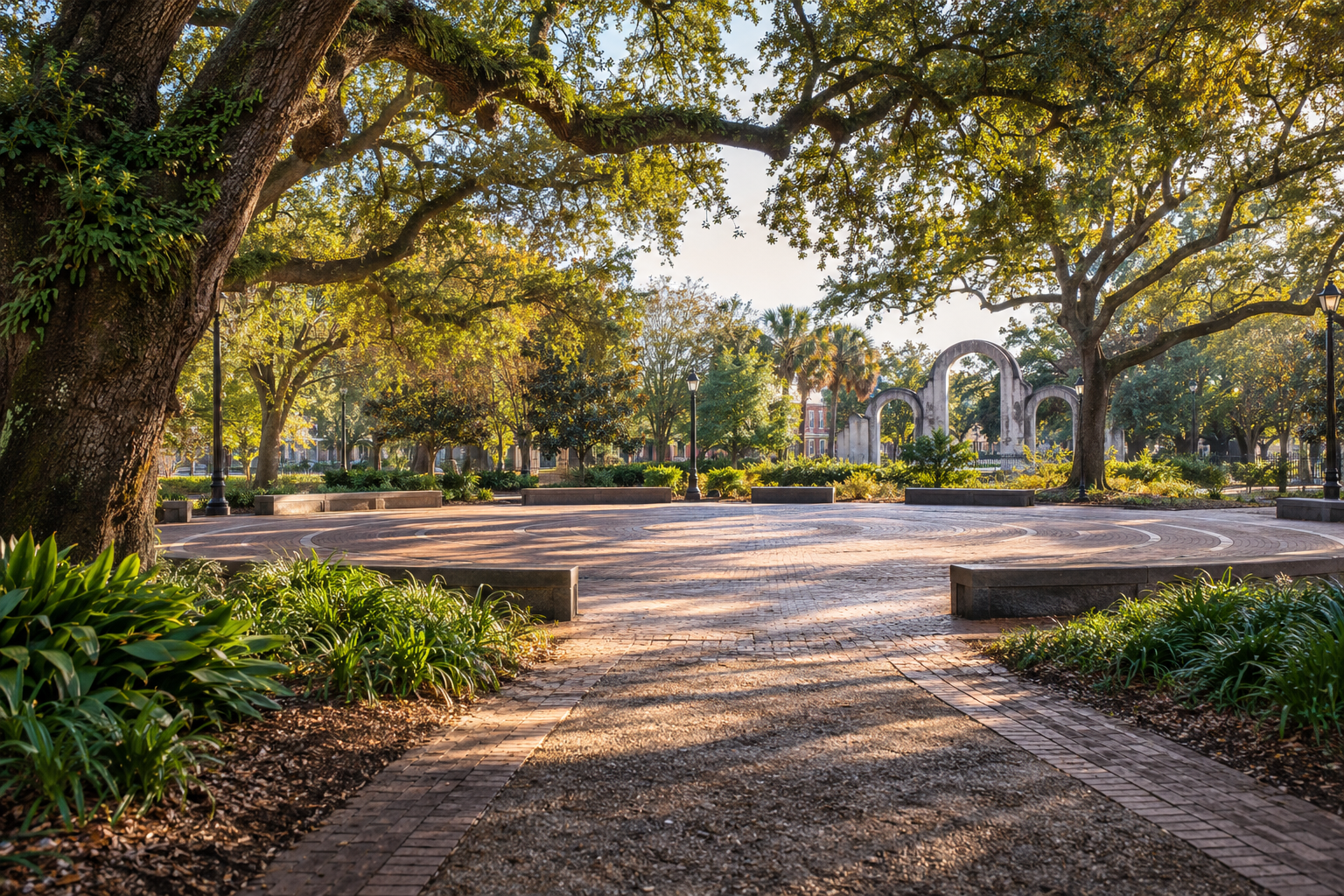
Cross North Rampart Street from the French Quarter and New Orleans changes tone. This self-guided Tremé and Congo Square walk explores a neighbourhood central to Black history, Creole culture and the development of jazz. It is a compact route, but it deserves time: the point is not to collect landmarks quickly, but to understand how music, faith, food and community remain connected.
Why Tremé matters
Faubourg Tremé developed in the late 18th century and became a place of property ownership, refuge and cultural life for free people of colour as well as enslaved and newly emancipated people. Congo Square, now inside Louis Armstrong Park, was a Sunday gathering place where enslaved and free Black people traded, socialised, danced and maintained African musical traditions. Those practices helped shape the rhythmic foundations from which New Orleans jazz emerged.
Best Free Tour does not yet have a dedicated New Orleans city page. For planning, compare guided options in the free walking tour hub, build an independent route with the AI Tour Matcher, and browse compatible cultural experiences.
Self-guided Tremé heritage route
1. Begin with the Jazz National Historical Park
If its schedule fits, begin at the National Park Service visitor centre at 419 Decatur Street before crossing into Tremé. The centre interprets jazz history through exhibits, ranger talks and programmes. Official information currently lists Tuesday–Saturday, 9:30–16:30, with no entrance fee; it closes on federal holidays and Mardi Gras. Check the event calendar because performances and locations vary.
2. Cross Rampart Street into Louis Armstrong Park
Walk toward the arched entrance of Louis Armstrong Park. The city lists the 31-acre park as open daily, generally 8:00–18:00 in winter and 8:00–19:00 during daylight-saving time. Events can affect access. The sculptures, ponds and paths introduce major figures and themes, but remember that the landscaped park is only one layer of a much older cultural landscape.
3. Pause at Congo Square
Congo Square lies in the southern corner of the park. Stand quietly, read the markers and notice the open circular space. In the 19th century, African and African-descended people gathered here for markets, music, dance and religious expression. Local spiritual and cultural communities still treat the square as meaningful ground. Do not interrupt ceremonies, rehearsals or drum circles, and ask before photographing people.
4. Walk toward St. Augustine Church
Continue into Tremé toward St. Augustine Catholic Church, founded in the 19th century and closely connected to the neighbourhood’s Black Catholic history. View the exterior respectfully and check the church’s own schedule before attempting to enter. Services are not tourist performances; dress and behave accordingly.
5. Read the residential streets
Take a slow loop along the nearby streets, looking at Creole cottages, shaded porches and small businesses. This is a living neighbourhood, not an open-air museum. Keep voices low, do not photograph through windows or doorways, and support local cafés, guides and cultural institutions without blocking pavements.
6. Add a museum or a locally led tour
Institutions such as the Backstreet Cultural Museum and the New Orleans African American Museum can deepen the story of masking traditions, social aid and pleasure clubs, second lines and community creativity. Hours can change, especially around festivals and recovery work, so verify directly before walking over. A Black-led neighbourhood tour adds oral history that a map cannot reproduce.
Practical planning
- Distance: about 2.5–3.5 km, depending on museum detours.
- Time: 90 minutes outdoors; half a day with the NPS centre or a museum.
- Best time: morning for cooler temperatures and quieter streets.
- Cost: Congo Square, Armstrong Park and the NPS visitor centre are free; museums and guided tours may charge.
- Weather: heat and humidity can be intense. Carry water, use sun protection and pause in shade.
Responsible visitor etiquette
Jazz is not just a historical product; it belongs to living communities and working musicians. Tip performers when appropriate, buy from local businesses, and avoid treating second lines or spiritual practices as props. If a gathering is public, observe its signals before joining. If it is private or memorial in character, give it space.
FAQ
Is Congo Square free to visit?
Yes. Congo Square is inside Louis Armstrong Park and is normally free during park hours. City events, maintenance or severe weather can change access.
Can I visit Tremé without a guide?
Yes, this route can be walked independently in daylight. A local guide is still valuable for oral history, community context and current cultural programming.
Is Congo Square where jazz began?
It is one of jazz’s essential roots, where African musical, dance and community traditions endured. Jazz developed through many people, neighbourhoods and musical exchanges across New Orleans.
Is the route suitable for children?
Yes, with age-appropriate explanation of slavery, segregation and cultural resilience. The park offers open space, but adults should keep children respectful during ceremonies or performances.
A walk that changes how you hear New Orleans
Tremé rewards attentive listening. The route from Congo Square to its churches, cottages and cultural institutions shows that New Orleans music grew from people sustaining community under pressure. Walk slowly, verify current hours, and leave room for the neighbourhood to be more complex than any single jazz origin story.