
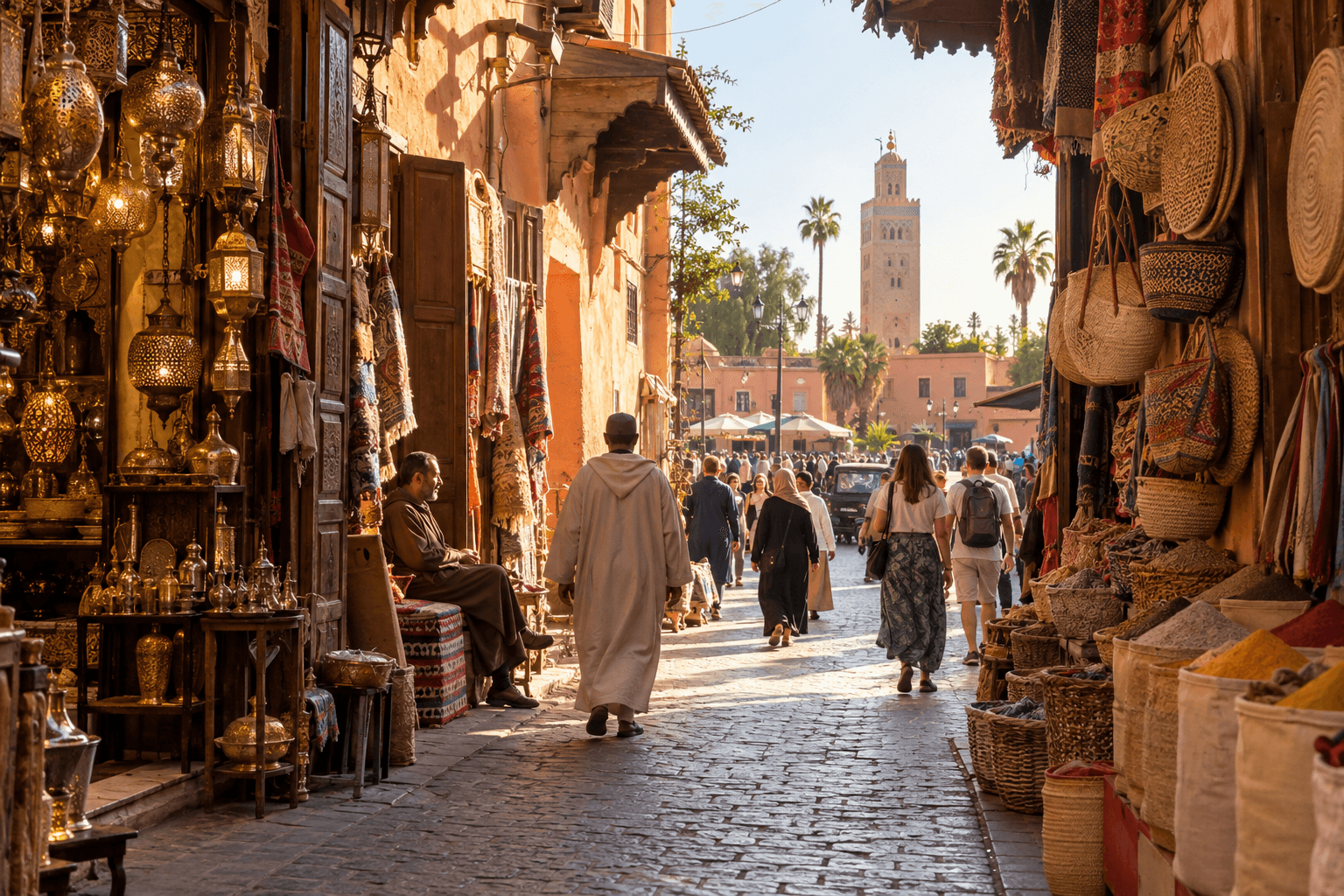
Marrakech does not reveal itself in a straight line. The medina turns, narrows and suddenly opens into a courtyard or a square filled with sound. This walk embraces that rhythm: begin with the measured beauty of Bahia Palace, move north through working souks, and reach Jemaa el-Fna when daylight softens and the evening scene begins.
Begin where the city speaks through craft
Arrive near Bahia Palace in the morning, when both the temperature and the surrounding streets are gentler. The palace is celebrated for zellige, carved plaster, painted cedar and garden courtyards. Rather than trying to photograph every surface, pause to notice how shade, water and proportion shape the rooms. Opening times can change, so confirm them before setting out.
From Bahia Palace to the spice quarter
Leave towards Mellah, Marrakech’s historic Jewish quarter. Market stalls, metal workshops and spice displays replace the formal calm of the palace. Ask before photographing a person or a shop interior. A friendly greeting—“salam”—usually starts an exchange better than pointing a camera.
For a midday pause, look for tanjia marrakchia, meat cooked slowly in an earthen jar, or a vegetable tagine served with bread. Moroccan salads often arrive as several small dishes. Choose places displaying prices clearly, and drink bottled or properly filtered water during hot weather.
How to move through the souks without turning the day into a chase
Continue towards Rahba Kedima and the lanes leading to the artisan souks. Navigation apps are useful, but walls can interfere with positioning. Keep two reliable anchors in mind: Jemaa el-Fna lies to the southwest, while the Ben Youssef area is farther northeast. If unsure, ask a shopkeeper for a landmark rather than accepting an unsolicited escort.
Shopping with time and respect
Bargaining is part of many purchases, yet it should remain courteous. Ask the price, decide what the object is worth to you and make a reasonable counteroffer only if you genuinely want it. Leatherwork, lanterns, woven textiles and carved wood vary greatly in quality; the maker’s technique is often more interesting than the quickest bargain.
Let Jemaa el-Fna change around you
Approach the square in late afternoon. Koutoubia’s minaret helps orient the final stretch. Jemaa el-Fna is not a single spectacle: juice stalls, food stands, musicians and storytellers occupy different spaces as evening arrives. Observe from the edge first, then choose where to enter the flow. Confirm prices before ordering or accepting a service, and ask permission before taking close photographs of performers.
If you want a wider view, a licensed rooftop café can offer perspective at sunset, though many require a drink or meal. Afterwards, return to street level: the changing soundscape is the real finale.
Practical rhythm for a comfortable day
Allow four to five hours including palace time, lunch and shopping pauses. Wear shoes with good grip, carry small notes, and keep valuables secure without displaying them nervously. Should the medina feel overwhelming, step into a riad café, museum courtyard or garden rather than rushing onward.
Continue exploring Marrakech
Shape the route around your pace with the AI Tour Matcher, compare local guides in our free walking tour directory, or add a cooking class and cultural activity from our experiences.
Frequently asked questions
Is it safe to walk in the Marrakech medina?
Busy central routes are generally lively and well travelled. Stay aware of scooters, keep valuables close and use official transport for late returns outside the medina.
Will I get lost in the souks?
A wrong turn is common, but major landmarks restore orientation. Save your accommodation pin offline and ask established shopkeepers for directions.
What should I wear?
Light, breathable clothing that covers shoulders and knees is comfortable, respectful and practical in strong sun. A hat and sunscreen help outside shaded lanes.
Sources checked: Morocco’s official tourism portal for Marrakech, its official city guide and cultural pages on Bahia Palace and Amazigh heritage.