
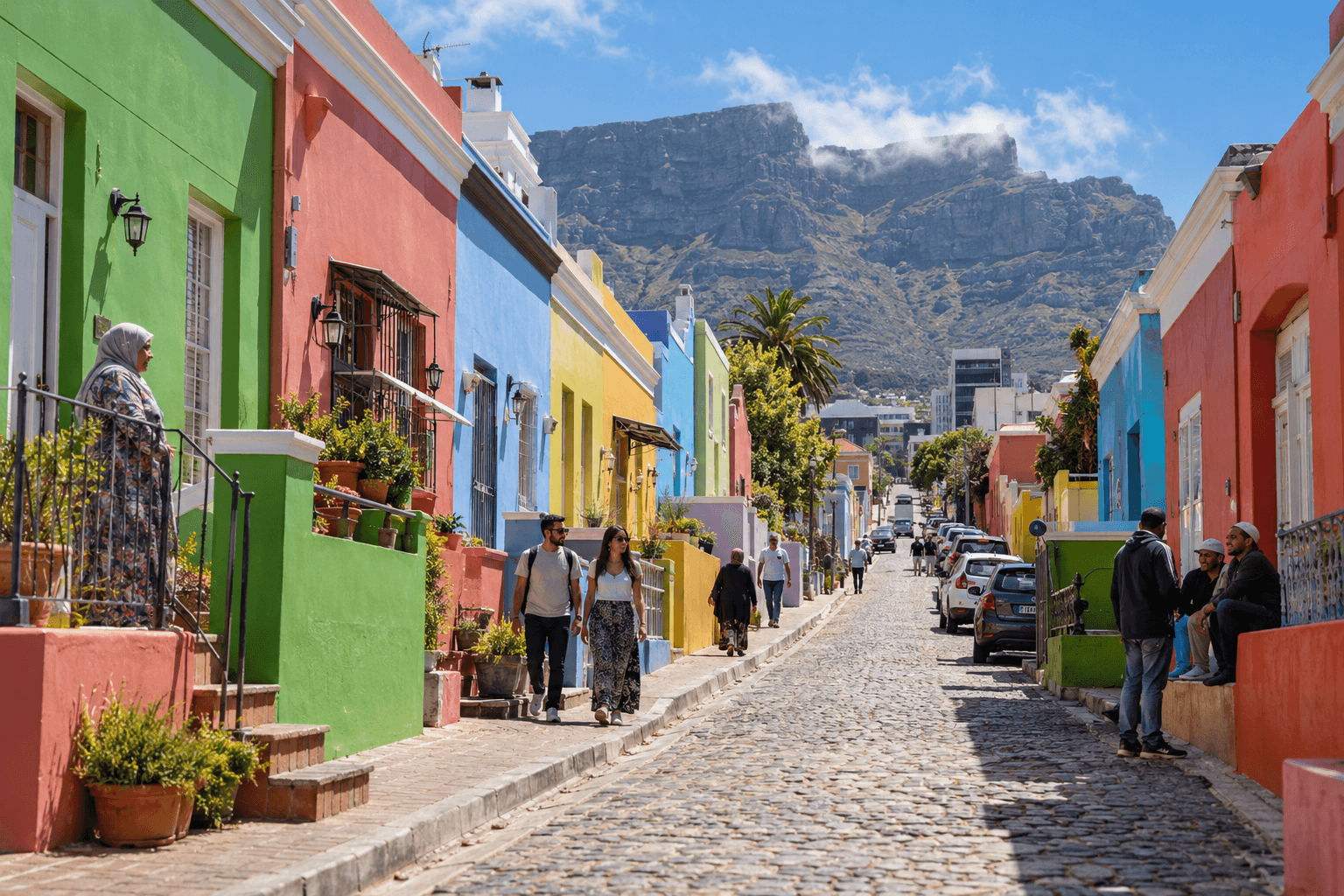
Cape Town’s centre is compact enough for a satisfying walk, yet every block carries a different layer of the city. This route begins in Bo-Kaap, where colour belongs to a living Cape Malay neighbourhood, then follows Wale Street into the civic heart and finishes beneath the old trees of Company’s Garden. It is best treated as a daytime cultural walk, with attention to weather, local advice and ordinary city awareness.
Start in Bo-Kaap with context, not just colour
Begin in the morning near the lower slopes of Signal Hill. Bo-Kaap’s flat-roofed houses and cobbled streets are instantly recognisable, but the neighbourhood’s meaning is deeper than its palette. Its history is tied to enslaved people and political exiles brought from Southeast Asia and East Africa, and to the Muslim Cape Malay community that shaped local language, food and religious life.
How to visit a residential neighbourhood respectfully
Walk quietly, keep doorways clear and ask before photographing residents. The call to prayer, mosques and family homes are part of daily life rather than a performance. A community museum or a guided walk can add essential voices that a self-guided route cannot provide.
For a food pause, look for a Cape Malay koesister—a soft, spiced doughnut coated with coconut—or dishes such as bobotie and denningvleis. A cooking experience in a local home offers more context than simply collecting photographs of colourful façades.
Follow Wale Street into the historic centre
Descend towards Wale Street and Greenmarket Square. The mountain may appear between buildings, but do not let the view distract from traffic or phones and bags. Cape Town Tourism recommends keeping valuables discreet and asking hosts or visitor-centre staff for current advice, especially about walking after dusk.
A city told through neighbouring institutions
Continue towards St George’s Cathedral, the Slave Lodge and the entrance to Company’s Garden. These sites sit close together but tell very different stories: faith and resistance, slavery and colonial administration, art and natural history. Choose one museum rather than trying to rush through all of them.
Slow down in Company’s Garden
Government Avenue runs through this historic green space without cars. The garden began as a produce garden supplying passing ships and later became a botanical and civic landscape. Today its paths connect the South African Museum, National Gallery, library, cathedral and Parliament precinct.
Allow time for the shift in atmosphere. After the steep cobbles and busy streets of Bo-Kaap, shaded paths and benches offer a useful pause. Weather can change quickly around Table Mountain, so carry a light layer even on a bright morning.
Should you continue to the V&A Waterfront?
The Waterfront is a logical next destination, but it need not be forced into the same walk. From the city centre, use a verified taxi service, MyCiTi connection where suitable, or a guided route recommended by your accommodation. This keeps the heritage walk focused and gives the harbour its own time.
Practical safety without losing the pleasure of walking
Explore in daylight, stay on active central streets, avoid displaying expensive equipment and do not follow shortcuts suggested by strangers. Check the official Cape Town Tourism safety page before departure and heed current local advice. For mountain paths, isolated beaches or unfamiliar areas, use registered guides and appropriate transport rather than treating them as extensions of a city-centre stroll.
Plan more of Cape Town
Shape the day with our AI Tour Matcher, compare knowledgeable local guides in the free walking tour directory, or add a Cape Malay cooking class and cultural activity from our experiences.
Frequently asked questions
How long does this walk take?
Allow three to four hours with a food stop and one museum. The direct distance is short, but the value lies in stopping for context.
Is central Cape Town walkable?
Central daytime routes are compact and busy, but conditions can change. Follow official safety advice, ask your host about the day’s route and arrange transport after dark.
Can I photograph the Bo-Kaap houses?
Yes from public streets, while respecting residents, entrances and places of worship. Always ask before photographing people closely.
Sources checked: Cape Town Tourism’s official Bo-Kaap, Company’s Garden, maps and visitor-safety guidance, plus City of Cape Town heritage information.