
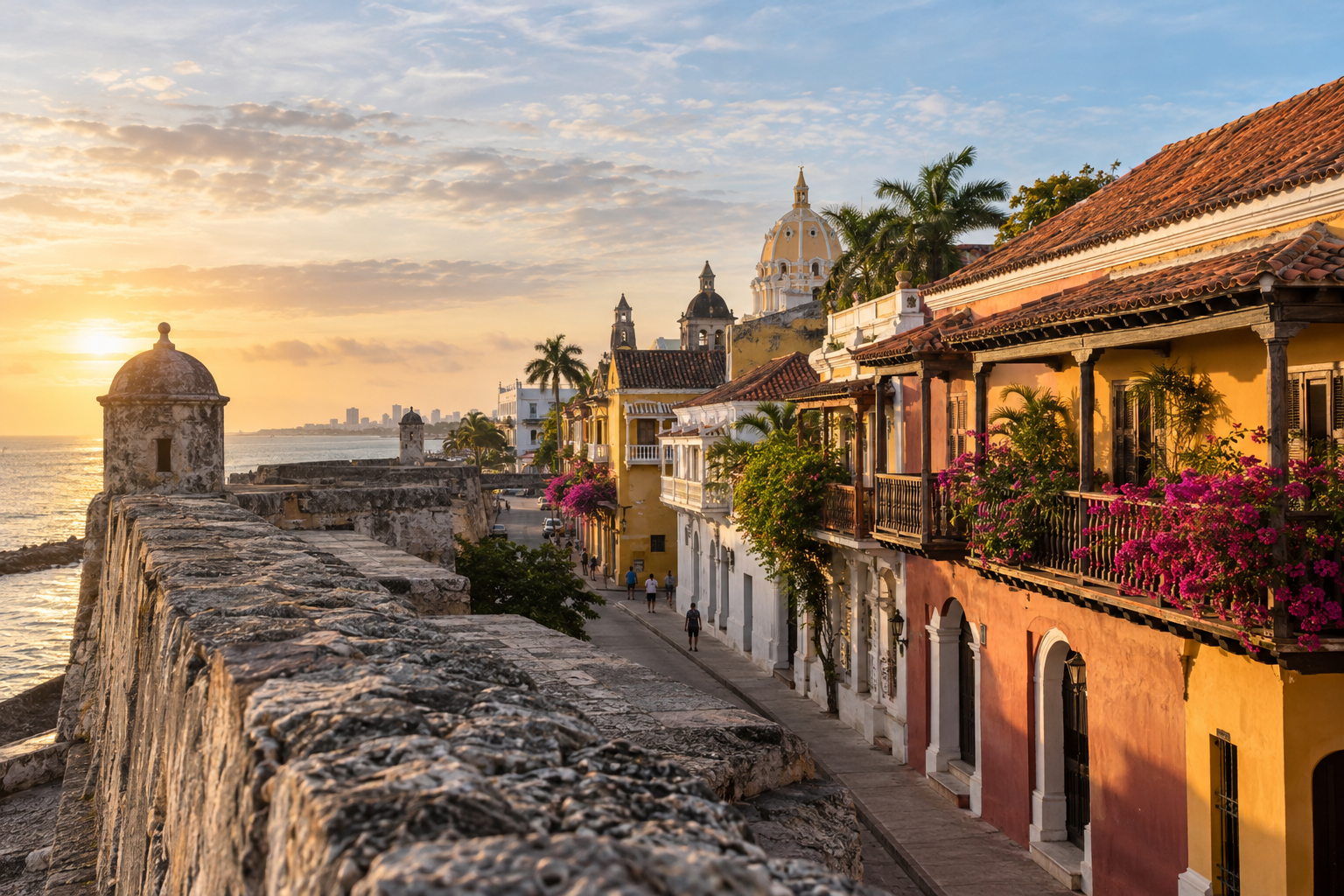
Cartagena rewards an early start. Before the Caribbean heat and the busiest sightseeing hours, the ochre ramparts catch soft light, flowered balconies open above quiet lanes and Getsemaní is beginning its day. This self-guided route joins the walled city’s fortifications and plazas with the neighbourhood across the Clock Tower, giving you a clear three-hour introduction without rushing.
Why walk Cartagena early?
Cartagena has a tropical climate, with warm conditions throughout the year. Starting around 7:00–7:30 a.m. makes the stone streets more comfortable and leaves time for breakfast or a museum once indoor attractions open. The historic centre is a UNESCO World Heritage site, and Colombia’s official tourism portal describes walls built in stages over almost two centuries to protect one of the Americas’ most important colonial ports.
Wear breathable clothing, comfortable shoes and sun protection, and carry water. Most of this route is outdoors and exposed. If you prefer a local storyteller, use the AI Tour Matcher to find a suitable free walking tour.
A three-hour route from the walls to Getsemaní
1. Las Bóvedas and the Caribbean ramparts
Begin beside Las Bóvedas at the northeastern edge of the old city. Climb to the wall where access is open and look along the bastions toward the sea. These fortifications are not decorative scenery: they reveal Cartagena’s strategic role, the threat of attacks and the immense labour behind a defensive system completed in the late eighteenth century.
2. San Diego and the quiet plazas
Walk into San Diego through streets of colourful façades and shaded balconies. Pause in Plaza de San Diego, then continue toward Plaza Fernández de Madrid. At this hour the small squares feel lived-in rather than staged. Notice doors, knockers, timber balconies and changes between colonial and republican architecture; details tell more than a checklist of monuments.
3. Santo Domingo, Bolívar and San Pedro Claver
Continue to Plaza Santo Domingo, then cross toward leafy Plaza de Bolívar and Plaza de San Pedro Claver. The sequence shows how churches, civic buildings and trading spaces shaped the old city. Keep voices low near homes and religious sites, and ask before photographing residents or street vendors.
4. Clock Tower and Getsemaní
Exit through the Clock Tower, cross the Camellón de los Mártires and enter Getsemaní. Follow Calle de la Sierpe for murals, then wander toward Plazoleta del Pozo and Plaza de la Trinidad. The neighbourhood’s popular and Afro-Caribbean identity is not merely a colourful backdrop; its community history, crafts, music and independence stories deserve attention. Admire street art without blocking doorways and support locally run cafés or workshops.
How to adapt the walk
For a shorter route, finish at the Clock Tower after about two hours. For more history, continue from Getsemaní toward Castillo de San Felipe de Barajas, but plan a separate visit: the exposed climb and fort require additional time and water. At sunset, return to a bastion for Caribbean light, rather than repeating every street.
Travellers who enjoy independent narration can browse self-guided experiences and audio-led ideas. For broader planning and city pages, start from Best Free Tour.
Responsible walking in Cartagena
Choose refillable water, avoid touching murals and never treat residents as props. Getsemaní is a living neighbourhood facing tourism pressure. Spend with community businesses, keep groups small and leave space on narrow pavements. If approached for a service, agree on the price first and decline politely if uninterested.
Frequently asked questions
What time should I start?
Around 7:00–7:30 a.m. is ideal for softer light and lower heat. Check opening times separately for museums and churches.
Is the route free?
The streets, plazas and accessible wall sections are free. Museums, churches with special areas and Castillo San Felipe may charge admission.
Can I do it in sandals?
Supportive walking sandals can work, but uneven stone, steps and hot surfaces make secure footwear preferable.
Is Getsemaní safe to explore?
The central visitor streets are busy, but normal city precautions apply: keep valuables discreet, follow well-used routes and take official transport after dark.