
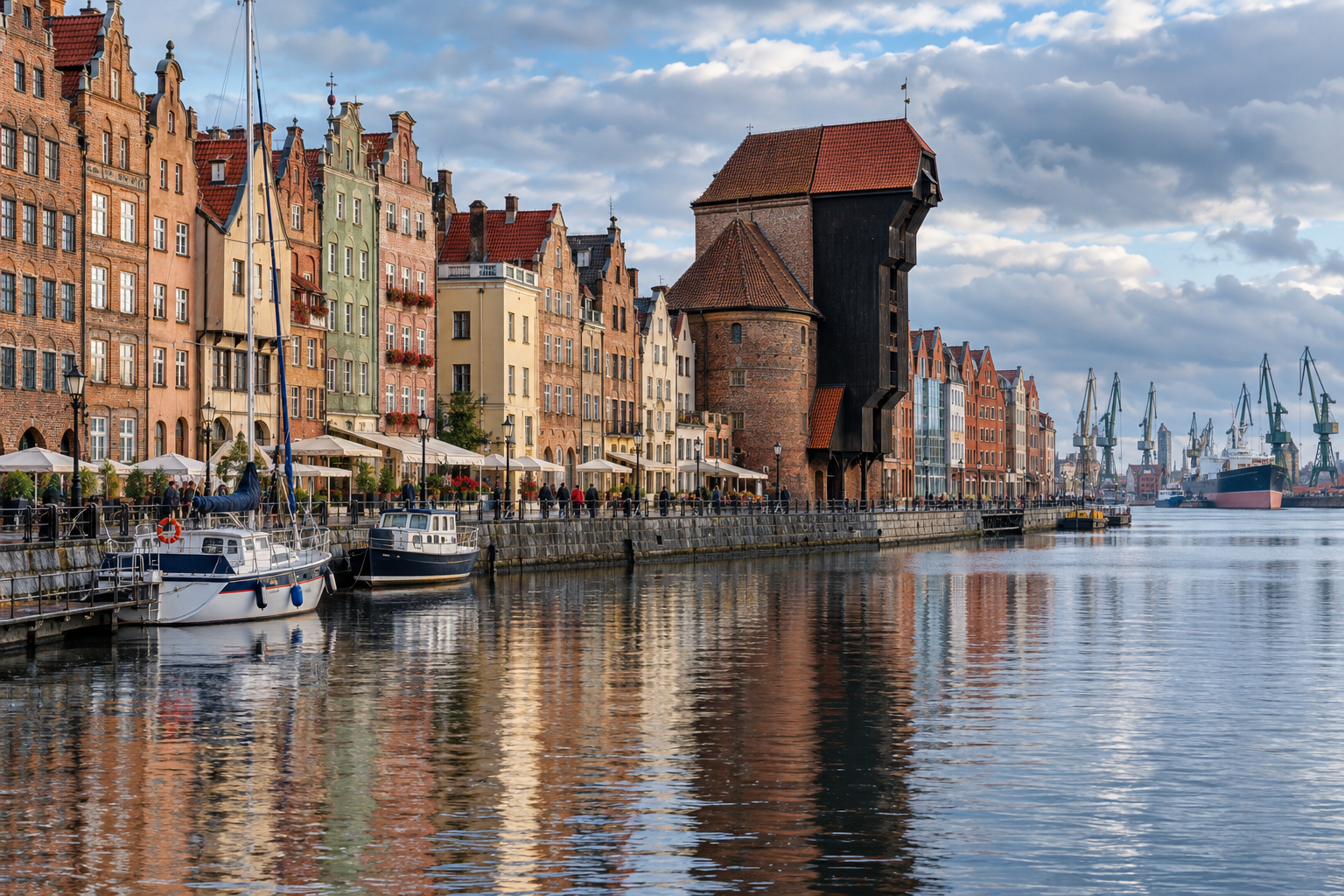
Gdańsk is often photographed as a Baltic city of ornate façades and waterside cranes, but its strongest walking route is also a journey through ideas. In a little over three kilometres, you can move from the ceremonial Royal Route to the Motława waterfront and then north toward the shipyard where Solidarity became a mass civic movement. Allow three hours for the walk, or most of a day with museum visits.
Why connect the Main Town with the shipyard?
The polished centre and the industrial north tell complementary stories. Długa Street and Długi Targ reflect merchant wealth, civic power and post-war reconstruction. The shipyard area records labour, protest and the democratic changes that reshaped Central and Eastern Europe. Walking between them makes Gdańsk feel like one city rather than two separate attractions.
Begin in the morning, wear shoes suitable for cobbles and exposed quays, and carry a light waterproof layer: Baltic weather changes quickly. To add a local guide’s perspective, compare options through the AI Tour Matcher for free walking tours.
Route from the Royal Way to Solidarity Square
1. Golden Gate, Długa Street and Long Market
Start at the Golden Gate and follow Długa Street into Długi Targ, the Long Market. Pause at the Main Town Hall, Artus Court and Neptune’s Fountain. The official tourism portal describes the Town Hall as a Gothic and Renaissance landmark; its tower viewpoint may operate seasonally, so check before planning a climb.
Do not hurry through the restored façades. Much of central Gdańsk was devastated during the Second World War, and its current appearance is the result of a deliberate reconstruction. Look for variations in gables, decorative portals and narrow plots that reveal the city’s trading history.
2. Mariacka Street and the Motława
Turn toward Mariacka Street, known for raised stone terraces, gargoyle drains and amber shops, then reach the river near the medieval Crane. Follow the Motława north. Granary Island across the water shows how the waterfront continues to evolve, while the historic crane recalls the port’s commercial machinery.
3. Museum of the Second World War and St Bridget’s
Continue toward the Museum of the Second World War. A full visit requires several hours, so decide whether it belongs on this day or a separate one. From here, walk toward St Bridget’s Church, closely associated with support for shipyard workers during the 1980 strikes. Respect services and check access before entering.
4. Shipyard Gate No. 2 and European Solidarity Centre
Finish at the Monument to the Fallen Shipyard Workers, historic Gate No. 2 and the European Solidarity Centre. Visit Gdańsk identifies the city as the birthplace of Solidarity, a movement for freedom, dignity and justice. The ECS permanent exhibition explains the strikes, the 21 Demands and the wider fall of communism. Opening times vary seasonally; verify the official schedule before arrival.
Practical choices and respectful travel
The route is mostly flat, but cobbles, construction and railway crossings can complicate access. Use marked crossings, keep clear of working areas and avoid climbing on memorials. The shipyard is not merely an industrial photo set: it is a place of work and civic memory.
If the weather deteriorates, shorten the outdoor section and prioritize one museum. Travellers who prefer independent narration can browse self-guided experiences and audio-tour ideas. For broader city planning, begin with Best Free Tour.
Frequently asked questions
How long does the walk take?
About three hours with pauses but no museum interiors. Add two to four hours for the European Solidarity Centre or the Second World War museum.
Is the route free?
The streets, waterfront, memorial and shipyard gate are free. Museums, towers and some interiors require tickets.
Can I do it in winter?
Yes, but daylight is limited and quays can be icy or windy. Wear warm waterproof footwear and check seasonal opening hours.
Is it accessible?
Much of the route is flat, though cobbles and temporary works can be challenging. Consult each museum’s current accessibility information.