
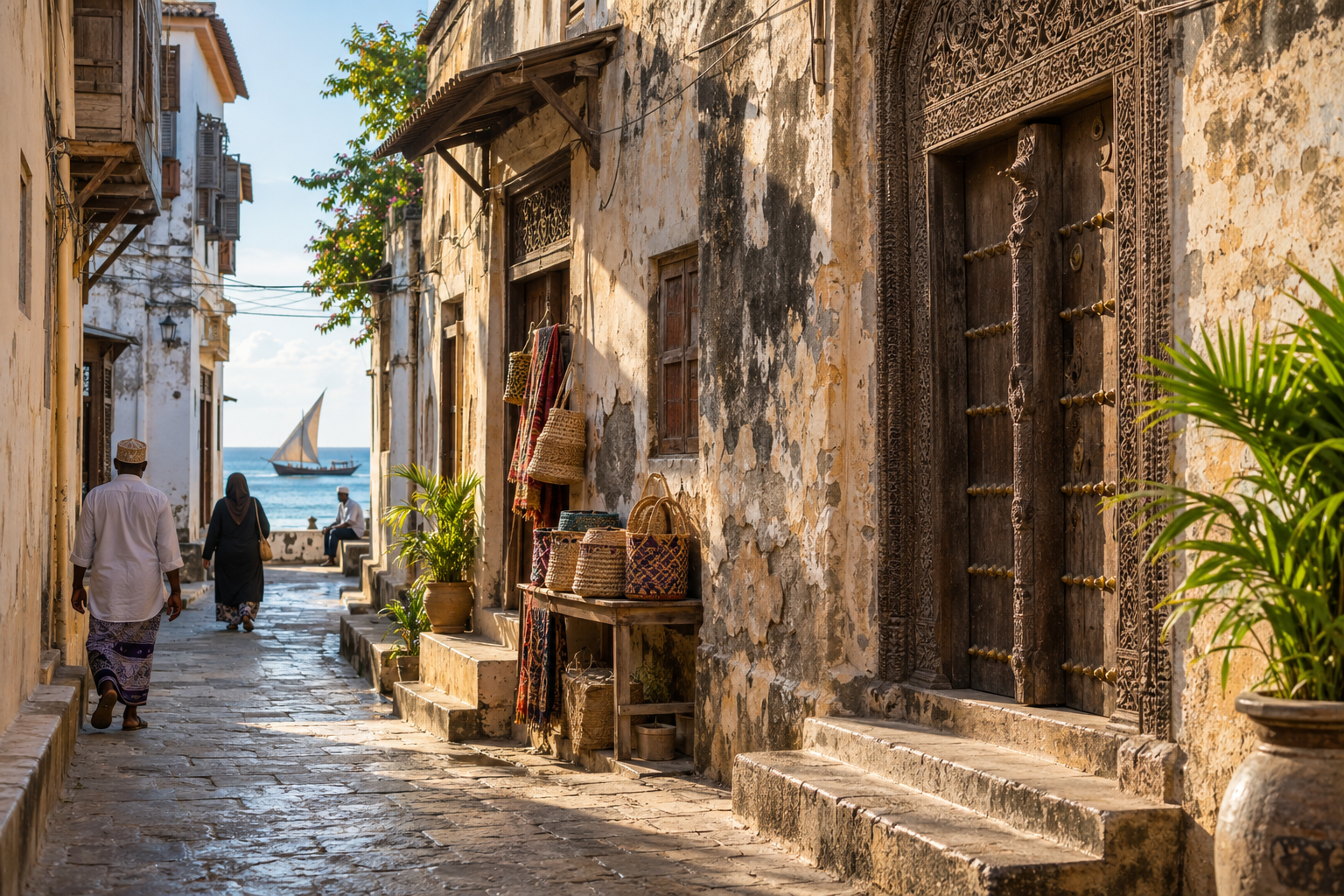
Stone Town is best understood at walking pace. Its narrow lanes, coral-stone houses, carved doors and busy commercial streets preserve a Swahili urban landscape shaped by African, Arab, Indian and European connections. UNESCO inscribed the historic centre in 2000, but this is not an open-air museum: it remains a lived-in neighbourhood where homes, mosques, workshops and markets share very limited space.
A half-day route through Stone Town
1. Begin at Forodhani Gardens
Start on the seafront in the morning, when the light is gentle and the lanes are easier to read. Forodhani gives a clear view of the harbour and the edge of the old town. The Old Fort stands nearby and makes a useful orientation point. The House of Wonders is an important landmark, but Zanzibar’s museum authority lists it as closed for restoration, so admire the exterior only and check official updates rather than relying on old guidebooks.
2. Look beyond the famous doors
Enter the lanes behind the waterfront and notice how buildings are made from coral ragstone, lime mortar and timber. Carved double doors often show Indian and Arab design influences, but they are entrances to real homes and businesses. Photograph discreetly, never block a doorway and ask before taking a close portrait. For a self-guided introduction suited to your schedule, compare ideas with our AI Tour Matcher.
3. Reach Darajani without rushing
The street pattern is deliberately irregular, so getting slightly lost is part of the experience. Keep a map available, use the seafront as your western reference and follow the flow toward Darajani Market. Around the market, remain alert to carts and scooters, keep valuables secure and avoid photographing vendors or customers without permission. Taste fruit or spices only after agreeing on a price.
4. Read the city’s difficult history
Continue toward the Anglican Cathedral and the former slave-market area. Stone Town’s prosperity was connected to Indian Ocean trade, including the trafficking of enslaved people. Approach memorial spaces quietly and avoid turning them into casual photo backdrops. A guided visit can add essential context and help separate documented history from tourist legends.
5. Return through the waterfront lanes
Loop back toward the sea through shop streets and small squares. Look for shaded courtyards, verandas and the contrast between grand mansions and simpler Swahili houses. End where you began, or stay for the evening food market after a break; confirm current operating arrangements locally.
How much time and what to wear
Allow three to four hours for this loop with one museum or heritage visit. The route is short in distance but slow because of heat, uneven paving and frequent turns. Wear breathable, modest clothing that covers shoulders and knees, especially near mosques and residential lanes. Comfortable closed shoes are useful after rain.
Safety and respectful travel
Walk in daylight, preferably with company, and avoid deserted or dark alleys. Keep phones and cameras discreet, use official taxis after dark and tell someone your plan. Do not pay anyone claiming that a permit is required to walk public streets. Support the neighbourhood through locally run cafés, licensed guides and craftspeople, without treating private homes as scenery.
Build a fuller Zanzibar day
Pair the walk with a bookable local experience focused on heritage, food or the waterfront. For other self-guided routes and free-tour ideas, browse Best Free Tour city guides. Avoid stacking too many distant excursions on the same day: Stone Town rewards slow observation.
FAQ
Is Stone Town easy to explore on foot?
Yes, the historic core is compact, but the lanes are winding and surfaces uneven. A map and daylight are helpful.
Is the House of Wonders open?
The official museum website lists it as closed for restoration. Check again shortly before your visit.
Do I need a permit to walk in Stone Town?
No permit is required for public streets. Be cautious of anyone demanding payment for access.
What is the best time to walk?
Early morning is cooler and quieter. Late afternoon is atmospheric, but finish unfamiliar lanes before dark.
Checked against UNESCO, Zanzibar Commission for Tourism and official museum information in October 2026.