
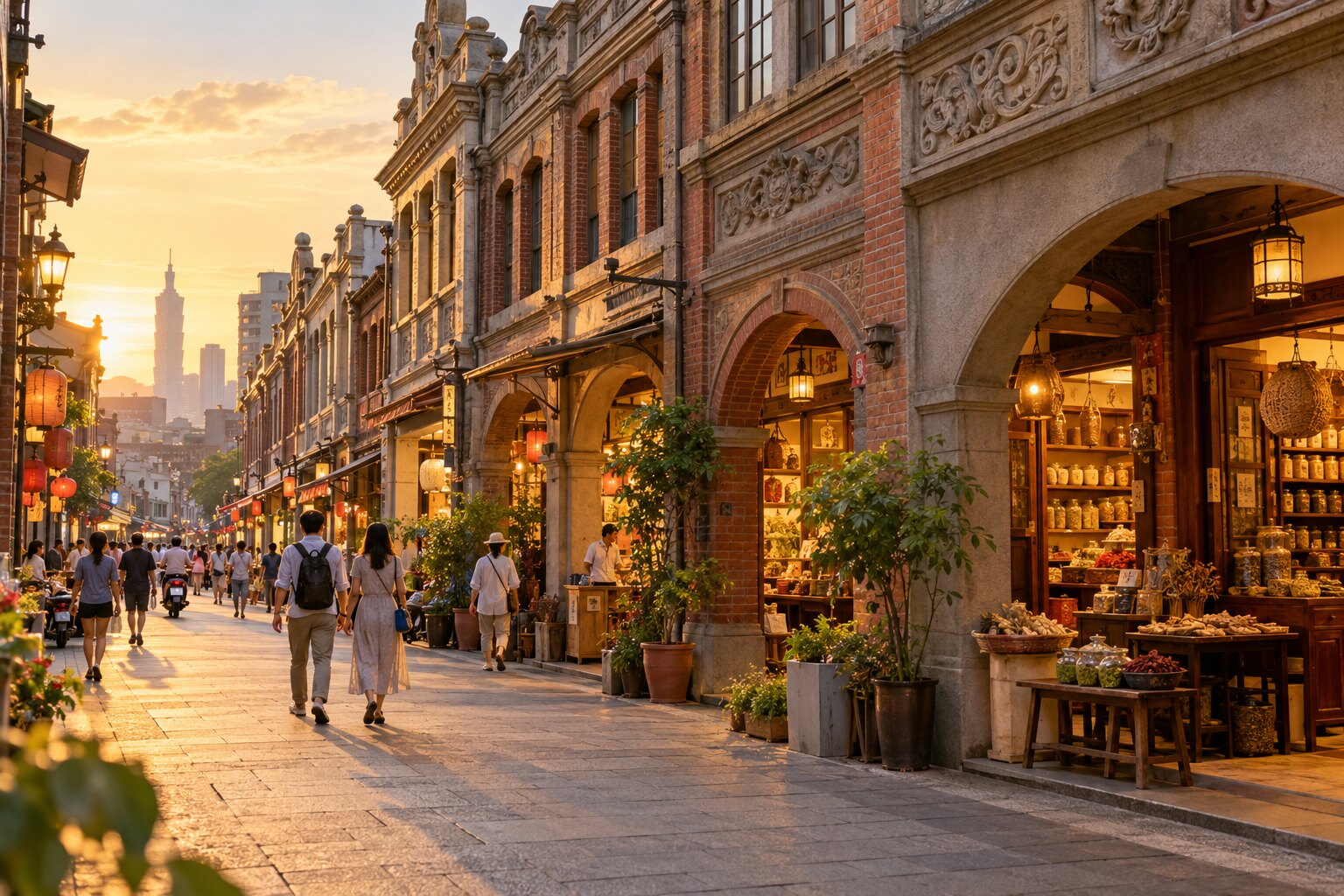
Dadaocheng is where Taipei’s river-trading past still lives in everyday shops, temple courtyards and brick façades. This self-guided walk links Beimen, Dihua Street and Dadaocheng Wharf in about 2.5 kilometres. Allow two to three hours if you want to pause for tea, browse Yongle Market and watch the light change over the Tamsui River.
Why walk Dadaocheng?
The district grew around river commerce and remains one of the clearest places to read old Taipei in the streetscape. Dihua Street still specialises in tea, dried foods, medicinal herbs and fabric, while restored shophouses now share the block with cafés and design studios. The result is not an open-air museum: it is a working neighbourhood where traditional trade and creative reuse sit side by side.
A practical Dadaocheng walking route
1. Start at Beimen and enter the old city
Begin at Beimen MRT station. The North Gate is a useful visual prologue before you follow Tacheng Street toward Dihua Street. Traffic can be busy, so use marked crossings and save your slow wandering for the arcaded shopfronts.
2. Dihua Street’s merchant façades
Turn north onto Section 1 of Dihua Street. Look above the awnings: Baroque, modernist and red-brick details reveal different phases of commercial confidence. Tea, fabric and herb shops make this stretch especially atmospheric. The official Taipei Travel page for Dihua Street is useful for current access information.
3. Yongle Market and Xia-Hai City God Temple
Yongle Market is a landmark for textiles; its upper floors are more interesting if you enjoy fabric and craft. Nearby, Xia-Hai City God Temple is compact but active. Enter respectfully, keep voices low, and do not block worshippers or photograph rituals without permission.
4. Follow the lanes toward the river
Leave the main shopping street for the short westbound lanes. They reveal quieter façades, small courtyards and the neighbourhood’s relationship with the former port. Pass through Water Gate No. 5 to reach the riverside.
5. Finish at Dadaocheng Wharf
The official wharf page explains the area’s trading history and current visitor information. Late afternoon is especially pleasant, but riverside facilities and event access can change. Check official notices on the day of your walk.
Food, timing and local etiquette
Weekday mornings are best for seeing traditional businesses at work; late afternoon gives softer light at the wharf. Around Lunar New Year, Dihua Street becomes extremely busy. Buy small amounts from specialist shops, ask before photographing interiors, and carry cash as well as a card. Summer heat and sudden rain are common, so bring water and a light rain layer.
How to make the route your own
Architecture lovers can linger over upper façades; food-focused walkers can sample tea, pastries and dried fruit; families may prefer a shorter Beimen–Yongle Market–wharf version. The city’s official Dadaocheng feature adds heritage stops and current cultural context.
Prefer a flexible start? Browse our self-guided city ideas, compare free walking tours, or add a bookable local experience to your Taipei plan.
Frequently asked questions
How long does the walk take?
The direct route takes about 45 minutes, but two to three hours is more realistic with markets, temples and tea stops.
Is Dadaocheng easy to reach by metro?
Yes. Beimen is the most convenient starting station; Daqiaotou is useful if you prefer to walk south along Dihua Street.
Is the route suitable in rain?
Many shopfronts have covered sections, but crossings and the riverfront are exposed. Wear shoes with grip and postpone the wharf section during severe weather.
When is Dihua Street busiest?
The weeks before Lunar New Year are the busiest. Visit early on a weekday for a calmer experience.