
Seoul rewards visitors who slow down. Behind its fast transport and illuminated skyline, the historic centre is compact enough to explore on foot. This route connects a royal palace, a preserved hanok neighbourhood, craft streets and the Cheonggyecheon stream without turning the day into a checklist.
Allow six to eight hours, excluding palace interiors. The walking distance is roughly six kilometres, with easy subway access at both ends. If you want a route adapted to your hotel, pace and interests, use the Best Free Tour matcher.
Seoul walking route at a glance
- Gwanghwamun Square and Gyeongbokgung Palace
- National Folk Museum exterior and Samcheong-dong
- Bukchon Hanok Village
- Insadong and Jogyesa Temple
- Cheonggyecheon stream
Start at Gwanghwamun Square
Begin early at Gwanghwamun Square, where the broad ceremonial axis offers a clear view toward Bugaksan Mountain and the palace gate. The statues of Admiral Yi Sun-sin and King Sejong introduce two central figures in Korean history. Instead of rushing directly inside the palace, look at the scale of the avenue and the way modern Seoul frames the restored royal landscape.
Gyeongbokgung Palace
Gyeongbokgung was the principal palace of the Joseon dynasty. Its courtyards, gates and mountain backdrop make it the most legible introduction to royal Seoul. Opening days, admission rules and guard ceremonies can change, so check the official Royal Palaces and Tombs website before visiting. If you do not enter, the gate and perimeter still provide an effective first stop.
Walk toward Samcheong-dong
Continue along the eastern side of the palace. The streets gradually narrow as government buildings give way to galleries, cafés and lower traditional roofs. Samcheong-dong works best as a transition rather than a destination to rush through: pause for coffee or a light snack and observe how contemporary businesses occupy older urban plots.
Bukchon Hanok Village with respect
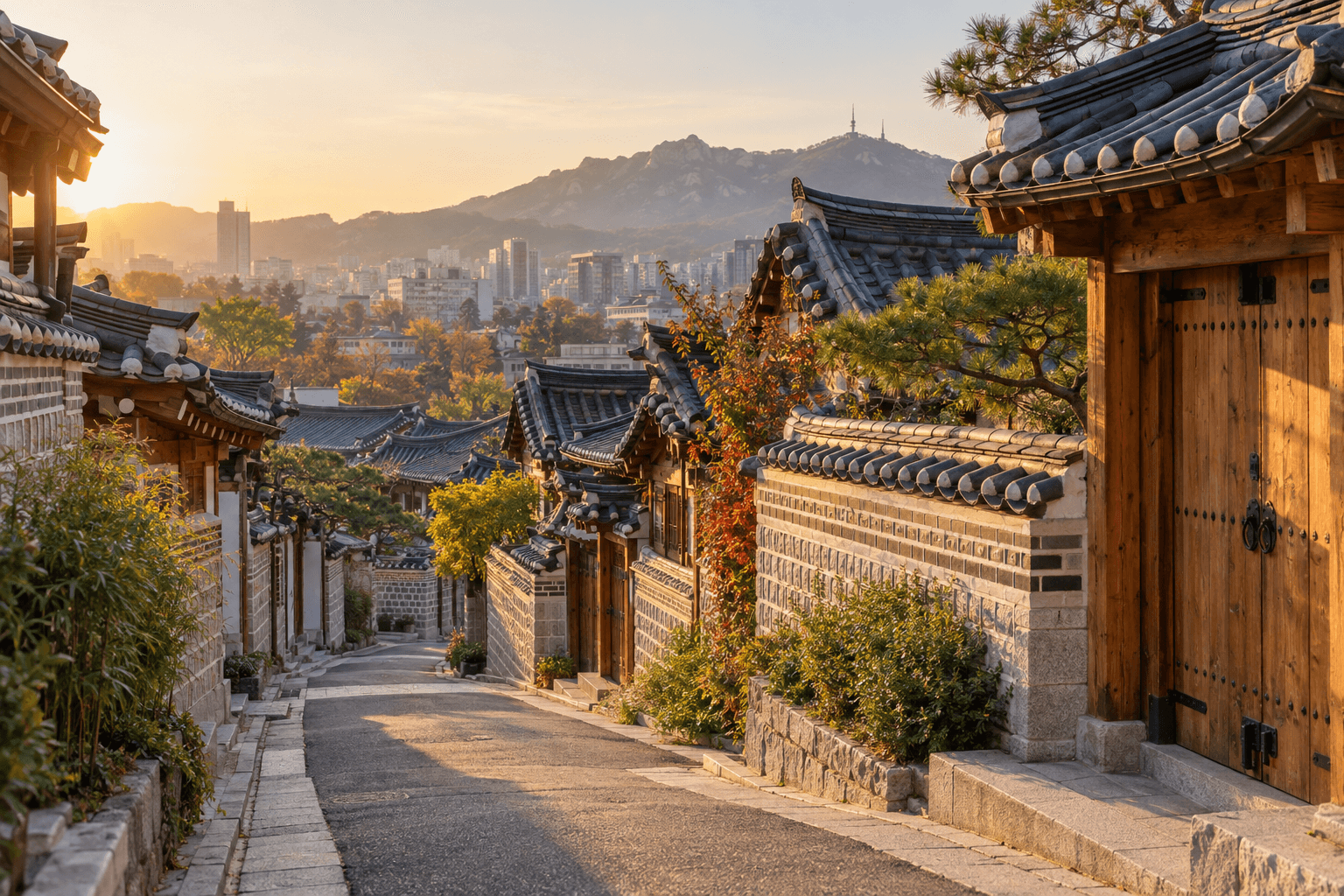
Bukchon is a residential neighbourhood, not an open-air museum. Its hanok houses preserve tiled roofs, wooden structures and courtyards adapted to the slopes between the palaces. Keep your voice low, avoid blocking entrances and follow local signs restricting access to sensitive lanes. The best experience comes from noticing rooflines, walls and changing views rather than pursuing one crowded photograph.
For a guided introduction, compare the available free walking tours. A guide can add context while helping visitors move respectfully through residential streets.
Lunch between Bukchon and Insadong
This area is suitable for a simple Korean lunch. Look for a restaurant specialising in one or two dishes: mandu dumplings, kalguksu noodles, bibimbap or a set meal with seasonal side dishes. Menus with clear prices and a steady local clientele are often more useful than viral recommendations. Tea houses offer a quieter alternative for a break.
Insadong beyond souvenir shopping
Insadong remains associated with calligraphy, ceramics, paper crafts, galleries and traditional tea. Walk the main street, but spend more time in the side alleys where small workshops and restaurants survive. Korea Tourism Organization notes that the street becomes a pedestrian cultural space at designated weekend hours; verify current arrangements before relying on traffic restrictions.
Jogyesa Temple
A short walk leads to Jogyesa, an active Buddhist temple surrounded by central Seoul. Enter quietly and remember that ceremonies take priority over sightseeing. Lanterns and seasonal decorations can transform the courtyard, but the essential experience is the contrast between religious life and the offices surrounding it.
Finish beside Cheonggyecheon
End at Cheonggyecheon, the restored stream running below street level through the city centre. It offers a calmer final walk and convenient connections toward Jonggak, Euljiro and Myeongdong. After a day of palace courtyards and hillside lanes, the watercourse reveals another chapter of Seoul: infrastructure redesigned as public space.
Practical advice
- Wear shoes suited to slopes and uneven paving.
- Carry a transport card for optional subway shortcuts.
- Check palace closure days and temporary access restrictions.
- Keep conversations quiet in Bukchon and religious sites.
- In summer, start early and schedule indoor breaks.
For current visitor information consult Visit Seoul, VisitKorea and the Royal Palaces and Tombs Center.
Build a personal Seoul tour
This route favours history and architecture. Food lovers can extend Insadong; families may shorten Bukchon; design travellers can spend longer in Samcheong-dong. Use the tour creator for a self-guided audio route, then add compatible experiences.
Frequently asked questions
Is central Seoul easy to explore on foot?
Yes, although Bukchon includes slopes. The route is manageable with breaks and can be shortened using the subway.
How much time should I allow?
Six to eight hours provides time for one palace visit, lunch and unhurried walking.
Is Bukchon free to visit?
The neighbourhood streets are generally accessible, but local restrictions protect residents. Follow signs and avoid restricted lanes.
Do I need a guide?
No, but a guide or audio tour adds historical context and helps connect places that can otherwise feel separate.
Information checked on 19 September 2026. Verify opening times and access rules before departure.