
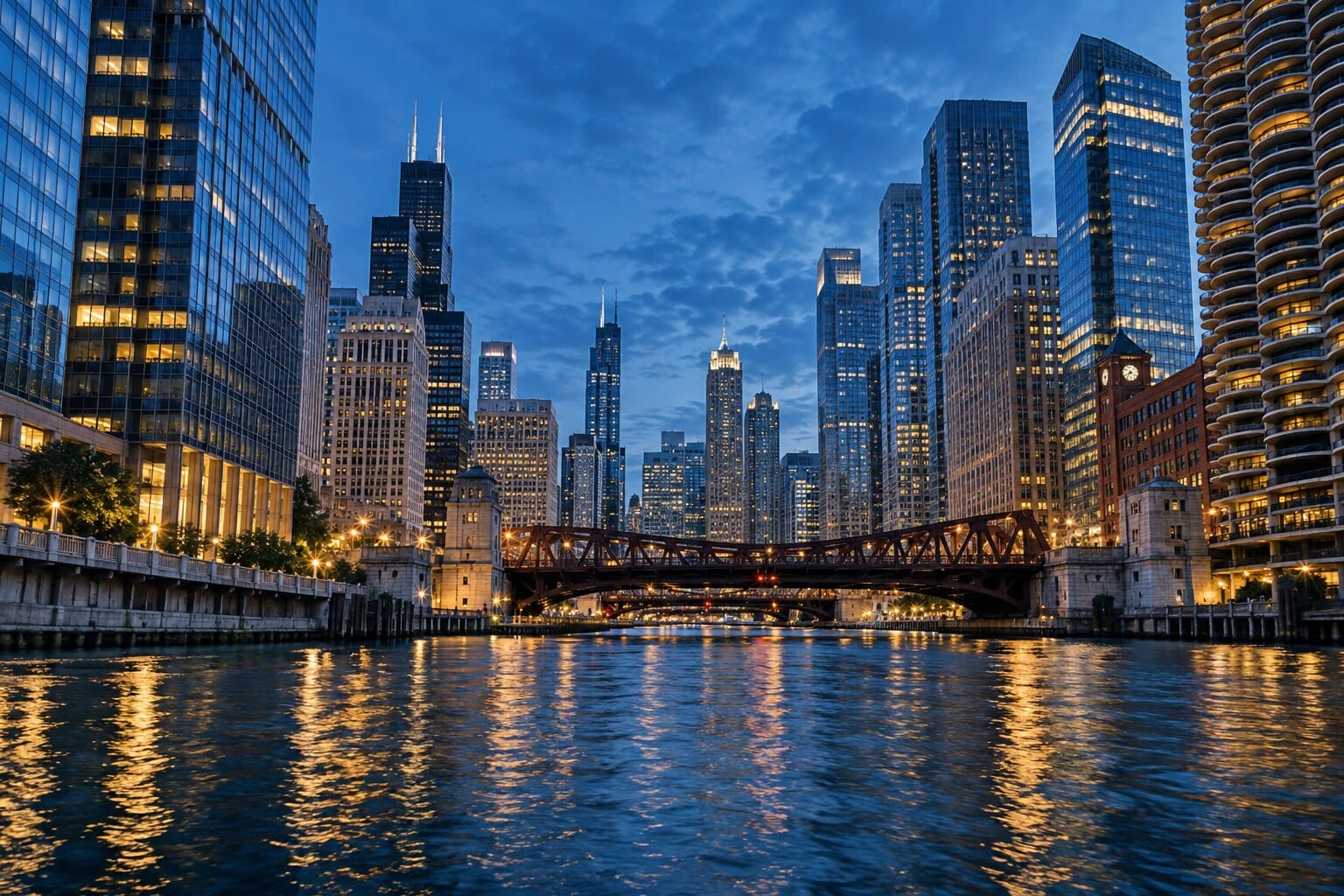
Chicago does not reveal its architecture from a single viewpoint. The city is best understood by changing scale: stand close enough to see stone ornament, step beneath the elevated railway to feel the street’s movement, then reach the river and watch entire towers become part of one skyline. This self-guided walk connects those perspectives without turning the city into a checklist.
Chicago architecture walk: route and timing
Allow four to five hours, including a coffee stop and time to look inside publicly accessible spaces. The route begins at the southern edge of the Loop, moves north through its historic commercial core, crosses Millennium Park and ends along the Chicago Riverwalk. It is compact, but you will spend more time looking up than covering distance.
Start at the Monadnock Building
Begin on Dearborn Street with the Monadnock Building. Its heavy masonry walls and restrained curves make a useful starting point: the building feels solid and almost geological, yet it belongs to the period when Chicago was testing the limits of the modern office block. Walk around the corner before moving on; light changes its dark brick more than photographs suggest.
Read the city beneath the L
As you move through the Loop, the elevated railway becomes part of the architecture. Steel tracks frame streets, interrupt views and add a mechanical rhythm overhead. Do not treat the noise as an obstacle. It explains how transport, commerce and building density grew together. Keep to crossings and pavements when taking photographs; traffic turns quickly beneath the tracks.
Enter the Rookery if public access is available
The Rookery’s exterior is robust, but its light court offers a different experience of Chicago design. Access and tours can vary, so confirm current arrangements before visiting. Even without entering, compare its layered façade with the cleaner geometry of later towers nearby. The short distance between them holds several decades of architectural experimentation.
Where art and civic space meet
Pause at Federal Plaza
Federal Plaza creates breathing room among the office buildings. Alexander Calder’s red Flamingo introduces movement and colour against dark, disciplined façades. Instead of photographing the sculpture alone, step sideways and use it to frame the surrounding grid. This is where Chicago’s public art and modernist planning become one composition.
Cross toward Millennium Park
Move east to Millennium Park and the Chicago Cultural Center. The park is busy for good reason, but the most interesting view is often the relationship between reflective contemporary surfaces and the older buildings behind them. Inside the Cultural Center, when open, the ornate interiors offer a sharp counterpoint to the steel-and-glass city outside. Check event access before relying on an interior stop.
Finish at the river
Approach the Chicago River from Michigan Avenue
Walk north until the street opens over the river. Here the route changes from individual buildings to urban theatre: bridges, water, traffic and towers work together. Notice how the Wrigley Building’s pale surface responds to light, then compare it with darker and more vertical neighbours. The best position is not always on the bridge; descend when access is open and look back from river level.
Walk only the Riverwalk section that suits the day
The Riverwalk offers close views of façades that seem distant from street level. Weather, seasonal operations and events affect the experience, so keep the ending flexible. A short westward stretch is enough to understand the river as a public room. If wind or heat becomes tiring, finish with a seat near the water rather than forcing the full length.
What to eat nearby
Architecture deserves pauses. A Chicago-style hot dog is quick and practical; an Italian beef sandwich is messier but deeply associated with the city; deep-dish pizza requires more time than this route naturally allows. Choose what fits the day instead of treating local food as a compulsory list. The Loop also contains long-standing cafeterias and newer counters serving the communities that shape contemporary Chicago.
Turn this walk into your own tour
Design enthusiasts can add a guided architecture cruise or a Chicago Architecture Center visit. Families can shorten the Loop section and spend longer around Millennium Park and the river. Travellers with limited mobility should check current lift and ramp access on the Riverwalk. To build a route around your starting point and interests, use the Best Free Tour matcher. You can compare free walking tours and autonomous audio guides or browse compatible Chicago experiences.
Practical advice
- Wear shoes suitable for polished interiors, pavements and river-level paths.
- Allow extra time for bridge openings, events and busy crossings.
- Use the CTA when weather makes a longer walk uncomfortable.
- Verify building access and tour schedules directly before travelling.
Frequently asked questions
Is this Chicago architecture route free?
The outdoor route is free. Some interiors, exhibitions, cruises and guided tours require tickets.
Can I walk it in winter?
Yes, but shorten the river section, dress for strong wind and check whether river-level access is open.
Is an architecture cruise worth adding?
It offers a complementary viewpoint from the water. Choose it if architecture is a main interest and leave enough time rather than squeezing it between stops.
Where can I verify current information?
Use Choose Chicago for visitor planning and the Chicago Architecture Center for exhibitions and tours. Information checked on 20 September 2026.