
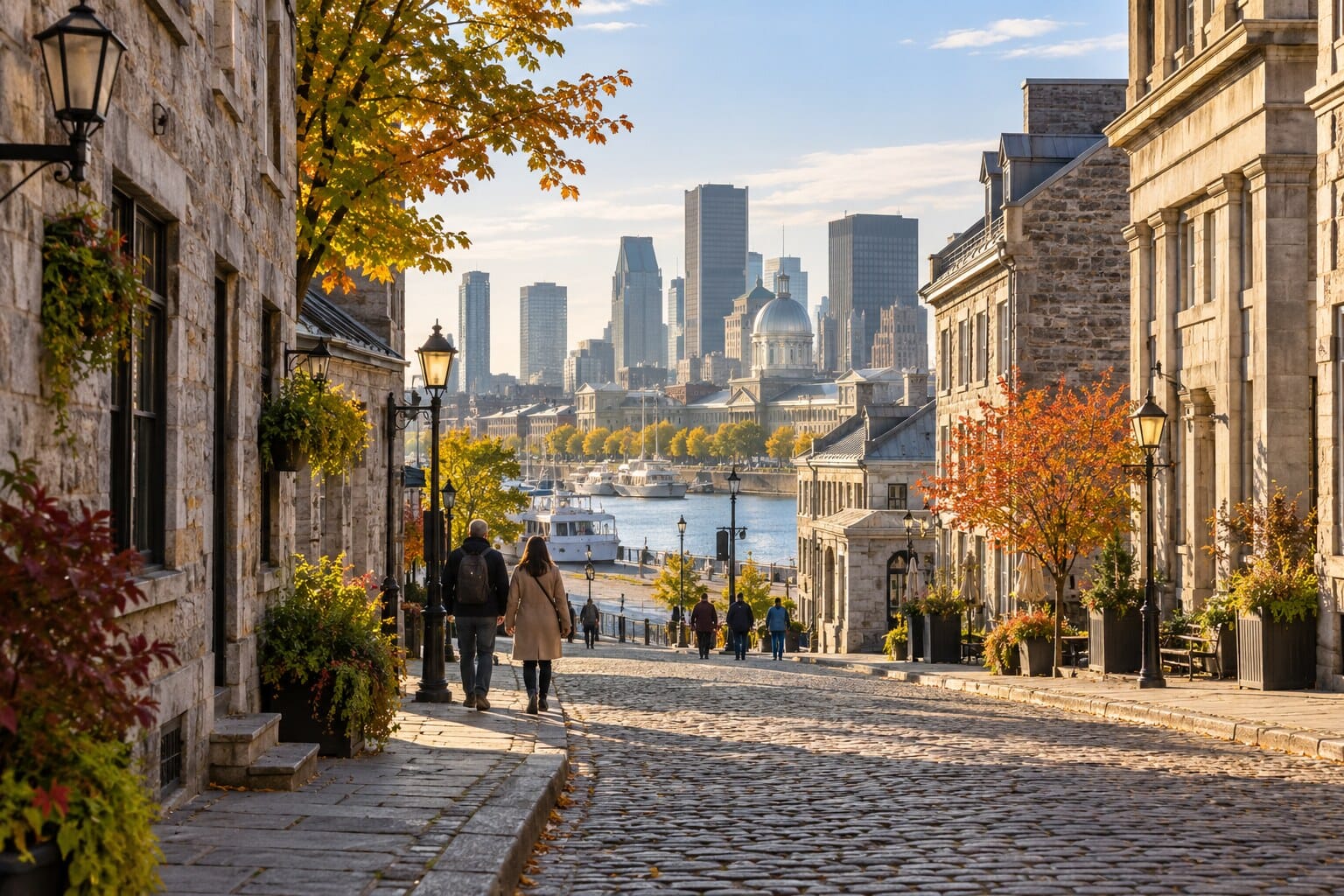
Montréal rewards travellers who explore it slowly. In a single day you can move from the stone façades of Old Montréal to the cafés and staircases of the Plateau, while noticing how French-speaking heritage, immigrant traditions and contemporary design share the same streets. This route is designed for a first visit and can be shortened whenever the weather or your pace asks for it.
Montréal in one day: the route at a glance
Allow seven to eight hours including lunch and pauses. The core itinerary is walkable, but using the métro between downtown and the Plateau saves energy for Mount Royal. Start near Place-d’Armes, continue through Old Montréal and the Old Port, cross the cultural district, then choose between the Plateau and a climb to the Kondiaronk lookout.
1. Begin at Place-d’Armes
Arrive early enough to hear the square before it becomes busy. The surrounding buildings read like a compressed history of the city: religious Montréal, financial Montréal and the modern metropolis all face one another. Notre-Dame Basilica dominates the view. If you want to enter, check current admission and visiting times on the official website; otherwise the square itself is a fine place to begin understanding the city.
2. Follow Rue Saint-Paul through Old Montréal
Walk east along Rue Saint-Paul rather than rushing directly to the waterfront. Look up at old warehouses, carved stone details and the changing shopfronts. Small lanes lead toward Place Jacques-Cartier and the remains of the city’s commercial past. This section is less about ticking off monuments than about reading the texture of the streets.
3. Pause at the Old Port
The river opens the route and changes its rhythm. Walk only the section that suits the weather: the quays can feel wonderfully spacious, but wind and winter temperatures make a shorter pause sensible. Turn back toward the historic centre when you are ready, leaving time for the neighbourhoods ahead.
From the historic centre to contemporary Montréal
4. Cross toward the Quartier des spectacles
Head northwest through downtown toward Place des Arts. The route becomes more urban and less postcard-like: office towers, public art, university life and festival spaces replace the stone streets. That contrast is part of Montréal’s character. Check the official tourism calendar before travelling because temporary installations and street closures can reshape this area.
5. Eat something unmistakably local
For lunch, choose one speciality rather than trying to collect them all. A bowl of poutine is filling; a Montréal-style bagel is lighter and easy to share; smoked meat works well when you have time to sit. The city’s food identity is broader than these classics, so a neighbourhood bakery or a small counter serving dishes from Montréal’s immigrant communities can be an equally authentic stop.
6. Continue to the Plateau and Mile End
Use the métro if your legs need a break, then wander rather than marching. Colourful façades, exterior staircases, murals, bookshops and residential side streets make the Plateau rewarding. In Mile End, cafés and bakeries sit beside studios and music venues. Keep voices low on residential streets and remember that the photogenic staircases are private entrances.
7. Finish on Mount Royal
If conditions are good, end with the ascent to the Kondiaronk lookout. The view helps connect the places crossed during the day: downtown below, the river beyond it and the mountain park around you. Wear shoes with grip after rain or snow. If the climb does not suit your group, finish instead around Jeanne-Mance Park and enjoy the mountain from below.
How to personalise this Montréal walk
Architecture lovers can spend longer in Old Montréal. Food-focused travellers can reduce the waterfront section and add Mile End. Families may prefer the Old Port and a shorter park visit. When you want a route tailored to your starting point and interests, use the Best Free Tour matcher. You can also compare free walking tours and autonomous audio guides or browse compatible local experiences.
Practical advice before you go
- Weather changes quickly, so carry a light layer even on a warm day.
- Use contactless payment or obtain the appropriate STM fare before boarding public transport.
- French is the city’s public language, but visitors will often hear English and many other languages.
- Verify opening hours and reservations directly with each attraction.
Frequently asked questions
Can I complete the route entirely on foot?
Yes, but it is a long day. A short métro ride between downtown and the Plateau makes the itinerary more comfortable.
Is Old Montréal best visited in the morning?
Morning usually offers a calmer atmosphere and better room to notice architectural details, although seasonal conditions and events can change the flow.
Do I need to book Notre-Dame Basilica?
Policies can change. Check the basilica’s official website before visiting, especially during busy periods or events.
Where should I verify current visitor information?
Consult Tourisme Montréal for city information and the STM for public transport updates. Information checked on 20 September 2026.