
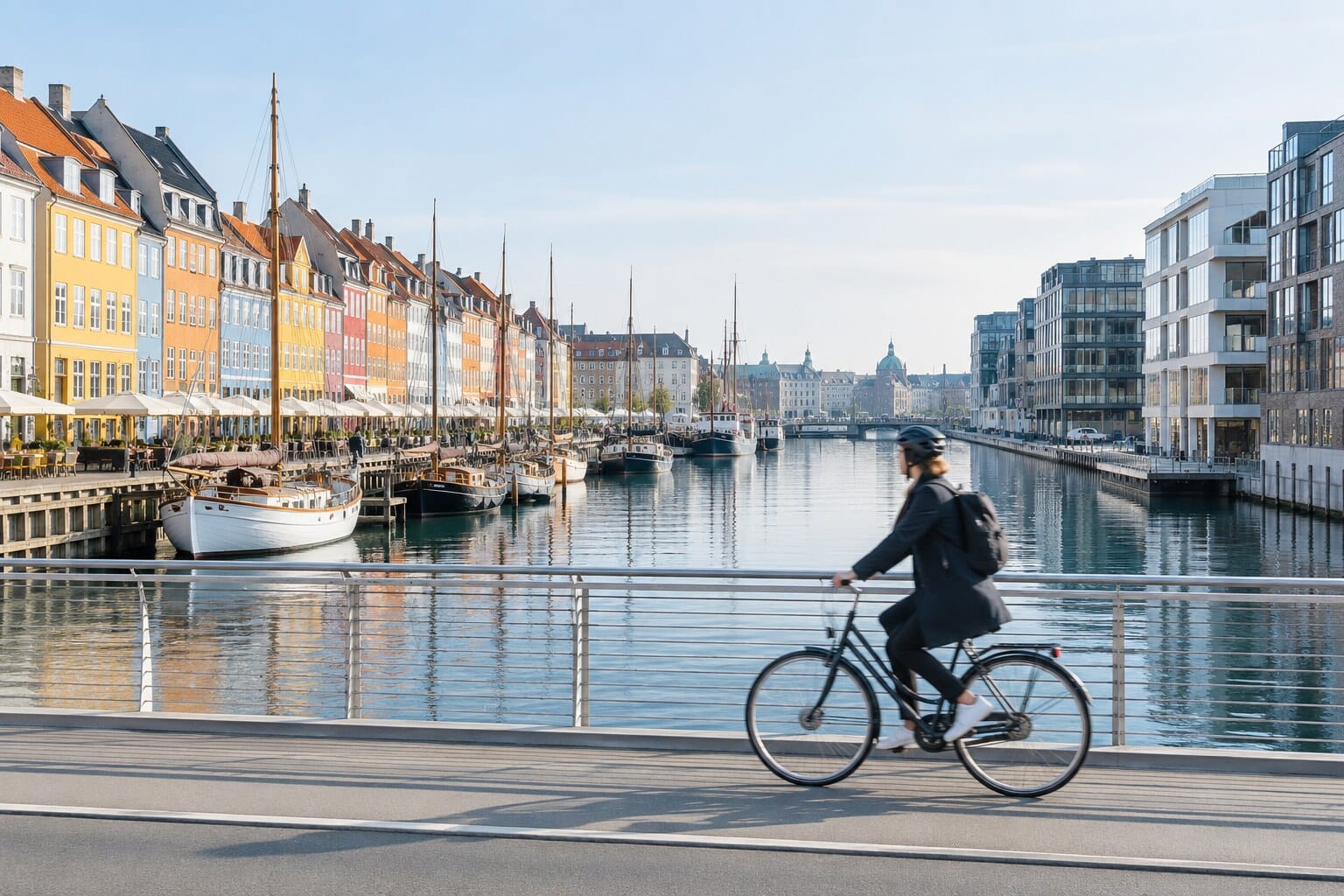
Copenhagen’s harbour is not merely a backdrop. It is a working piece of the city: ferries pass commuters, swimmers share the water with boats, and new bridges stitch together streets that once faced each other from opposite banks. This walk starts with the familiar colours of Nyhavn but quickly moves into quieter canals and contemporary public spaces.
Copenhagen harbour walk: route and timing
Allow four to five hours, including a meal and unhurried stops. Begin at Kongens Nytorv, follow Nyhavn to the water, cross the Inner Harbour Bridge, explore Christianshavn and return toward the Black Diamond. The route is mostly level, although paving, bridge ramps and winter conditions can affect accessibility.
Begin at Kongens Nytorv, not at the postcard
Starting in the square gives Nyhavn context. Elegant façades and busy transport connections show how the old harbour relates to the royal and commercial city. Walk toward the canal slowly. The first view is famous, but the useful detail is in the scale: narrow houses, low quays and boats create an intimate space despite the crowds.
Walk both sides of Nyhavn
One bank is lined with restaurants and colour; the other gives more room to step back and look. Nyhavn was once a busy port, and its present-day atmosphere still depends on water, street life and movement. Arrive earlier for calm reflections or later for livelier cafés. In peak periods, continue walking before choosing somewhere to sit; prices and queues can change within a few streets.
Pause around Ofelia Plads
The harbour opens beside the Royal Danish Playhouse. Here Copenhagen shifts from historic canal to contemporary waterfront. Sit at the edge when conditions are safe and watch how bicycles, harbour buses and small craft share the scene. Temporary events can change access, so let the space guide the pause rather than planning an exact viewpoint.
Cross into Christianshavn
Use the Inner Harbour Bridge as part of the experience
The bridge is not simply a shortcut. Its ramps reveal the harbour in stages, and the constant flow of bicycles explains Copenhagen’s daily rhythm better than any monument. Keep to the pedestrian side, check both directions before crossing cycle lanes and avoid stopping in the moving path for photographs.
Follow the Christianshavn canals
After crossing, move away from the busiest waterfront and enter the canal streets. Houseboats, brick warehouses and small courtyards create a more residential mood. This is a good place to slow down: notice doors, mooring details and the way residents use the water. Keep voices low near homes and never step onto private boats or jetties.
Look up at the Church of Our Saviour
The spiral tower acts as an orientation point across Christianshavn. If you hope to climb it, confirm current access, weather restrictions and ticket arrangements first. The outdoor staircase is not suitable for everyone. The church and surrounding streets still make a worthwhile stop without the climb, especially when wind or rain changes the plan.
Return through Copenhagen’s modern waterfront
Cross the Circle Bridge
The Circle Bridge turns a necessary crossing into a sequence of small public rooms. Instead of hurrying across, observe how people negotiate space among walkers, cyclists and boats. Its red masts and rounded platforms offer a playful contrast with the disciplined brick buildings nearby.
Finish at the Black Diamond
The Royal Danish Library’s dark glass façade reflects sky and water differently throughout the day. Stand across the harbour first, then approach the building and compare its sharp geometry with the older waterfront. Public interior access depends on opening hours and events; the exterior and waterside setting remain the real conclusion to this route.
What to eat along the way
For a light lunch, smørrebrød lets you try seasonal toppings without interrupting the walk for too long. A bakery stop for a cinnamon pastry works well in colder weather. Fish dishes suit the harbour setting, while a Danish-style hot dog is the fastest option. Choose a neighbourhood counter away from the busiest quay if you want a calmer and often more local experience.
Adapt the route to your travel style
Design enthusiasts can spend longer around the bridges and library. Families may prefer Nyhavn, Ofelia Plads and a harbour bus ride. Travellers interested in daily life should give Christianshavn more time. Build a route around your starting point with the Best Free Tour matcher, compare free walking tours and autonomous audio guides, or browse compatible Copenhagen experiences.
Practical advice
- Never stand in a cycle lane and look both ways before crossing one.
- Dress for wind from the harbour, even on a bright day.
- Use the harbour bus or metro if weather shortens the walk.
- Check bridge, tower and building access before travelling.
Frequently asked questions
Is the Copenhagen harbour walk free?
The outdoor route is free. Tower access, museums, canal cruises and some interiors may require tickets.
Can I do the route with a stroller?
Most of the route is level, but bridge ramps, paving and temporary works should be checked. A harbour bus can replace part of the walk.
Is Nyhavn worth visiting when crowded?
Yes, if you treat it as the beginning rather than the whole experience. Walk onward to quieter harbour spaces and Christianshavn.
Where should I verify current information?
Use Visit Copenhagen for official visitor information and Public Transport Denmark for tickets and routes. Information checked on 21 September 2026.