
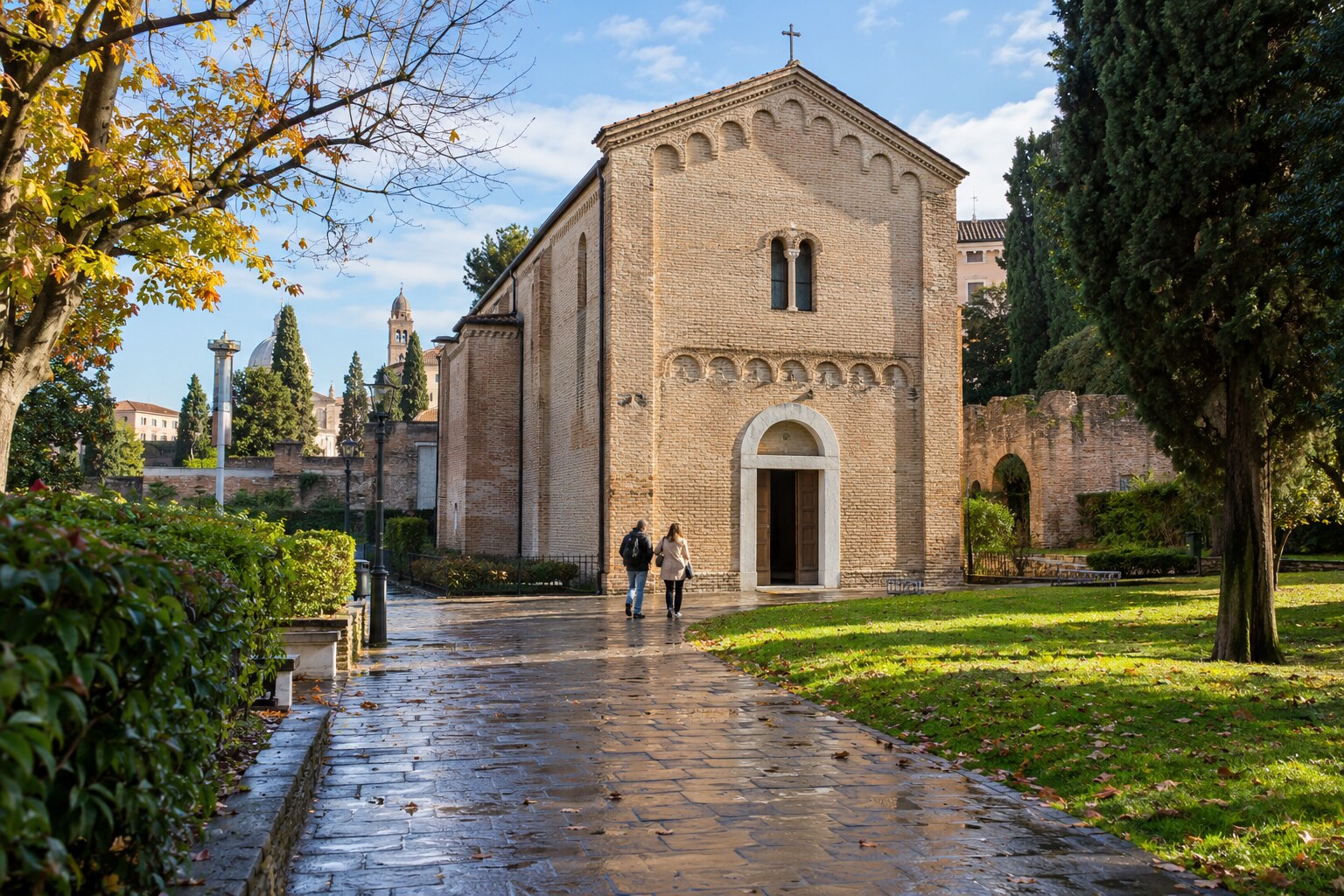
Padua’s greatest art experience is not contained in one museum. The UNESCO property “Padua’s fourteenth-century fresco cycles” links eight religious and secular complexes across the historic centre. A good plan combines timed entry at the Scrovegni Chapel with a walk through squares, churches and oratories where the language of painting changed during the fourteenth century.
What makes Padua Urbs Picta special?
UNESCO recognises eight building complexes grouped into four areas inside the walled city. Together they show how Giotto and later painters transformed fresco storytelling, spatial depth and human emotion, helping prepare the way for Renaissance perspective. The route is therefore more than a list of decorated rooms: it is a walk through a century of artistic experimentation.
The Scrovegni Chapel is the best-known site, but Palazzo della Ragione, the Baptistery, the Carraresi Palace chapel, the Basilica of Saint Anthony, the Oratory of San Giorgio and the Oratory of San Michele broaden the story.
A practical walking order
1. Scrovegni Chapel and the Eremitani area
Build the day around your reserved chapel slot. The official site states that advance booking is compulsory and same-day reservations cannot be made. Visitors should collect tickets well before admission; groups are advised to arrive at least 45 minutes early.
Current 2026 notice: the chapel is scheduled to close from 16 to 27 November 2026 for annual fresco inspections. Booking for daytime visits is currently open through 10 February 2027. Recheck before travel because operational notices can change.
2. Palazzo della Ragione and the market squares
Walk south to Piazza delle Erbe and Palazzo della Ragione. The civic hall connects art with Padua’s living market district. This is also a convenient point for the central tourist office, where visitors can obtain maps and information about the Urbs Picta Card.
3. Cathedral Baptistery and Carraresi area
Continue toward Piazza Duomo for the Baptistery, then connect with the Carraresi Palace area according to opening slots. These smaller spaces reward advance planning because hours and access methods differ from the Scrovegni Chapel.
4. Saint Anthony and the southern oratories
Finish around the Basilica of Saint Anthony and Oratory of San Giorgio, then continue to San Michele if time and opening hours allow. The complete sequence is ambitious in one day; a two-day plan offers more time to look rather than rush.
Tickets, timing and visitor etiquette
- Reserve the Scrovegni Chapel before fixing the rest of the day.
- Check each site individually: religious services, restoration and seasonal hours may affect access.
- Photography rules vary and flash is inappropriate around fragile frescoes.
- The Urbs Picta Card can cover the eight UNESCO sites and public transport; verify current prices and validity before purchase.
- Allow at least four hours for a selective route and two days for a more complete visit.
Use the Padua city page to compare an autonomous audio guide, available free walking tours and compatible bookable experiences. Browse free tour options in Italy and continue with our overview of Italy’s art, history and culture.
Frequently asked questions
Can I book the Scrovegni Chapel on the same day?
The official booking rules say no. Advance sales are compulsory, so reserve before arriving in Padua.
Are all eight UNESCO sites in one building?
No. They form a serial property spread across eight complexes in the historic centre.
Can I see everything in one day?
It is possible only with carefully aligned entry times. Two days create a calmer and more useful art itinerary.
Is the route suitable for children?
Yes, especially if you choose fewer sites and use visual details as a treasure hunt. Timed entries and quiet interiors require preparation.