
Information:
Discover Agrigento, Sicily: A Historic Treasure of Ancient Greece and Modern Charm
Agrigento History Ancient Sicily
Introduction: Discovering Agrigento History Ancient Sicily
Agrigento History Ancient Sicily tells the story of one of the most powerful and fascinating cities of the ancient Mediterranean. Located on Sicily’s southern coast, Agrigento was founded in 581 BCE by Greek settlers from Gela. From the very beginning, the city stood out for its wealth, culture, and strategic position. Today, Agrigento History Ancient Sicily continues to attract travelers eager to explore its temples, legends, and timeless beauty.
Ancient Greek Origins and Rise to Power
To begin with, Agrigento—known in antiquity as Akragas—rapidly became one of the richest Greek colonies in Sicily. Thanks to fertile lands and successful trade, the city flourished economically and culturally. As a result, monumental temples and public buildings were constructed, many of which still dominate the landscape today.
Moreover, Agrigento reached its golden age after the Battle of Himera in 480 BCE, when Greek forces defeated the Carthaginians. At that time, Agrigento History Ancient Sicily was defined by luxury, artistic excellence, and political influence across the Mediterranean.
Destruction and Roman Rebirth
However, prosperity did not last forever. In 406 BCE, Carthaginian armies destroyed much of the city, marking a dramatic turning point. Nevertheless, Agrigento did not disappear. Instead, it was later refounded and entered a new phase under Roman rule.
During the Roman period, Agrigento History Ancient Sicily became closely linked to agriculture and sulfur mining. In particular, grain production made the city essential to Rome’s food supply, ensuring continued relevance and stability for centuries.
Valley of the Temples: A UNESCO Treasure
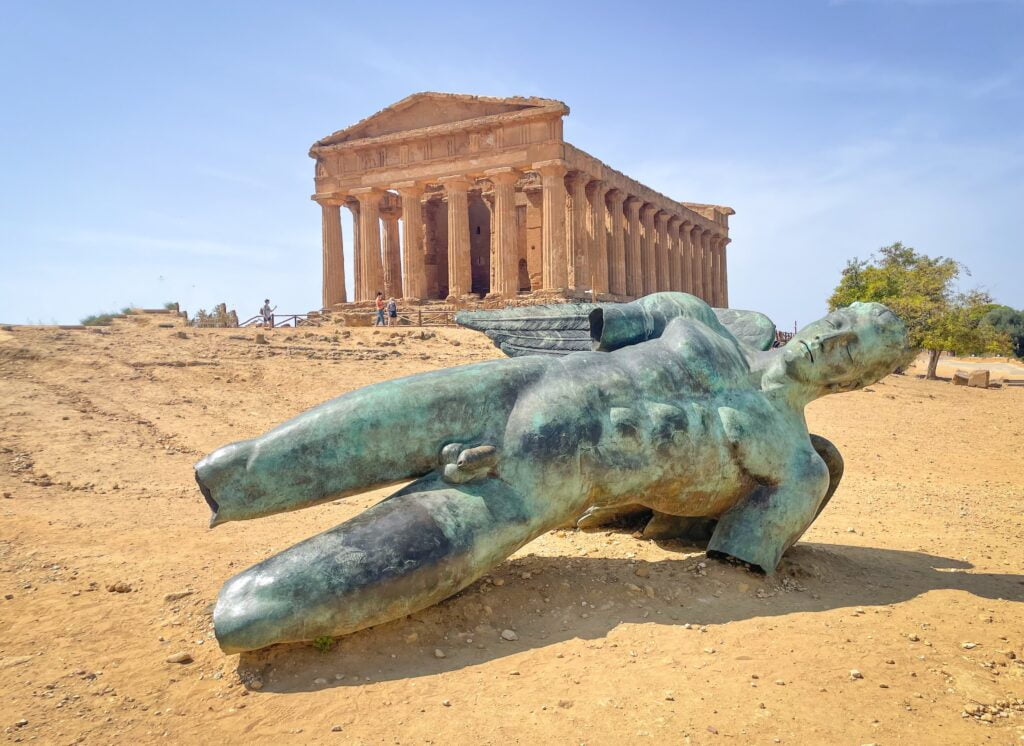
Today, Agrigento History Ancient Sicily is best experienced in the Valley of the Temples, a UNESCO World Heritage Site and one of the finest archaeological parks in Europe. Above all, this area preserves remarkably intact Doric temples.
Notably, the Temple of Zeus, once among the largest temples ever built, reflects the city’s ancient ambition. In addition, the Sanctuary of Demeter and Persephone highlights the importance of fertility cults in Greek religious life. Other landmarks, such as the Tomb of Theron and the Oratory of Phalaris, further enrich Agrigento History Ancient Sicily.
Medieval Layers and Cultural Heritage
Beyond classical antiquity, Agrigento also showcases medieval and Baroque architecture. For example, the Cathedral of San Gerlando, dating back to the 14th century, dominates the historic center. Likewise, the Church of Santa Maria dei Greci, built over an ancient Doric temple, perfectly symbolizes the city’s layered past.
Meanwhile, the Regional Archaeological Museum of Agrigento offers deeper insight into Agrigento History Ancient Sicily, displaying exceptional Greek and Roman artifacts.
Agrigento Today: Past and Present Combined
In conclusion, Agrigento History Ancient Sicily represents a unique blend of ancient ruins, medieval heritage, and modern life. Today, tourism plays a central role in the local economy, alongside agriculture and the historical legacy of sulfur mining. Nearby Porto Empedocle still recalls its past as a major export hub.
Ultimately, Agrigento History Ancient Sicily stands as a living museum where thousands of years of history come together, making it an unmissable destination for travelers exploring Sicily.
External Links
- 🔗 UNESCO – Valley of the Temples
https://whc.unesco.org/en/list/831/ - 🔗 Encyclopaedia Britannica – Agrigento
https://www.britannica.com/place/Agrigento - 🔗 Italian Ministry of Culture – Valley of the Temples
https://valledeitempli.it - 🔗 Sicily Tourism Official Website
https://www.visitsicily.info
Just tell me 😊
Pubs
Bad and Breakfast
Hostel
Hotel