
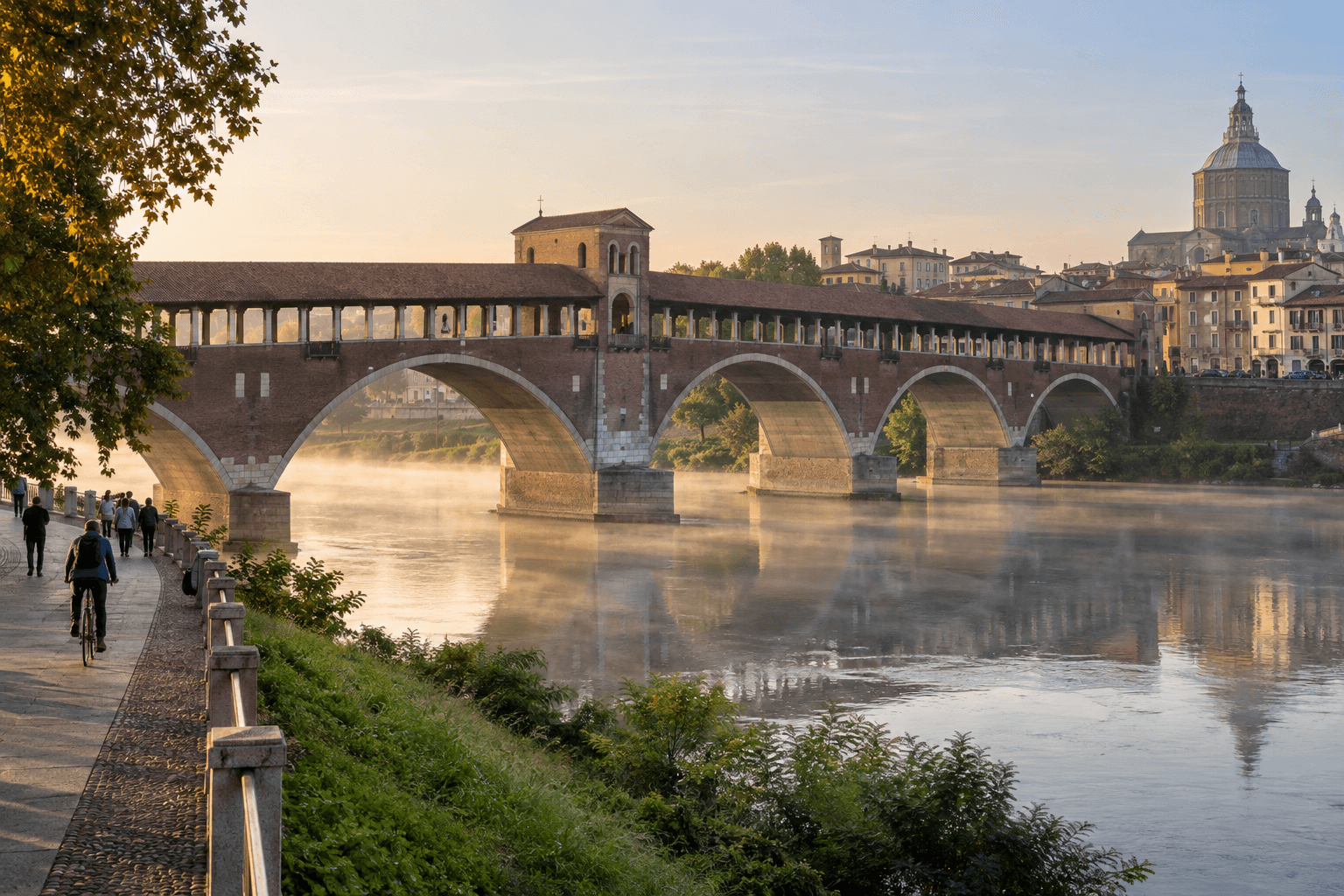
Pavia is a city where scholarship, medieval power and river life sit within an easy walk. Its landmarks are important, but the route works best when the spaces between them remain visible: university courtyards, brick lanes, quiet church fronts and the approach to the Ticino. This first-visit itinerary covers about four kilometres and avoids treating the Certosa, outside the centre, as if it were a quick extra stop.
A half-day walking route through Pavia
1. Begin at the Visconti Castle
Start beside the Castello Visconteo and its gardens. The fortress establishes Pavia’s later medieval story and houses the civic museums, making it a useful choice for bad weather or a deeper visit. If you enter, select one collection rather than trying to absorb everything before the walk has begun.
2. San Pietro in Ciel d’Oro and the university city
Walk toward San Pietro in Ciel d’Oro, then continue to the historic university. The courtyards change the rhythm of the route: pass through respectfully when accessible, remembering that they remain study and working spaces. Pavia’s academic identity is not a decorative theme; it still shapes the streets and daily population.
3. Piazza della Vittoria and the cathedral
Reach Piazza della Vittoria through the porticoed centre. Market stalls, cafés and bicycles make it a living square rather than a formal stage. From here, continue to the cathedral and observe how its large dome rises above a dense network of smaller streets. Check access around services before entering.
4. San Michele Maggiore
The sandstone façade of San Michele rewards close attention. This Romanesque church is tied to Pavia’s role as a royal capital and to medieval coronations. Look for the sculpted surface before going inside; weathering is part of what makes the façade feel different from polished Renaissance monuments. Respect worship and verify current hours.
5. Cross the Ponte Coperto
Continue downhill to the Ticino and cross the Covered Bridge toward Borgo Ticino. The present bridge reconstructs an earlier structure damaged during the Second World War, yet it remains one of the city’s defining perspectives. Walk to the opposite bank, turn back for the skyline, and leave space for cyclists and local traffic.
6. Lunch with Pavese character
Choose one local direction: risotto, freshwater fish when offered responsibly, salame di Varzi, or a dish based on local rice and seasonal vegetables. In cooler months, richer preparations make sense; in summer, keep lunch light before the return walk. Wines from Oltrepò Pavese belong to the wider territory and can be explored without turning the city route into a tasting marathon.
How much time do you need?
Allow four to five hours with one museum or church interior and lunch. The centre is largely flat, but the approach to the river has a noticeable slope and many streets are paved. Comfortable shoes are useful. The Certosa di Pavia deserves a separate half-day with transport planning.
Adapt the route to your interests
History travellers can prioritise San Michele and the castle; architecture lovers can compare Romanesque façades; families may prefer the castle gardens and riverbank. Use the AI Tour Matcher to compare compatible routes, browse free walking tours, and add a local activity from our experiences. An autonomous audio guide helps connect the courtyards, churches and river without fixing your pace.
Frequently asked questions
Can Pavia be visited on a day trip from Milan?
Yes. The centre is compact and close to the station, but choose one major interior rather than rushing.
Is the Covered Bridge pedestrian-only?
No. Pedestrians share the bridge with local traffic, so remain aware while stopping for views.
Is the Certosa in the city centre?
No. It lies outside central Pavia and needs separate transport and time planning.
Official sources checked
Official tourism website for Pavia, including pages for the Covered Bridge, San Michele Maggiore and the Pavia Infopoint. Confirm current access before travelling.