
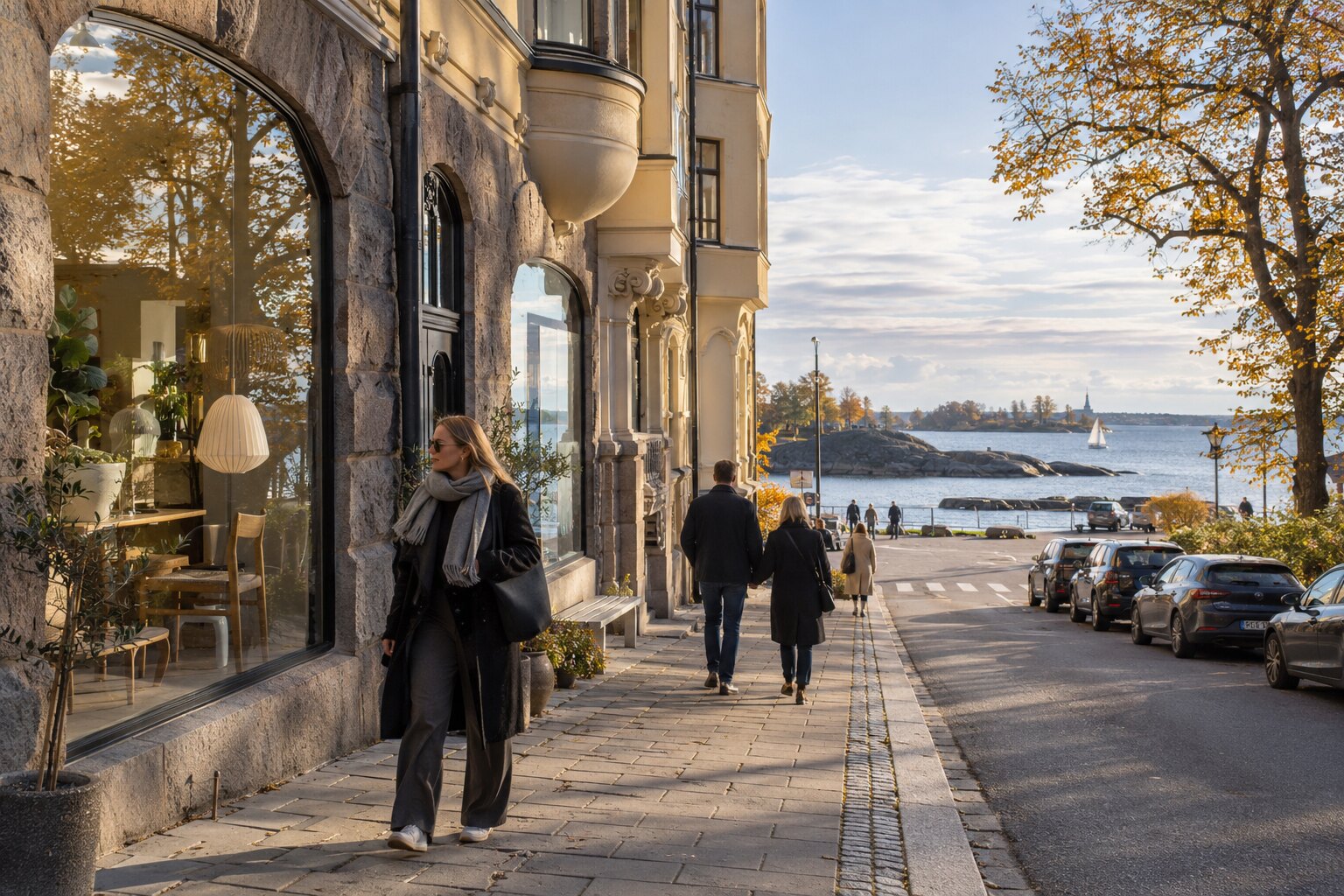
Helsinki’s southern districts offer a compact walk where Finnish design, Jugend architecture and the Baltic shore meet. This self-guided route starts near the Design Museum, crosses Punavuori and Eira, then follows the sea toward Eiranranta and Löyly. It is roughly four kilometres; allow two to three hours, more if you enter museums or stop for coffee.
Why choose this Helsinki walk?
Central Helsinki is flat, walkable and close to the water. Instead of collecting isolated landmarks, this route shows how design works at street level: shop windows, stone façades, tram streets, parks and carefully planned public space. The final waterfront section adds open horizons and an immediate sense of the city’s maritime character.
Step-by-step route from design to the sea
1. Begin around the Design Museum
Start near Korkeavuorenkatu and the Design Museum. Before moving on, circle the block and look at materials, doorways and restrained signage. The official MyHelsinki walking-route guide maps design and food stops across this part of the city.
2. Explore Punavuori at street level
Continue west through Punavuori. Small studios, second-hand design, cafés and residential courtyards are mixed into ordinary blocks. Browse selectively rather than rushing: the value of the district lies in details and in the transition between commercial streets and calm side roads.
3. Read Eira’s Jugend architecture
Turn south toward Eira, where early-20th-century villas and apartment buildings use granite, plaster, bay windows and curved forms. This is a residential neighbourhood, so photograph from public space and keep entrances clear. The slope gradually reveals glimpses of the Baltic.
4. Walk Eiranranta and the coastal path
At the shore, follow the promenade west. Granite rocks, small islands and changing light make this section feel spacious even though the centre is close. The city’s official route and map page is useful for checking outdoor options and seasonal information.
5. Finish near Löyly
End around the wooden Löyly complex at Hernesaari. You do not need a sauna booking to appreciate the waterfront architecture from public paths, but access to private terraces or sauna areas follows venue rules. From here, buses and trams connect back toward the centre; check HSL on the day of travel.
Best time, weather and seasonal choices
Late spring to early autumn gives long daylight, but wind off the sea can be cool in any season. In winter, daylight is short and pavements may be icy. Wear shoes with grip, add reflective details after dark and avoid exposed waterfront sections during severe wind. The route remains rewarding in light rain because cafés and museums offer natural pauses.
Food and responsible stops
Helsinki’s coffee culture suits a slow walk. Choose one independent café or bakery, try a cinnamon bun, and leave time to sit rather than treating every stop as a checklist. Carry a reusable bottle and respect recycling signs. MyHelsinki’s official coffee guide gives useful cultural context.
Build the rest of your trip with our Finland travel page, compare free walking tours, or add a bookable local experience.
Frequently asked questions
How long is the walk?
About four kilometres. Walking without stops takes roughly one hour, but two to three hours is more realistic.
Is the route accessible?
Most streets are paved and fairly level, but some Eira slopes, kerbs and winter ice can be challenging. Check current accessible transport information before departure.
Can I walk it in winter?
Yes, with warm layers, good grip and an early start. Skip the exposed coast during storms or dangerous ice conditions.
Do I need to book the Design Museum or Löyly?
The street route needs no booking. Museum entry and sauna sessions have their own tickets and schedules, so check official sites separately.