
Rio de Janeiro is often introduced through beaches and viewpoints, but its port district tells an essential story of the city and the Atlantic world. This self-guided Little Africa walk links Praça Mauá, Valongo Wharf, Pedra do Sal and nearby Afro-Brazilian memory sites. It should be approached as a route of learning and remembrance, not simply as a colourful photo trail.
What is Little Africa in Rio?
“Pequena África” is the name associated with the port neighbourhoods of Saúde, Gamboa and Santo Cristo, where Black communities built homes, religious networks, music and mutual support after slavery. The area is deeply connected to the African diaspora and to the development of carioca samba. Valongo Wharf, inscribed on the UNESCO World Heritage List in 2017, is the most powerful physical witness along the route.
There is no dedicated Rio city page on Best Free Tour yet, so use the site’s free walking tour hub for guided options, the AI Tour Matcher for an independent itinerary, and the experience directory for compatible cultural activities.
Self-guided Little Africa route
1. Start at Praça Mauá
Begin in daylight at Praça Mauá, the open waterfront square beside Rio’s port museums. The square helps explain how radically the harbour landscape changed, but resist rushing straight to the newest architecture. The older streets behind it hold the route’s central history.
2. Read the port landscape around MAR
Walk past the Rio Art Museum (MAR), whose exhibitions and public visits often connect art to the history of the port and Little Africa. Even if you do not enter, pause to read the relationship between the former port buildings, the square and Morro da Conceição. Check the museum’s official programme before relying on a particular tour or exhibition.
3. Valongo Wharf: a site of conscience
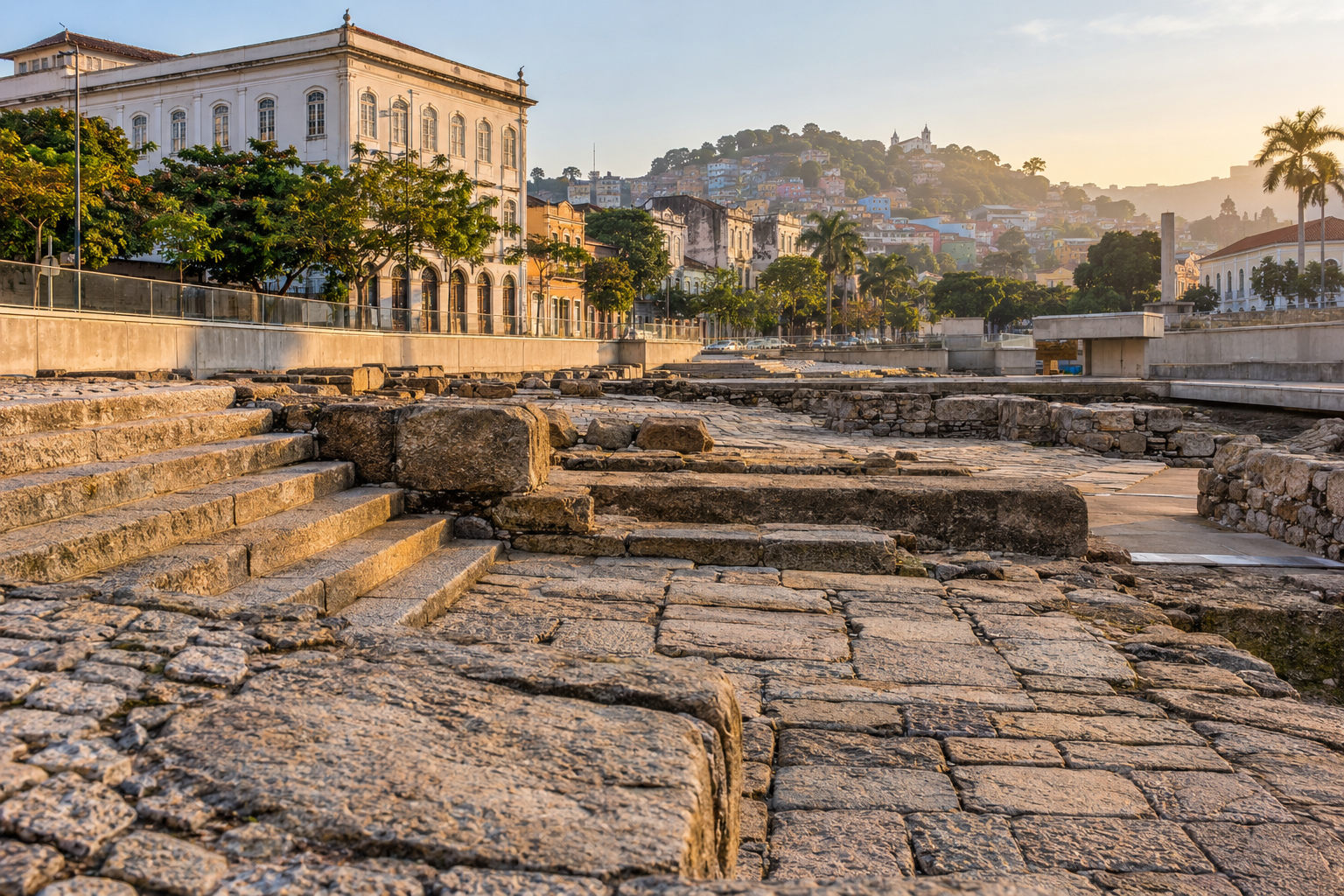
Continue to Jornal do Comércio Square and the Valongo Wharf Archaeological Site. Built from 1811 for the landing of enslaved Africans, it received an estimated 900,000 people according to UNESCO. Excavations rediscovered the site in 2011, revealing several archaeological layers, including the rough pé de moleque stone paving of the original wharf.
Move slowly, read the interpretation and avoid posing on the stones. This is an open-air memorial associated with forced migration, violence and survival. The site is free to see from the public square, but access arrangements can change during conservation work.
4. Pedra do Sal and Morro da Conceição
From Valongo, walk toward Pedra do Sal, a rock, stairway and gathering place tied to dock work, Afro-Brazilian religions, capoeira and the emergence of urban samba. Weekly music gatherings continue this living tradition, but schedules change. If you attend in the evening, go with a reputable local guide or group, watch belongings and arrange your return transport in advance.
5. Largo da Prainha and MUHCAB
Finish around Largo da Prainha, where bars and restaurants now animate the historic district. For more context, check the current programme of MUHCAB, the Museum of Afro-Brazilian History and Culture. A museum visit or a locally led Afro-tourism walk can add voices and detail that a self-guided route cannot fully provide.
Practical planning
- Distance: about 2–3 km, depending on museum detours.
- Time: 90 minutes outdoors; 3–4 hours with a museum.
- Best time: weekday morning or early afternoon for quiet observation and easier orientation.
- Cost: streets, squares and the visible archaeological site are free; museums and guided tours may charge.
- Safety: stay on active streets, avoid displaying valuables, use official transport after dark and follow current local advice.
Responsible ways to visit
Use the names communities use, do not reduce the neighbourhood to “samba nightlife,” and support Black-owned guides, cultural projects and businesses when possible. Photography may be inappropriate during ceremonies or at sensitive memorial moments; ask before photographing people. A locally led tour is especially valuable here because oral history is central to understanding the territory.
FAQ
Is Valongo Wharf free to visit?
The archaeological site can normally be viewed from the public square without a ticket. Conservation or event arrangements may affect access, so check current city information.
Is the route safe for independent visitors?
Many visitors walk the port district by day, but conditions vary by street and hour. Travel in daylight, keep valuables discreet and consider a local guide, particularly for evening samba.
When are the samba circles at Pedra do Sal?
Riotur highlights regular gatherings, especially on Monday and Friday evenings, but programmes can change because of weather, holidays or local decisions. Verify on the day.
Can children follow this route?
Yes, if the historical subject is explained age-appropriately. The route concerns enslavement and forced migration, so adults should prepare younger visitors with care.
Why this walk matters
Little Africa is not a footnote to Rio’s history. It is a territory where memory, faith, resistance, food and music remain connected. Walking from the modern waterfront to Valongo and Pedra do Sal makes the city’s celebrated culture more intelligible—and gives remembrance the time and respect it deserves.