
Bordeaux’s historic centre rewards walkers who look beyond wine. Its “Port of the Moon” is a UNESCO-listed inhabited city shaped by more than 2,000 years of exchange, with an especially coherent ensemble of 18th- and 19th-century streets and façades. This self-guided circuit links monumental squares, medieval gateways and the Garonne in about 3.6 kilometres. Allow 2½–3½ hours, longer if you climb a tower or enter museums.
Why follow the UNESCO architecture route?
UNESCO describes Bordeaux as an outstanding urban and architectural ensemble created in the Age of Enlightenment, while the tourist office marks an accessible “Port de la Lune” circuit through the centre. The route below follows that official logic but keeps the day flexible. Review the UNESCO World Heritage entry and the official accessible circuit before setting out.
Bordeaux UNESCO walk: step by step
1. Quinconces and the Grand Théâtre
Start near the Bordeaux Tourist Office at Place des Quinconces, easily reached by tram. The Monument aux Girondins rises 43 metres above the square; its fountains and sculpted groups introduce the city’s taste for theatrical public space. Continue along Cours du 30 Juillet to the Grand Théâtre. Its classical portico and twelve stone statues show how architecture was used to organise a modern city rather than decorate isolated monuments.
2. Cathedral quarter and Grosse Cloche
Turn inland through the centre toward Saint-André Cathedral and the separate Pey-Berland bell tower. If you plan to climb, check the monument’s official opening and ticket conditions that day. Continue south through pedestrian streets to Grosse Cloche, the surviving gateway of the 13th-century wall. The bell cast in 1775 weighs about 7,800 kilograms and rings only on selected dates, so enjoy the tower without expecting a performance.
This section is best walked slowly. Look above shopfront level for carved mascarons, iron balconies and the warm limestone that gives Bordeaux its visual unity. The tourist office’s UNESCO walking guide explains many of these stops.
3. Porte Cailhau and Saint-Pierre
Follow Rue Saint-James and the older lanes toward Place du Palais. Porte Cailhau, built between 1493 and 1496, combines a defensive gateway with Renaissance decoration. Entry arrangements may vary, but the exterior and square are worthwhile at any time.
Continue to the Saint-Pierre district, where lanes preserve the scale of the former port quarter. Place du Parlement, created in the 18th century, offers a useful pause before the grand riverfront. Keep café terraces clear and remember that residents still use these streets daily.
4. Place de la Bourse and Miroir d’Eau
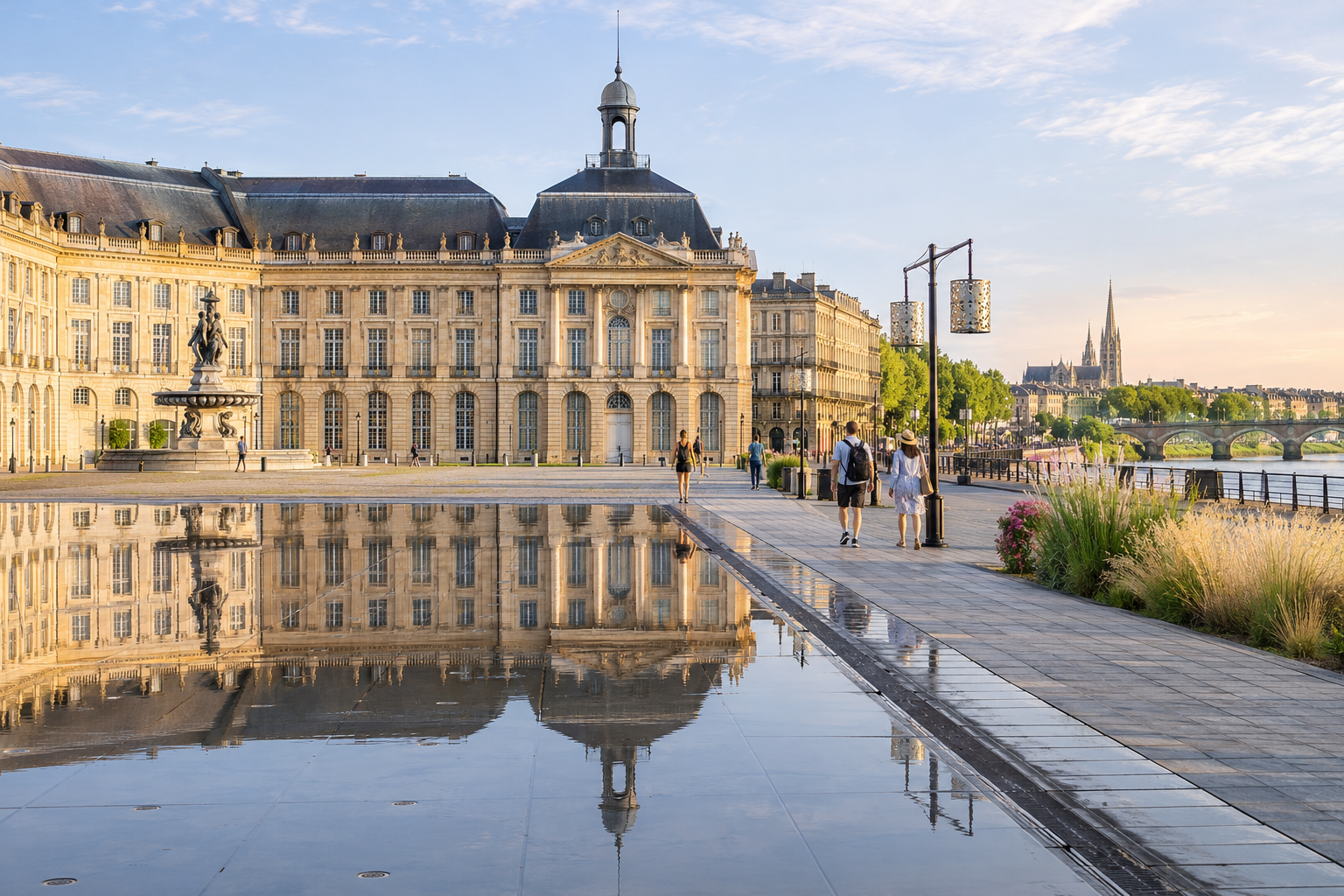
Finish at Place de la Bourse, built between 1730 and 1755 and deliberately opened toward the Garonne. The Fountain of the Three Graces stands at its centre; across the road, the Miroir d’Eau reflects the classical façades when its water cycle is operating. The installation can pause for maintenance or seasonal reasons, so treat the reflection as a bonus rather than a guarantee.
From here, walk north along the quays back toward Quinconces or continue beside the river. Bordeaux Tourism lists the square, Porte Cailhau, Grosse Cloche and cathedral among the city’s core monuments; check its official monuments directory for current visit information.
Practical planning
- Best time: early morning gives quiet squares and soft limestone light; late afternoon suits the riverfront. Summer midday can be hot.
- Transport: Quinconces is a useful tram hub. Consult the official TBM tourist map for current lines and stops.
- Accessibility: the official 3.6 km Port de la Lune circuit carries a Tourism & Handicap label, but cobbles, temporary works and café terraces may still require care.
- Water mirror: never assume it is running. Maintenance, frost or events may interrupt the cycle.
- Monuments: exterior viewing is free; towers, museums and exhibitions may have tickets or timed entry.
Continue exploring with Best Free Tour
Browse the France destination page, compare guided experiences with the Best Free Tour city finder, or explore self-guided and audio-friendly ideas. Pair this route with our Bordeaux food journey for a different intent, or continue south with the Marseille hidden gems guide.
Frequently asked questions
Is the Bordeaux UNESCO walk free?
The streets, squares and riverfront are free. Interior visits and tower climbs may charge admission.
How long does the circuit take?
Allow 2½–3½ hours for the 3.6 km route with photo stops. Add time for museums or monuments.
Is the walk accessible?
An official Tourism & Handicap-labelled circuit covers the main sights. Check the live map and allow for cobbles or temporary diversions.
Does the Miroir d’Eau run all year?
No continuous operation is guaranteed. Seasonal conditions, cleaning, maintenance and events can suspend the water cycle.