
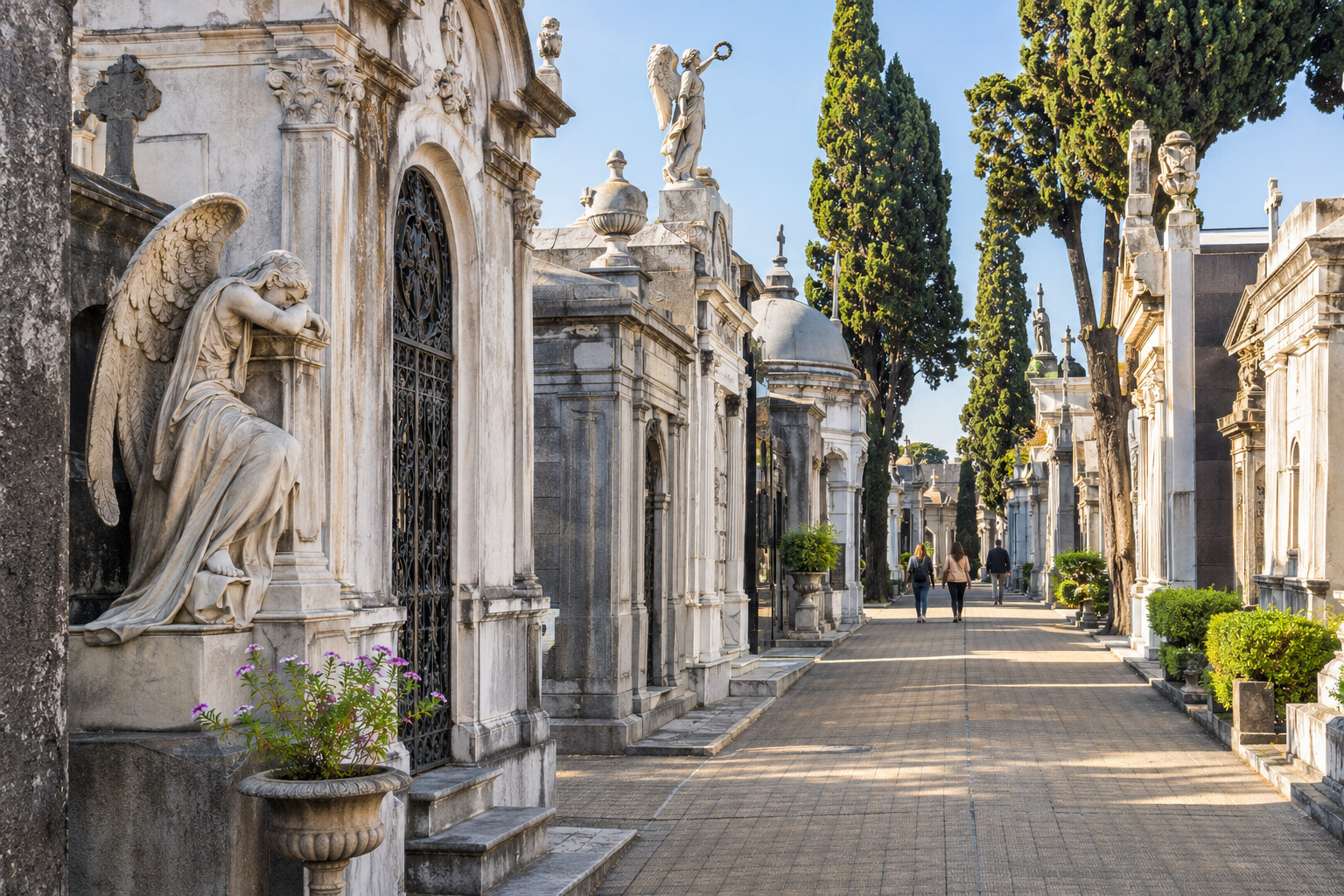
Recoleta Cemetery is often described as a city within the city: narrow lanes, marble façades, domes, chapels and sculpture create an extraordinary architectural landscape. Founded in 1822 as Buenos Aires’ first public cemetery, it now contains more than 4,500 vaults; over 90 have been declared National Historic Monuments, according to the city government.
This self-guided walk is designed for visitors who want more than a list of famous names. It explains how to read the architecture and recurring symbols while keeping the visit respectful. Allow 90 minutes inside, then add time for the basilica and surrounding neighbourhood. For wider context, pair it with our Buenos Aires historic walk or the Avenida de Mayo architecture guide.
Before you enter: practical information
- Address: Junín 1760, Recoleta, Buenos Aires
- Tourist visiting hours: the official city pages currently list daily access from 9:00 to 17:00; verify the same-day information before travelling
- Admission: conditions differ for residents and international visitors and may change; use the official tourism-visit page
- Time needed: 60–90 minutes for the core route, about two hours with careful photography
- Best approach: arrive earlier in the day, take a map if available and keep voices low
The cemetery also offers official guided visits in Spanish at published times. If you prefer a broader city introduction, compare options in our free walking tour directory.
How to read Recoleta’s architecture
A nineteenth-century city in miniature
The plan originated with French engineer Próspero Catelin. As wealthy families moved north in the late nineteenth century, the cemetery became a stage for family identity and civic ambition. Mausoleums borrow from Greek temples, Gothic chapels, Art Nouveau, Art Deco and Egyptian revival. Compare neighbouring vaults: their differences reveal changing tastes more clearly than any single monument.
Materials that communicate status
Look for Carrara-like white marble, dark granite, bronze doors, stained glass and delicate ironwork. Imported materials and commissioned sculpture expressed prestige, but weathering is equally revealing. Patina, repaired stone and empty niches show that this is a living heritage site rather than a frozen museum.
Doors, thresholds and interior glimpses
Many vaults use gates, steps and small windows to dramatise the boundary between public lane and private memorial space. Observe from the path and never touch, lean on or enter a structure. Reflections in glass sometimes reveal altars, portraits or flowers without disturbing the site.
A self-guided route through five themes
1. Begin with the main avenues
From the entrance, first walk a principal lane to understand the cemetery’s scale. Notice how domes and towers work as orientation points above the lower roofs. Use the official map or entrance information rather than trying to follow a rigid online route: maintenance work and access conditions can alter small passages.
2. Read recurring funerary symbols
Angels may suggest guidance or protection; laurel wreaths often evoke honour; inverted torches can refer to life extinguished; hourglasses and winged figures point to time and mortality. Broken columns frequently suggest a life cut short. Meanings can overlap, so treat symbols as clues—not a universal code.
3. Find contrasting styles
Choose three nearby vaults in different styles and compare their proportions, lettering, sculpture and materials. A neoclassical temple may emphasise permanence and order; a Gothic structure can create verticality and spiritual aspiration; an Art Deco façade may reduce the memorial to geometry and polished surfaces.
4. Approach famous stories without rushing
The Duarte family vault, where Eva Perón is buried, is among the most visited. The city’s official tourism site also highlights Liliana Crociati de Szaszak and David Alleno, a former cemetery worker who saved for his own tomb. Read these stories as part of Argentine social history, not as sensational legends, and allow space for mourners.
5. End at the urban edge
Before leaving, look back at the skyline of mausoleums and compare it with the apartment buildings beyond the walls. The contrast explains why Recoleta feels both enclosed and deeply connected to modern Buenos Aires.
Continue the walk in Recoleta
Basílica del Pilar and the old convent complex
Next to the cemetery, the whitewashed Basílica de Nuestra Señora del Pilar dates to 1732 and belonged to the Recollect friars who gave the neighbourhood its name. The nearby cultural centre occupies part of the former convent complex. Check opening times separately before entering religious or exhibition spaces.
Build a half-day itinerary
After the cemetery, continue toward the cultural centre, Plaza Francia and the museum district. Use our AI tour matcher to connect this self-guided visit with a compatible walking tour, or browse Buenos Aires experiences for the afternoon.
Etiquette and accessibility
Recoleta is a tourist landmark, a protected architectural ensemble and an active cemetery. Keep voices low, do not climb on monuments, avoid photographing private ceremonies and follow staff instructions. Paths include uneven paving and narrow passages; visitors with limited mobility should ask staff about the most accessible route and current closures.
Summer heat can be intense and shade is irregular. Carry water, wear sun protection and avoid the hottest part of the day when possible. Rain can make stone surfaces slippery.
FAQ: visiting Recoleta Cemetery
Is Recoleta Cemetery open every day?
The official city pages currently list tourist visits daily from 9:00 to 17:00, but hours and exceptional closures can change. Confirm before departure.
Do international visitors need a ticket?
Admission conditions differ by visitor category. Use the official city booking and information page for the current rule and price rather than relying on old articles.
How long should I spend inside?
Ninety minutes is a comfortable minimum for architecture, symbols and a few historical stories. Two hours suits slower photography and detailed reading.
Can I take photographs?
Personal photography is generally part of the visitor experience, but respect mourners, ceremonies, barriers and any current staff guidance. Avoid tripods in narrow passages.
Is a guided tour better than a self-guided visit?
A guided visit adds historical context; a self-guided walk offers more time for architecture. The official city service publishes free Spanish-language tour times, subject to availability.
Official sources checked
- Buenos Aires Tourism: Recoleta Cemetery
- Buenos Aires City: history and visitor information
- Buenos Aires City: official Recoleta neighbourhood route
- Buenos Aires Tourism: Basílica del Pilar
Information checked on 11 November 2026. Reconfirm hours, admission and access conditions on the official city pages before visiting.