
Stockholm’s metro is not simply a way to cross the city: it is a public-art network experienced one platform at a time. Region Stockholm reports that art appears in 94 of the system’s 100 stations, while the Blue Line is especially memorable for stations carved into exposed rock. This self-guided route concentrates five strong stops into a clear half-day plan, without turning the visit into a race.
The itinerary works well for first-time visitors, design lovers and rainy-day explorers. Allow about two hours for the core route, or closer to three if you pause for photographs and surface breaks. Pair it with our three-day Stockholm guide or browse the wider Sweden destination page.
Why the Stockholm metro is an art destination
Public art has been part of Stockholm’s underground story since 1957. Instead of placing a few objects in neutral spaces, many stations treat the entire cavern as a work: rock, colour, light, mosaics and archaeological references shape the passenger’s experience. According to Region Stockholm, roughly 250 artists are represented across public-transport environments.
This route follows the Blue Line because its deep “cave stations” make the connection between engineering and art easy to read. The sequence is also practical: start at Kungsträdgården, continue through the central interchange, then travel west on the branch toward Akalla.
Stockholm Metro Art Tour at a glance
- Start: Kungsträdgården station
- Finish: Hallonbergen station
- Core stops: Kungsträdgården, T-Centralen, Rådhuset, Solna Centrum, Hallonbergen
- Time: about 2–3 hours
- Ticket: a valid SL ticket or travelcard is required; check current options on the official SL fare page
- Best approach: travel outside the busiest commuter periods and keep passageways clear
Step-by-step Blue Line route
1. Kungsträdgården: archaeology beneath the park
Begin at the eastern end of the Blue Line. The station feels like an underground excavation, with fragments, columns, patterned surfaces and references to buildings that once stood above. Do not stop only at the first platform view: walk slowly toward the exits, where the changing levels reveal how the art follows the architecture.
Before descending, the surrounding park and waterfront give useful context. If you want a city overview before the underground route, compare options on our free walking tour directory.
2. T-Centralen: the calm blue heart of the network
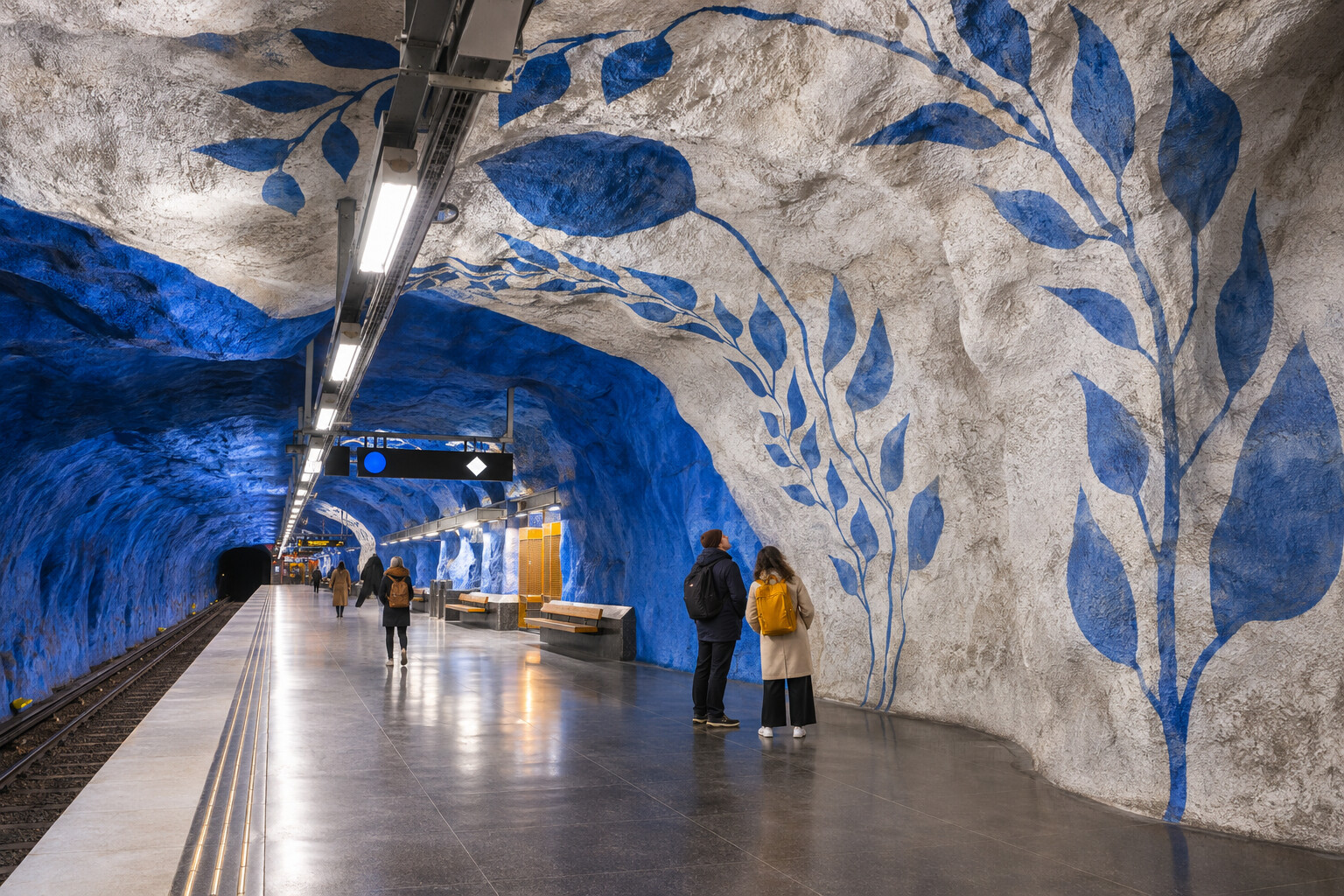
Ride one stop to T-Centralen and follow signs for the Blue Line platforms rather than the busier red and green levels. Blue-and-white organic motifs soften the raw rock, creating one of Stockholm’s most recognisable transit spaces. Notice how the decoration leads the eye along stairways and vaults rather than acting as a framed picture.
This is the busiest stop on the route. Stand well away from escalator landings, avoid tripods and wait for a quieter moment instead of blocking passengers.
3. Rådhuset: a monumental underground chamber
Continue one stop to Rådhuset. Its reddish rock and oversized architectural fragments suggest a buried civic building. The scale becomes clearer if you first look along the full platform and then examine the details near the passageways. The station demonstrates why the Blue Line is often described as an underground gallery rather than a series of decorated platforms.
4. Solna Centrum: colour, landscape and social themes
Take a train toward Akalla and get off at Solna Centrum. The intense red ceiling and green landscape imagery create a dramatic visual contrast. Look beyond the first impression: smaller scenes introduce environmental and social themes. This is a good place to slow down because the work rewards close observation.
If service changes affect the branch, use the official SL journey planner before setting out. The route is easy to shorten by returning to the centre from Solna Centrum.
5. Hallonbergen: drawings, memory and play
Continue on the same branch to Hallonbergen. The pale rock is covered with playful lines and imagery inspired by childhood drawings and notebooks. After the monumental spaces of Rådhuset and Solna Centrum, this station feels intimate and spontaneous. Finish here, then return toward T-Centralen on the same line.
How to plan the visit responsibly
Choose the right ticket
A single journey ticket is time-limited, so a travelcard may be more comfortable if you plan long stops. Ticket products and prices can change; confirm the current conditions on SL rather than relying on an old screenshot or blog post. Always validate or activate the ticket as required before entering.
Photograph without disrupting travel
Use handheld equipment, keep stairs and platform edges unobstructed, and follow staff instructions. Avoid photographing identifiable passengers without consent. The best images usually come from patient framing, wide angles and quieter moments—not from stepping into circulation routes.
Add a surface walk
For a balanced day, combine the underground route with a short walk around Kungsträdgården and the waterfront. You can also use our AI tour matcher to find a compatible guided walk, or browse Stockholm-friendly experiences for the rest of the day.
FAQ: Stockholm metro art tour
Is the Stockholm metro art free?
There is no separate museum admission, but you need a valid SL ticket to enter and travel within the metro system.
How long does the Blue Line art route take?
Allow around two hours for the five core stations. Three hours is more comfortable if you photograph carefully or take a surface break.
Can I do the route with children?
Yes, especially if you keep the visit flexible. Hallonbergen’s playful imagery can be engaging for families. Stay close together on escalators and platforms.
Is the route accessible?
Stockholm’s metro generally provides lifts, but temporary outages can occur. Check the live SL accessibility and service information before departure.
Which direction should I take after T-Centralen?
After visiting Kungsträdgården and T-Centralen, take the Blue Line west toward Akalla for Rådhuset, Solna Centrum and Hallonbergen. Confirm the train destination on the platform display.
Official sources checked
- Region Stockholm: art in public transport
- Region Stockholm: exploring art along the Blue Line
- Visit Stockholm: art in the subway
- SL: current fares and tickets
Information checked on 11 November 2026. Always review live service notices before travelling.