
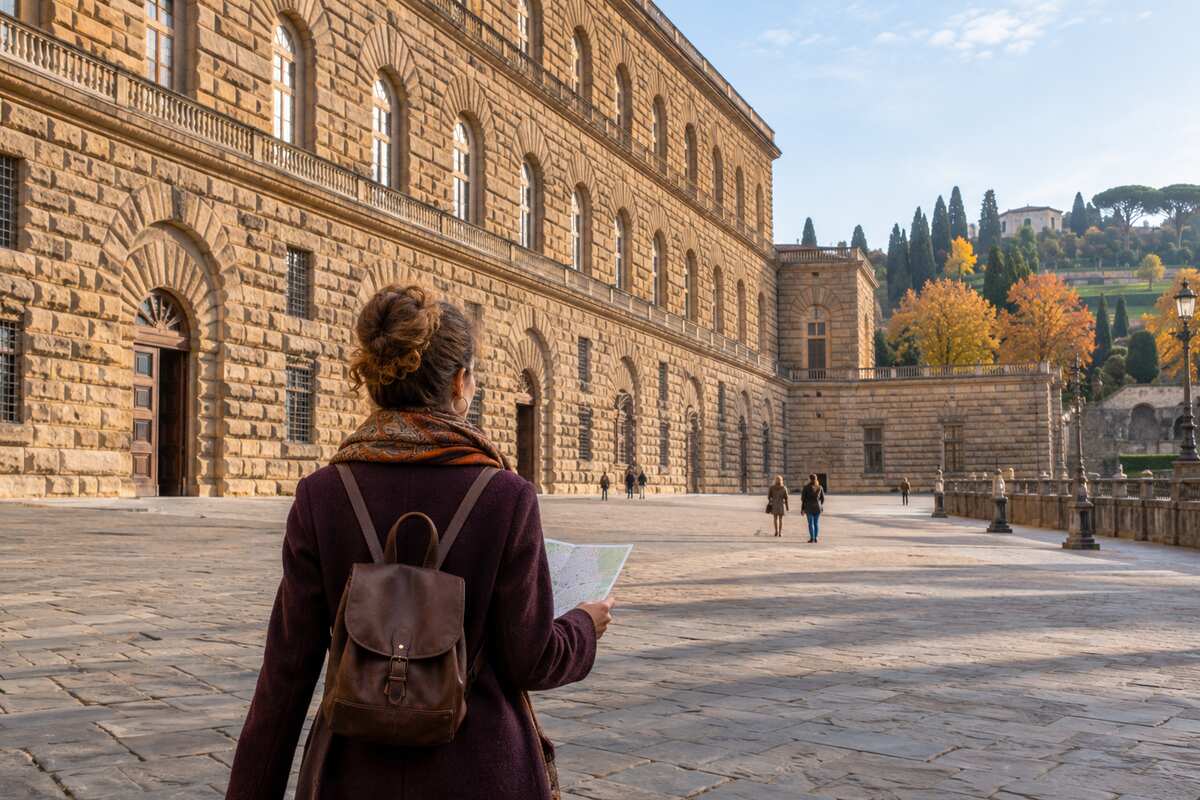
Florence is often told through Medici dukes, bankers and artists, yet several women shaped the dynasty’s culture, court and enduring relationship with the city. This self-guided walk connects places associated with Lucrezia Tornabuoni, Eleonora di Toledo and Anna Maria Luisa de’ Medici. The outdoor route is about 2.5 km and takes 75–90 minutes without entries; allow half a day if you visit the museums.
Current service note: the Uffizi Galleries posted a strike notice for 20 November 2026. If you are visiting on that date, verify the opening of state museums before setting out. Municipal museums may follow different arrangements.
Route overview
Start at Palazzo Medici Riccardi on Via Cavour, pass San Lorenzo, continue to Palazzo Vecchio and the Uffizi exterior, then cross Ponte Vecchio to Palazzo Pitti and Boboli. The route is mostly level until Boboli, where gravel and steep slopes make access more demanding.
From the first Medici palace to San Lorenzo
1. Palazzo Medici Riccardi and Lucrezia Tornabuoni
Begin at Palazzo Medici Riccardi, the family’s first great urban residence. Lucrezia Tornabuoni married Piero de’ Medici in 1444 and became the mother of Lorenzo the Magnificent. A writer, patron and political intermediary, she reminds visitors that influence in Renaissance Florence did not always come with an official title.
The museum currently lists opening hours of 9:00–19:00, closed Wednesday, with last admission at 18:00. The ticket includes the Chapel of the Magi; capacity inside the chapel is limited. Most rooms are accessible, while wheelchair access to the chapel uses a special platform and has size limits.
2. San Lorenzo and the dynastic memory
Walk five minutes to Piazza San Lorenzo. The basilica and Medici Chapels form the dynasty’s principal memorial complex. Even without entering, the square is a useful pause to distinguish the family’s public religious identity from the private household life of nearby Via Larga. Check the official museum listing before planning an interior visit, because state-site hours can change.
Eleonora’s court in the civic centre
3. Palazzo Vecchio and Eleonora di Toledo
Continue along Via de’ Calzaiuoli to Palazzo Vecchio. During the sixteenth century it became the residence of Duke Cosimo I, Eleonora di Toledo and their children. Eleonora’s apartments on the second floor make her role visible through rooms designed around female virtue, family continuity and ducal authority.
Palazzo Vecchio currently lists 9:00–19:00 daily, except Thursday 9:00–14:00; the ticket office closes one hour earlier. Allow at least 60–90 minutes for the museum. The official inclusive guide is useful for planning lifts and accessible sections.
4. The Uffizi and Anna Maria Luisa’s legacy
Cross Piazza della Signoria and walk through the Uffizi courtyard. Anna Maria Luisa, the last Medici descendant, signed the 1737 Family Pact that bound the family collections to Florence. The Galleries credit that decision with preserving the core of the art now displayed in the Uffizi, Pitti Palace and Boboli. You do not need a museum ticket to walk through the exterior courtyard.
Across the Arno to Pitti and Boboli
5. Palazzo Pitti: a palace chosen by Eleonora
Cross Ponte Vecchio and follow Via de’ Guicciardini to Palazzo Pitti. The Uffizi Galleries explain that Eleonora purchased the palace in 1549 and transformed it into a ceremonial residence suited to the new grand-ducal court. Anna Maria Luisa later lived here again from 1717.
6. Boboli Gardens: landscape as power
Finish in the Boboli Gardens, begun in 1549 for Eleonora and designed first by Tribolo. In November the official hours are 8:15–16:30, with last admission one hour before closing; the first and last Monday of each month and 25 December are closing days. Weather can cause temporary closures. The accessible entrances are from Pitti Square and Porta Romana, but the garden is steep, largely gravelled and requires an accompanying person for accessible visits.
For more planning, open the Florence city and free-tour page, compare free walking tours, use the matcher for an independent audio guide, or browse compatible experiences.
Practical choices
- Free version: follow the exteriors and public squares only.
- One paid stop: choose Palazzo Vecchio for Eleonora’s apartments or Pitti–Boboli for her court landscape.
- Best timing: start after 9:00 and reach Boboli well before its seasonal last admission.
- Accessibility: the city-centre route is largely flat, but paving is uneven and Boboli is the challenging section.
FAQ
How long is the Medici women walk?
The outdoor route is about 2.5 km. Allow 75–90 minutes without museum entries or four to five hours with two substantial visits.
Can I do the route for free?
Yes. Every stop can be understood from public streets and squares. Museum interiors require separate tickets.
Which museum best fits the theme?
Palazzo Vecchio gives the clearest view of Eleonora’s court. Palazzo Pitti and Boboli show how she reshaped the ducal residence and landscape.
Is advance booking essential?
Not for the outdoor route. For museums, booking is sensible at weekends and in peak seasons; always use the official ticket links and check same-day notices.