
Orvieto appears suddenly above the Umbrian countryside, balanced on a volcanic tuff cliff. Arriving by train makes the geography part of the experience: the funicular climbs from Orvieto Scalo to Piazza Cahen, where the historic centre begins. This route combines engineering, medieval streets, the cathedral and the quieter western quarter without turning the day into a checklist.
A one-day walking route through Orvieto
1. Funicular to Piazza Cahen
From the railway station, cross to the funicular and ride up to Piazza Cahen. Check current service information locally, because operating arrangements can change. Before heading toward the centre, step into the Rocca Albornoz gardens for a first view over the valley.
2. Descend into Saint Patrick’s Well
The Pozzo di San Patrizio was commissioned after the Sack of Rome to secure water during a siege. Its two spiral stairways were designed so descending and ascending traffic would not meet. The interior is damp, cool and physically demanding; allow time for the steps, wear shoes with grip and skip the descent if mobility or vertigo is a concern.
3. Corso Cavour and the first glimpse of the Duomo
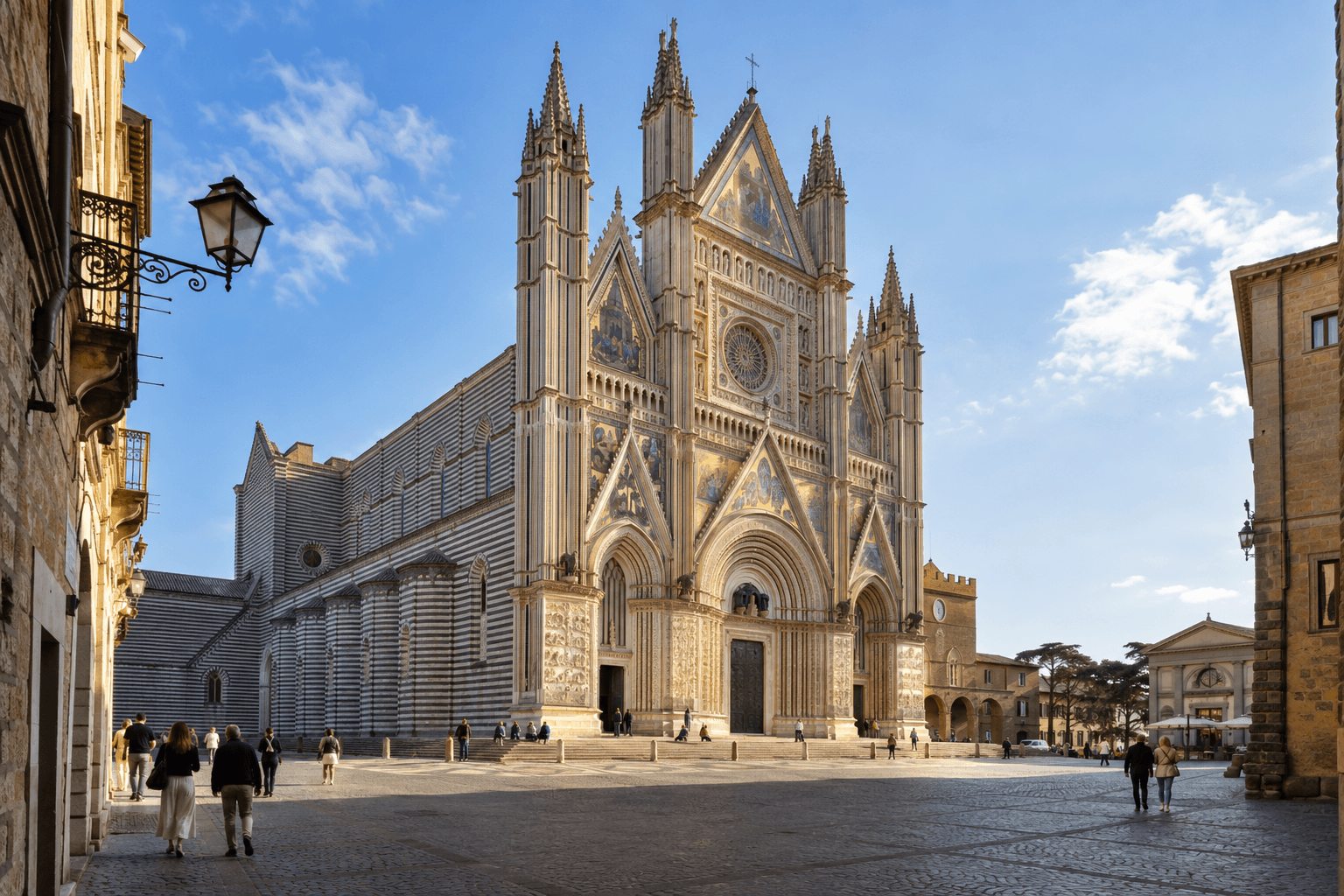
Follow Corso Cavour rather than rushing. Small squares, workshops and stone façades prepare the reveal of Piazza del Duomo. The cathedral front is extraordinarily detailed, but the best first view comes from slightly back and to one side, where the mosaics, sculpture and striped walls can be read together.
Inside, give priority to the Cappella di San Brizio if it is open to visitors. Respect services and dress requirements, and consult the cathedral or museum’s current access information before travelling.
4. Lunch with Umbrian character
Choose a focused lunch: umbrichelli pasta, wild boar, local pulses or a board with pecorino and cured meats. Orvieto Classico belongs to the surrounding landscape, but water and a lighter meal make the remaining hills easier. Avoid restaurants that promise every regional speciality at once.
5. Medieval quarter and cliff-edge views
Continue toward Piazza della Repubblica and Torre del Moro, then drift west into the medieval quarter. Via della Cava and the lanes around San Giovenale feel more residential than Piazza del Duomo. Finish at a panoramic edge of the plateau, where the roofs and countryside explain the city’s defensive position.
6. Add the underground city only with enough time
Orvieto’s caves and tunnels reveal wells, quarries and working spaces cut into the tuff. Visits are guided and scheduled, so book or verify departure times rather than assuming continuous entry. If you have only four hours, choose either the underground tour or a complete cathedral visit, not both.
Timing and practical choices
Allow five to six hours for the full walk with two interiors. A shorter visit can link the well, cathedral and medieval quarter in about four hours. The centre is compact but uneven, with slopes, cobbles and many steps. The funicular reduces the main climb; it does not make every attraction step-free.
Make the route yours
Architecture lovers can spend longer at the Duomo; families may prefer the Rocca gardens and selected underground spaces; photographers should save the cliff edge for later light. Compare suitable walking routes with the AI Tour Matcher, browse free walking tours, and add a local activity from our experiences. An autonomous audio guide is useful between timed visits.
Frequently asked questions
Can Orvieto be visited as a day trip?
Yes. It is well suited to a day trip, but reserve timed attractions and avoid packing every underground site into one visit.
Is Saint Patrick’s Well difficult?
The stairs are numerous and the environment can be damp. Wear secure footwear and assess mobility before entering.
Do I need a car?
No. The railway station and funicular make the historic centre accessible without a car, while the main sights are walkable.
Official sources checked
Live Orvieto, the municipality’s official tourism portal, its pages for Saint Patrick’s Well and Orvieto Underground. Confirm live opening and transport details before departure.