
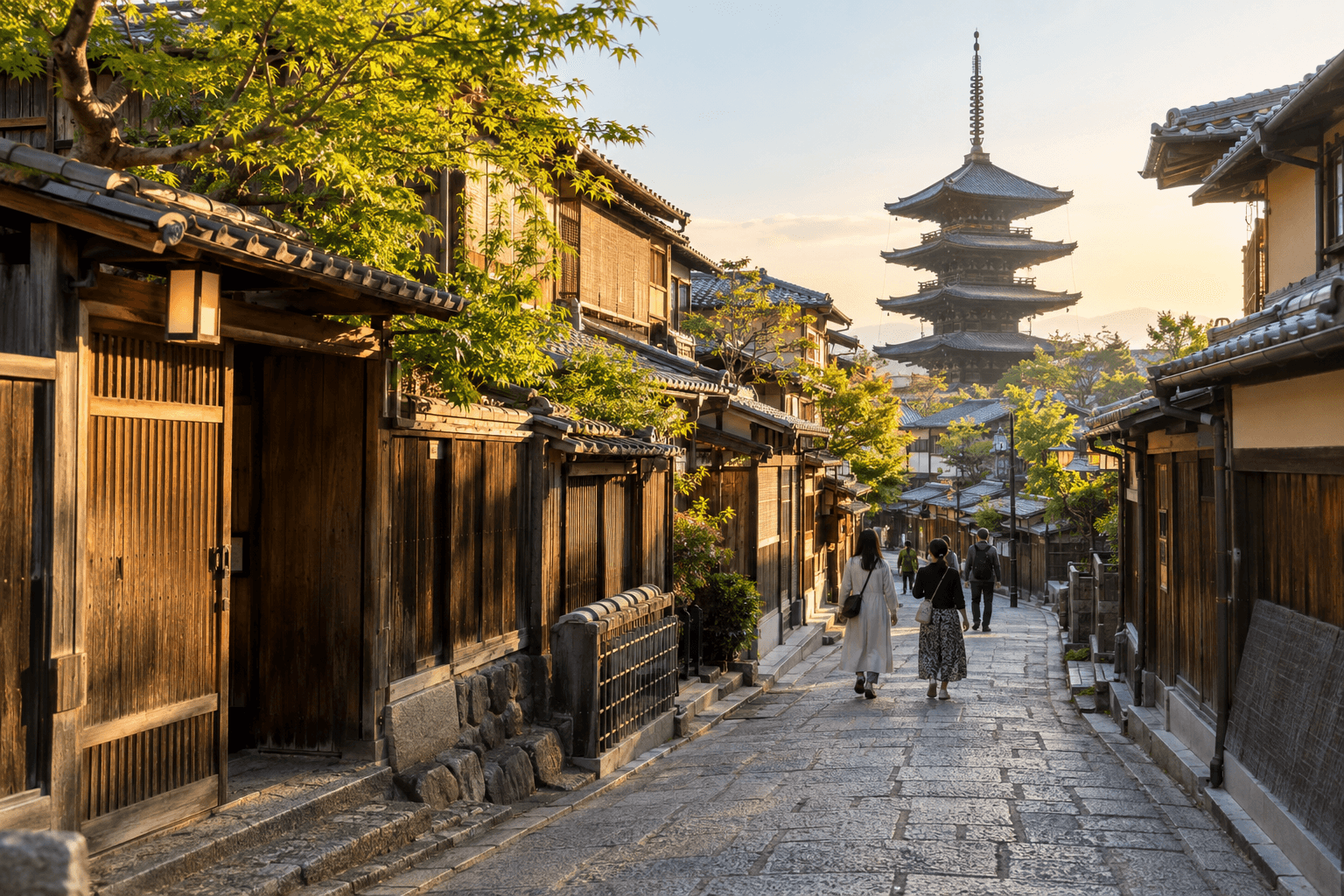
Kyoto rewards an early start, but this route is not a race between temples. It is a two-part day designed around the way the eastern side of the city actually feels: stone lanes waking up around Kiyomizu in the morning, Gion settling into its daily rhythm, and a quieter afternoon beside the canal on the Philosopher’s Path.
A Kyoto walking day in two chapters
Start near Kiyomizu-dera before the busiest visitor wave. From the temple area, descend through Sannenzaka and Ninenzaka rather than following the quickest road. Wooden façades, small workshops and glimpses of Yasaka Pagoda make this stretch memorable, but the lanes are lived-in spaces as well as a postcard view.
Morning: Kiyomizu to Gion
Continue towards Yasaka Shrine and Maruyama Park. The transition is gradual: souvenir shops give way to temple grounds, then to the wider streets around Gion. Kennin-ji is a useful quiet pause before Hanami-koji. In Gion, photograph architecture rather than people; images of maiko or geiko should never be taken without permission, and private lanes must remain private.
For lunch, look for a small restaurant serving obanzai, Kyoto’s home-style selection of seasonal dishes, or try yudofu, gently simmered tofu associated with the city’s temple cuisine. Nishin soba, topped with sweet-simmered herring, is another distinctly local option. Reservations are sensible for tiny dining rooms.
Afternoon: Keage to the Philosopher’s Path
Do not force the entire eastern district into one continuous walk. Take the subway or a short public-transport connection towards Keage. From there, the brick incline and Nanzen-ji create a natural second beginning. Walk north along the canal towards Eikan-do and the Philosopher’s Path, finishing near Ginkaku-ji. The official Kyoto guide recommends rail-and-bus combinations because direct buses from Kyoto Station often cross congested central streets.
Timing, transport and crowd strategy
Allow roughly three hours for the Kiyomizu–Gion section, lunch included, and another two to three hours for Keage, Nanzen-ji and the canal path. Temple opening hours and paid areas vary, so check each official site on the morning of your visit. Kyoto’s official congestion forecast uses live information and predicted comfort levels; consulting it can be more useful than rigidly following a saved itinerary.
Travel light. Large luggage slows crowded buses and is awkward on stepped lanes. The city promotes hands-free sightseeing through station lockers and delivery services. Comfortable shoes matter more than ambitious mileage.
Respecting the city while you explore
Kyoto’s beauty depends on ordinary neighbourhood life. Keep voices low near homes, do not block doorways, avoid eating while walking in sensitive market areas, and never enter a street marked private. At shrines and temples, follow posted photography rules. These small choices make the walk more pleasant for residents and visitors alike.
Build the rest of your Kyoto stay
Use the AI Tour Matcher to shape the day around your interests, compare guided options from the free walking tour directory, or add a workshop and local activity from our experiences.
Frequently asked questions
Can I walk from Kiyomizu to the Philosopher’s Path?
Yes, but it makes a long day and encourages rushing. Splitting the route with a subway or bus connection near Keage gives both areas enough time.
What is the best time to visit Gion?
Early morning is calmer for architecture; early evening is atmospheric but busier. In every case, respect privacy and local photography restrictions.
Is the route suitable in rainy weather?
Yes, with grippy shoes. Stone steps can become slippery, while covered temple areas and cafés provide useful breaks.
Sources checked: Kyoto City Official Travel Guide pages for Gion & Kiyomizu, Philosopher’s Path & Okazaki, comfortable access, congestion forecasts and sightseeing guidelines.