
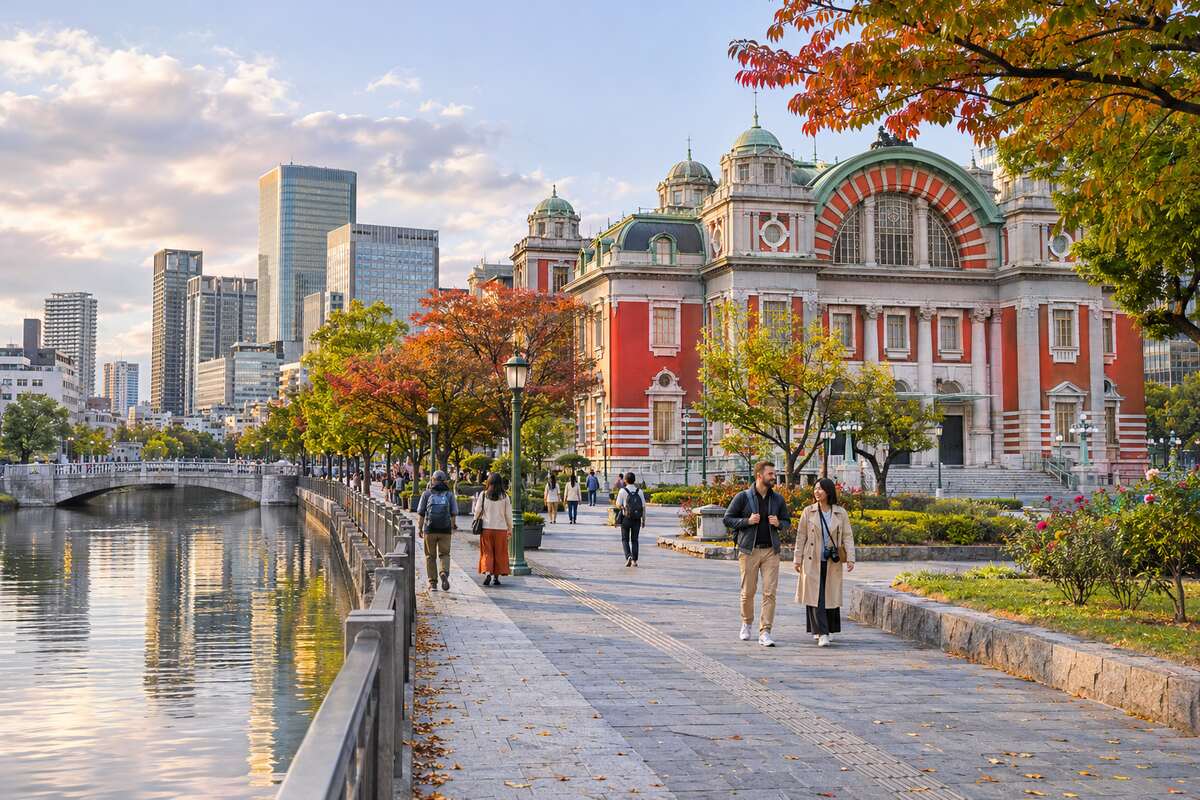
Osaka is often introduced through food streets and neon, but Nakanoshima reveals a quieter identity shaped by rivers, civic architecture and modern art. This self-guided walk follows the island between the Dojima and Tosabori rivers, linking a rose garden, the red-brick Central Public Hall and contemporary museum architecture. It is a useful half-day route for travellers who want space, design and a different view of the city.
Nakanoshima walk at a glance
- Start: Kitahama or Naniwabashi station
- Finish: Nakanoshima Museum of Art, then Higobashi or Watanabebashi station
- Distance: about 3 km, excluding museum visits
- Allow: 2–4 hours
- Best time: morning for softer light; late afternoon for river reflections
The outdoor route is free and mostly level. Exhibition tickets and building access cost extra or depend on events. Osaka’s official tourism site notes that Nakanoshima is a short walk from Yodoyabashi and Kitahama and has served as a cultural, administrative and economic centre since the Edo period.
1. Begin at Naniwa Bridge and the eastern park
Start near Kitahama and cross toward Naniwa Bridge, whose stone lions frame views over the eastern end of Nakanoshima. From here, enter the park and orient yourself between two waterways. The island’s shape makes navigation simple: the walk continues west while bridges and skyline views change on both sides.
Rose season without making it a requirement
The official Nakanoshima Park guide describes a 1.5-kilometre urban park created in 1891, with thousands of rose bushes that peak in spring and autumn. Outside bloom periods, the riverside paths, lawns and historic buildings still make the route worthwhile.
2. Read the Central Public Hall from the river
Continue to Osaka City Central Public Hall, completed in 1918. Its red-brick neo-Renaissance exterior is one of the island’s defining images. According to the official visitor page, the building is a nationally designated Important Cultural Property; interior access depends on events, while the basement exhibition room is generally free.
Compare civic architecture, not just façades
Walk around the hall before continuing. Nearby, the Nakanoshima Library and Museum of Oriental Ceramics show how different public institutions gathered on the island. Check individual official sites for temporary closures rather than assuming every interior is open.
3. Follow the waterside promenade west
From the civic buildings, keep the river close and continue along the greenway. Office towers rise behind older architecture, creating the contrast that makes Nakanoshima distinctive. Benches and lawns invite a pause, but stay clear of bicycle lines and event equipment.
If you prefer spoken context on your own schedule, begin with a standalone self-guided audio experience. For more Japan inspiration, pair this route with our Yanaka and Nezu walk in old Tokyo.
4. End with contemporary art architecture
The western cultural cluster changes scale. The black cubic form of the Nakanoshima Museum of Art opened in 2022 and uses the idea of a public “passage” through the building. The official museum overview lists modern and contemporary art and design as its core, with hours and prices varying by exhibition.
Even without a ticket, the exterior, public approach and nearby river setting complete the architectural story. Finish at Higobashi or Watanabebashi station, or continue toward Umeda if you still have energy.
How to connect this walk with tours and experiences
Nakanoshima works well as an independent route, but a local guide can add context about Osaka’s river trade, civic patrons and modern development. Compare currently available free walking tours and confirm departure details on the booking page. Browse more routes in the travel guide archive, or share a genuine visit through the traveller experience page.
Frequently asked questions
Is Nakanoshima Park free?
Yes. The park, promenade and rose garden are free to enter. Museums, special exhibitions and some interiors may charge admission.
When do the roses bloom?
Spring and autumn are the main seasons, with conditions varying by year. The park remains useful for architecture and river views even without flowers.
Can I do the route in the rain?
Yes, but riverside paving and bridge approaches may be slippery. Use waterproof shoes and treat museums or cafés as optional sheltered stops.
Is the walk suitable for a first visit to Osaka?
Yes, especially if you want a calm counterpoint to Dotonbori and the busiest shopping districts. Combine it with a central food area later in the day.