
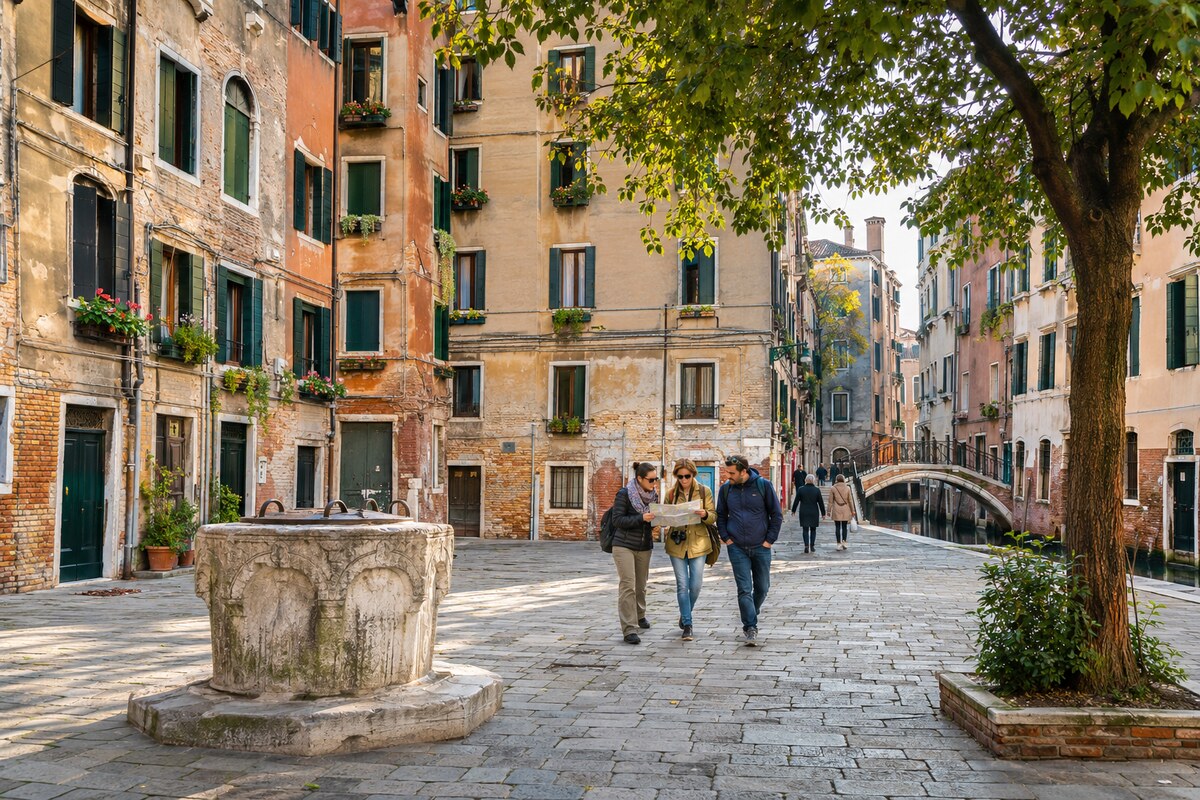
Venice’s Jewish Ghetto is both a historic place and the centre of a living community. A thoughtful visit therefore needs more than a list of sights: it needs time, context and respect for religious life. This half-day walk begins near Ponte delle Guglie, crosses the Ghetto Vecchio and Ghetto Nuovo, then continues along the quieter canals of Cannaregio. The outdoor route is free; synagogue and museum access follows a separate calendar.
Why this area matters
On 29 March 1516, the Venetian Republic ordered Jewish residents to live in a confined area of Cannaregio. Official Venetian sources describe it as Europe’s oldest Jewish quarter and connect the word “ghetto” with the local term gèto, referring to metal casting in the former foundry district. The quarter later brought together Italian, Ashkenazi, Levantine and Sephardic traditions.
Today the Jewish Community of Venice maintains religious, educational and cultural life here. The five historic synagogues and the Jewish Museum form its monumental core, but the neighbourhood is not an open-air museum. Homes, schools, places of worship and businesses remain part of everyday life.
Route at a glance
- Distance: roughly 3–4 km, depending on the Cannaregio extension.
- Time: 2 hours outdoors; 3–4 hours with a booked synagogue or museum visit.
- Difficulty: easy, with many bridges and occasional steps.
- Start: Ponte delle Guglie, about 15 minutes on foot from Santa Lucia station.
- Finish: Fondamenta della Misericordia or Campo Santi Apostoli.
A respectful walking route
1. Approach via Ponte delle Guglie
From the railway station, follow Lista di Spagna and cross Ponte delle Guglie over the Cannaregio Canal. The entrance towards the Ghetto is easy to miss among ordinary streets, which is useful: it prepares you to notice urban details rather than search for a monumental gateway.
2. Enter Ghetto Vecchio and Campiello delle Scuole
Despite its name, Ghetto Vecchio was incorporated into the restricted quarter after Ghetto Nuovo. Around Campiello delle Scuole stand the Levantine and Spanish synagogues, associated with Sephardic communities. Their façades blend into surrounding buildings. Interior visits are normally controlled and may require a ticket, a guide or advance booking.
3. Cross into Campo del Ghetto Nuovo
Pass over the small bridge into Campo del Ghetto Nuovo. The tall houses are the first feature to read: limited space pushed construction upward, creating an unusual Venetian skyline. Look for the old wellheads and the upper-floor locations of the German, Canton and Italian synagogues. Their discreet exteriors reflect both space constraints and the historical conditions imposed on the community.
4. Pause at the memorials
The campo also contains memorial works dedicated to the Shoah and to Venetian Jews deported during the Nazi occupation. Stop quietly, read the inscriptions and avoid treating the plaques as a photo backdrop. This is the most important moment to connect the long history of the Ghetto with the violence of the 20th century.
5. Visit the museum and synagogues thoughtfully
The renewed Jewish Museum presents the history and diversity of Jewish Venice. Access to synagogues is tied to religious needs, security and the museum calendar. Places may close on Saturdays, Jewish holidays or at short notice. Check the official Jewish Museum website and book the specific experience you want rather than assuming every synagogue is open.
6. Continue along Fondamenta degli Ormesini
Leave the campo via Ponte del Ghetto Nuovo and walk along Fondamenta degli Ormesini. This is a lived-in canal edge with cafés, small shops and residents’ doorways. Keep to one side on narrow passages and do not block bridges. The route then continues naturally towards Fondamenta della Misericordia.
7. Extend to Madonna dell’Orto
If you have another 30–45 minutes, detour to the church of Madonna dell’Orto and the northern edge of Cannaregio. The quieter canals show a different Venice from the San Marco–Rialto axis. Church opening and dress rules are separate from the Jewish sites, so check locally before entering.
Practical and respectful planning
Choose the right day
Sunday to Thursday generally offers the widest range of cultural visits, but schedules change. Friday hours may be shorter and Saturday is Shabbat. Religious holidays can affect access even when the public streets remain open. Consult the official calendar shortly before travelling.
Photography and behaviour
Photography may be restricted inside synagogues and security areas. Follow staff instructions, silence your phone and dress with the same care you would use in any active place of worship. Never photograph people at prayer without explicit consent.
Accessibility
Campo del Ghetto Nuovo and the fondamenta are mostly level, but bridges create barriers for wheelchairs and pushchairs. Museum accessibility has improved with the renovation, yet the historic synagogues occupy upper floors in old buildings. Ask the museum in advance which spaces are accessible on your chosen date.
Food and local businesses
Kosher bakeries and restaurants are part of community life, not themed attractions. Check certification and opening times directly, especially before Shabbat and holidays. A purchase can support local businesses, but avoid crowding doorways or photographing staff without permission.
Connect this walk with the rest of Venice
For a city introduction, see the Venice free walking tour. Continue planning with our Venice overview and essential Venice sights, or compare more free walking tours and compatible experiences. An independent audio guide, where available, is useful for the outdoor history, while synagogue visits should follow the official community programme.
Frequently asked questions
Is the Venice Jewish Ghetto free to visit?
Yes. The public streets, bridges and Campo del Ghetto Nuovo are free. The Jewish Museum, synagogue tours and special visits require tickets.
Can I enter the synagogues without a guide?
Access varies. Some visits are included in museum programmes or guided tours, while others require advance arrangements. Check the official booking calendar.
Is the Ghetto open on Saturday?
The public neighbourhood remains accessible, but the museum, synagogues and many community businesses normally observe Shabbat. Plan an outdoor-only visit or choose another day.
How long should I allow?
Two hours is enough for a respectful outdoor walk. Allow three to four hours if you add the museum, synagogues and the Cannaregio extension.
Is it appropriate to visit with children?
Yes. Explain beforehand that this is an active community and a place of memory. Keep voices low at memorials and watch children closely near canals.
Discover Cannaregio with context and care. Use an independent audio guide for the outdoor route, then choose an official community visit, a free walking tour or a compatible Venice experience.