
Welcome to the Trevi Fountain Complete Guide, your easy and friendly look at one of Rome’s most loved spots. Whether you’re planning a trip or just curious, this article walks you through who built it, why it exists, the artists and architects behind it, how the work unfolded, and what every statue really means. Moreover, you’ll find some fun details and practical tips that help you enjoy the fountain even more.
A Long History Before the Famous Fountain
The story of the Trevi Fountain starts long before the grand monument we see today. Way back in ancient times, around 19 BC, the Aqua Virgo aqueduct brought fresh water into Rome under the direction of Marcus Agrippa. As a result, a simpler fountain marked the end of that water line at the meeting point of three streets (that’s where the name “Trevi” comes from). Over the centuries, however, several popes wanted something more impressive. In the 1600s Gian Lorenzo Bernini even sketched ideas, yet the full project waited until the 1700s.
Who Designed It and How the Work Happened
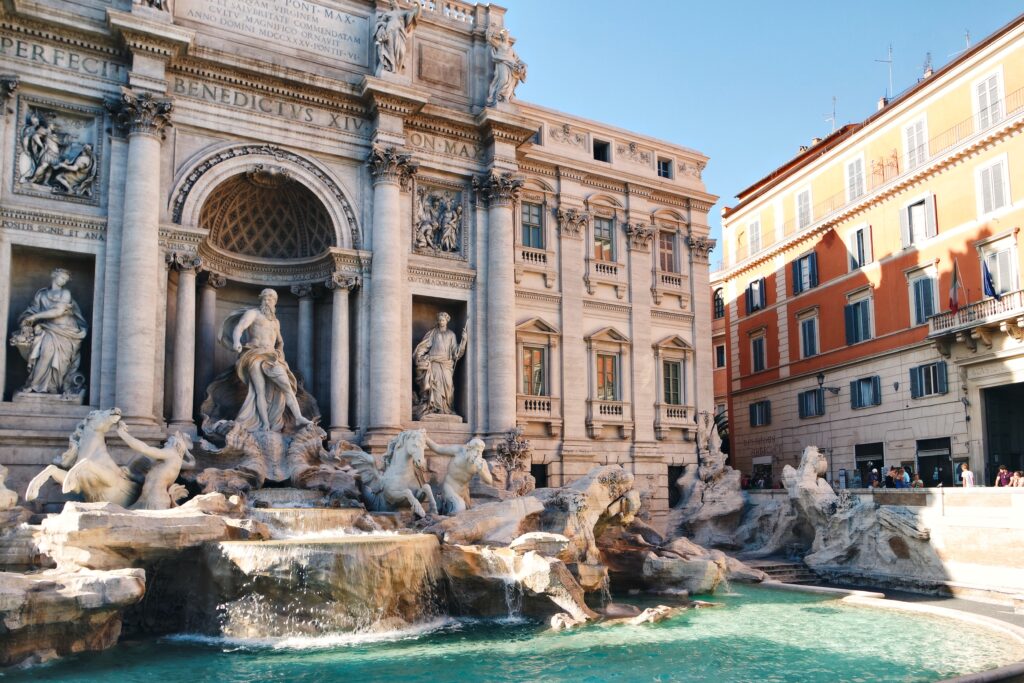
Pope Clement XII launched a design contest in 1730. A Florentine architect first won, yet Romans preferred one of their own, so the job went to Nicola Salvi. Work on the Trevi Fountain Complete Guide’s main subject began in 1732. Salvi cleverly built the fountain right against the back of Palazzo Poli, turning the palace wall into a dramatic stage. In addition, he used mostly travertine stone from nearby Tivoli. Progress was slow because of money issues, arguments among the artists, and Salvi’s own declining health. Consequently, he died in 1751 before finishing. Giuseppe Pannini then took over as architect, and a team of sculptors completed the statues. Finally, the fountain was inaugurated on 22 May 1762 by Pope Clement XIII.
Why the Fountain Was Built
Why build such a huge, expensive fountain? It celebrated the pure water of the Aqua Virgo and showed papal power and generosity. At the same time, it created a beautiful public space that still draws millions of visitors every year. Furthermore, the whole design mixes architecture and sculpture so the water itself becomes part of the art — rocks, waves, and figures all work together.
Trevi Fountain Guide: The Meaning of Every Important Statue
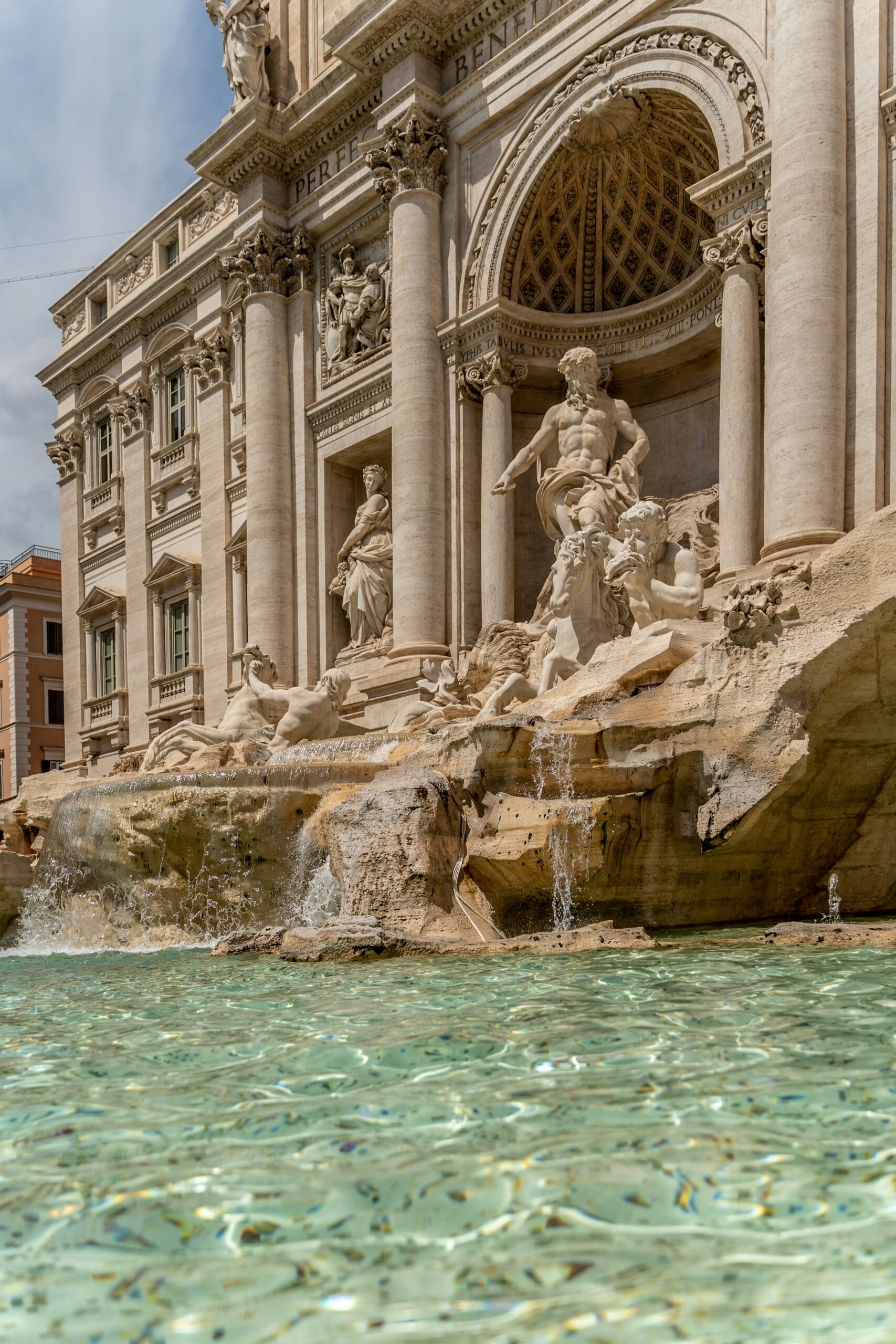
Now let’s look at the statues, because they tell the real story. Right in the middle stands Oceanus (often mistaken for Neptune), the powerful god of all waters. Pietro Bracci sculpted this muscular figure standing on a shell-shaped chariot. Two tritons guide the sea horses that pull him: one horse is wild and rearing, the other calm and steady. Together they show the two faces of the sea — stormy and peaceful. This central group is the heart of the whole scene.
On either side of Oceanus, in the smaller niches, you find two elegant female figures by Filippo della Valle. To the left is Abundance (or Abbondanza). She holds a cornucopia full of fruit and has an overturned jug at her feet, reminding us that the aqueduct brings plenty of water and food. To the right stands Salubrity (or Health). She wears a laurel wreath and holds a cup from which a snake drinks — an ancient symbol of healing and pure water. These two statues make the message clear: the fountain’s water means both wealth and good health.
Higher up, bas-reliefs tell the origin story of the aqueduct. One shows Agrippa ordering the works, while another depicts a young virgin pointing out the water source (the legend that gave the aqueduct its name). At the very top, four allegorical statues represent the seasons or the earth’s bounty that water makes possible, and the coat of arms of Pope Clement XII sits proudly above everything. In short, every figure has a clear meaning connected to water, abundance, and health.
Useful Links and Tips for Your Visit Rome, our Trevi Fountain Guide
If you want to dive deeper into the official history, check the detailed page on Wikipedia. For a clear overview of the design and meaning, the Britannica entry is excellent. You can also read a lively article about the construction and artists on The Collector, and for more statue explanations visit Romewise.
Of course, the best way to experience it is in person. When you visit Rome, join a free walking tour that includes this landmark — you can find great options right here on www.bestfreetour.com. Standing in front of the flowing water, hearing the splash, and maybe tossing a coin over your shoulder (one coin for a return trip to Rome, according to tradition) makes the history come alive.
In the end, the Trevi Fountain Complete Guide shows us more than just a pretty landmark. It is a celebration of water, art, and the long story of a city that never stops reinventing itself. Next time you see photos of Oceanus riding through the rocks, you’ll know the names of the people who created him, the reasons the fountain exists, and the quiet messages carved into every statue. That knowledge turns a simple visit into something much richer — and who knows, it might even bring you back to Rome someday.