
Introduction
When walking through the historic center of Rome, not all stories are carved in perfect marble. Some are born from irony, mockery, and the voice of the people. One of the most curious examples is The Talking Baboon Rome, a statue so ugly that it became immortal. During a stroll through Via del Babbuino, this strange figure tells a story of satire, protest, and popular power that still fascinates visitors today.
The Talking Baboon Rome: origins of a legendary statue
A hidden story in historic Rome
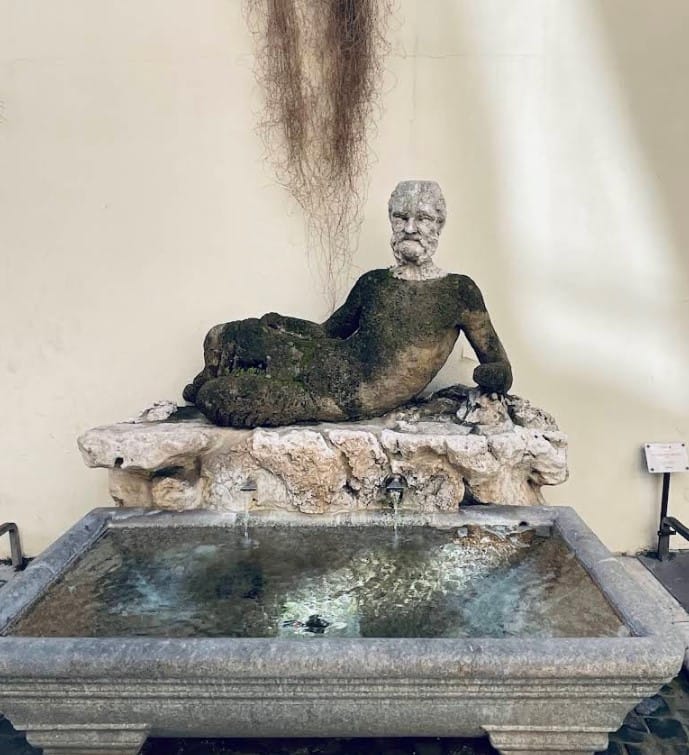
To begin with, in 1576, the Roman nobleman Alessandro Grandi placed a statue in front of his palace on what was then called Via della Clementina. The sculpture represented a Sileno, a mythological companion of Dionysus, traditionally shown as old, wise, and physically grotesque.
However, instead of admiration, the statue provoked laughter. Its exaggerated features and ruined appearance reminded Romans of a monkey. As a result, the people quickly renamed it Il Babbuino — “the baboon.” From that moment on, The Talking Baboon Rome became part of everyday Roman life.
Why Via del Babbuino changed its name
Popular Rome history shaped by satire
Over time, the nickname became so widespread that the original street name disappeared. Eventually, Via della Clementina officially became Via del Babbuino. This is one of the rare cases in European history where popular mockery changed the name of a street.
Consequently, the statue stopped being just an object and turned into a symbol. The Talking Baboon Rome proved that in Rome, the people always have the last word.
The Talking Baboon Rome and the Talking Statues tradition
Political satire in historic Rome
During the 17th century, the Baboon joined Rome’s famous Talking Statues, alongside Pasquino, Marforio, Madama Lucrezia, Abate Luigi, and Il Facchino. These statues were used as anonymous message boards where Romans posted satirical poems criticizing popes, nobles, and politicians.
In particular, The Talking Baboon Rome became known for its sharp and often vulgar tone. For this reason, it was especially loved by common people, who used humor as a form of resistance.
From removal to public outrage
A dramatic chapter in Rome’s urban history
In 1738, when the palace became property of the Buoncompagni Ludovisi family, the statue was moved to the left side of the building, making it less visible. Later, in 1887, the situation worsened: the Baboon was completely removed and placed in the courtyard of Palazzo Cerasi.
This decision angered many Romans. Even though the tradition of satire was fading, the statue remained a powerful symbol of collective memory. As a consequence, public dissatisfaction continued to grow.
The Talking Baboon Rome returns to its street
A victory for popular heritage
Finally, in 1957, after strong protests, the statue was returned to Via del Babbuino, close to its original position. This moment marked a victory for the Roman people and an official recognition of the statue’s historical value.
Today, The Talking Baboon Rome stands proudly once again, reminding visitors that Rome’s identity is built not only on beauty, but also on irony and imperfection.
Why the Baboon still matters today
More than an ugly statue
To sum up, the Baboon represents:
- 🗣️ The satirical voice of the Roman people
- 🏛️ The connection between ancient and modern Rome
- 😂 Humor as a political weapon
- 📍 A statue that renamed an entire street
For travelers seeking authentic stories beyond famous monuments, this legend offers a deeper understanding of Rome’s soul.
External links for further reading
- https://en.wikipedia.org/wiki/Talking_statues_of_Rome
- https://www.turismoroma.it
- https://www.britannica.com/place/Rome
- https://www.atlasobscura.com/places/il-babbuino
- Location