Summary – The Bell of Mercy
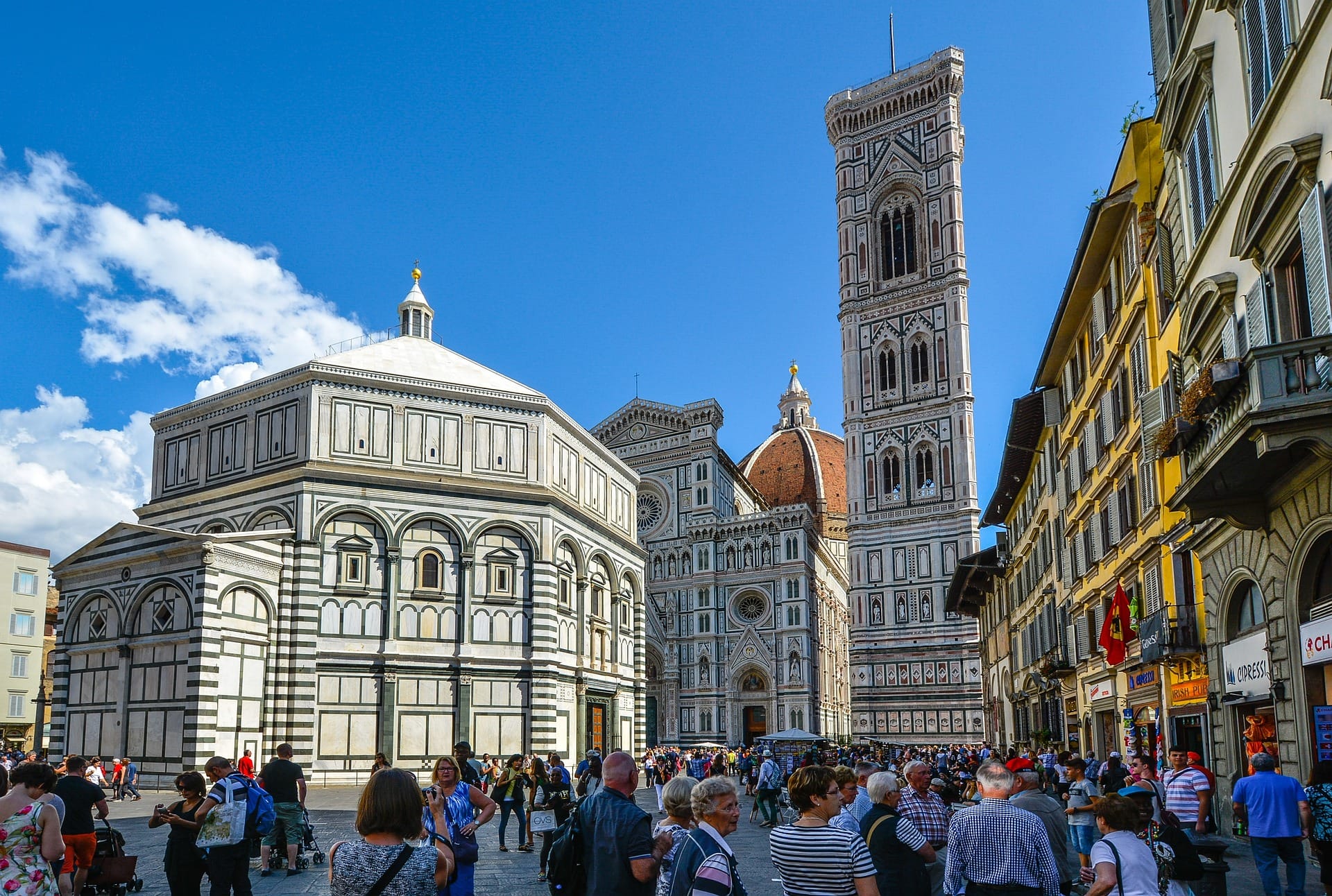
The Bell of Mercy, housed in Giotto’s Bell Tower in Florence, is more than just a bell—it’s a timeless symbol of faith and compassion. Hanging high above Piazza del Duomo, its sound has echoed through the centuries, uniting devotion, daily life, and Florentine craftsmanship.
Completed in 1359 by Francesco Talenti, Giotto’s tower became home to a concert of bells that evolved over time. Among them, “La Misericordia”, cast in 1614 and recast in 1670 by Girolamo Santoni, stands out. Named after the Confraternity of the Misericordia, the bell’s toll once called citizens not only to prayer but also to acts of charity and solidarity—the true voice of mercy in Renaissance Florence.
One of the most significant additions came in the 17th century, when the bell known as “La Misericordia” was created. Originally cast in 1614 and later recast in 1670 by Girolamo Santoni, this bell bears a name deeply connected to one of Florence’s oldest and most revered institutions: the Confraternity of the Misericordia.
Founded in the 14th century, the Misericordia di Firenze dedicated itself to aiding the sick, the poor, and the dying. Thus, the tolling of this bell was not only liturgical—it was a heartfelt call to compassion, a sound that the city recognized as the voice of mercy.
➡️ Learn more about the Misericordia di Firenze.
The Meaning Behind Each Toll
Every sound of the Bell of Duomo carried a distinct message, especially for the brothers of the Misericordia. When a Capo di Guardia (Head of Guard) of the Archconfraternity passed away, the bell tolled three times after noon at short intervals. This somber, heavy sound was known as “ciccia fredda”—a popular phrase referring to the lifeless body of the deceased.
Through this tradition, the bell became an essential part of the spiritual rhythm of the city, connecting the living with the departed and turning every toll into a moment of reflection.
For more about Florence’s religious customs, visit the Florence Cathedral Museum.
The Bell of Mercy in Daily Life
Interestingly, despite its sacred function, the Bell of Mercy also found a role in the daily routine of Florence’s artisans. During the construction of Brunelleschi’s Dome, the bell was used to mark the rhythm of work.
At 11:30 a.m., its familiar ring warned masons and laborers not to mix new mortar—known as calcina—because lunchtime was approaching, and the mixture would dry out before being used. Even today, this tradition continues: the 11:30 toll of the Bell of Mercy still echoes across the city, linking modern Florence to its industrious past.
For a deeper dive into Florence’s architectural marvels, check out the Opera del Duomo official website.
A Symbol That Still Resonates
Ultimately, the Bell of Mercy embodies both the spiritual and the practical soul of Florence. It called the faithful to prayer, honored the dead, and guided the hands of workers building one of the greatest masterpieces of the Renaissance.
Even now, when its chime resounds through the heart of the city, it serves as a timeless reminder of solidarity, compassion, and the deep connection between faith and labor.
To explore Giotto’s Bell Tower and climb to its panoramic terrace, visit the Florence Tourism Official Site.
The Bell of Mercy continues to speak—a sacred sound woven into the heartbeat of Florence. Its echo across the centuries reminds every listener that compassion, like its bronze voice, never truly fades.