
Zuccari Florence Dome Fresco
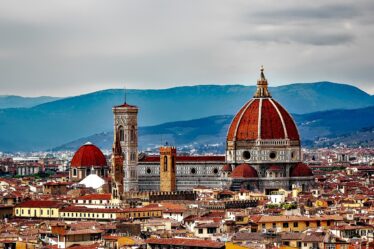
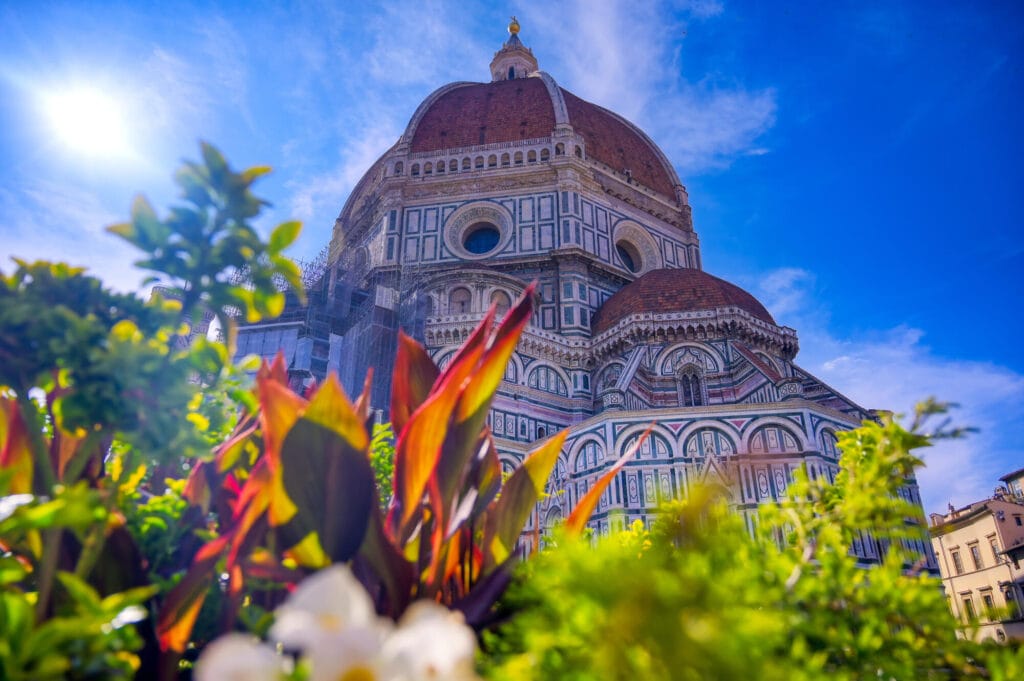
The story of the dome’s decoration in the Santa Maria del Fiore (the Duomo of Florence) is inextricably linked to the figure of Federico Zuccari. In fact, Zuccari Florence Dome Fresco marks one of the most ambitious and grandiose art‑projects of the Italian late Renaissance.
Introduction
Zuccari Florence Dome Fresco stands as a monumental achievement in the history of Western art. Commissioned originally to Giorgio Vasari, it was completed by Federico Zuccari after Vasari’s death — and today remains the largest pictorial decoration on a single church vault in the world.
From Vasari’s Vision to Zuccari’s Realization
Initially, in 1572, the Grand Duke Cosimo I de’ Medici entrusted Vasari with the decoration of the dome’s interior. The theological‑iconographic program was devised by the scholar Vincenzo Borghini, embedding the themes of salvation, judgment, and Christian virtues. mega.it+2duomo.firenze.it+2
Unfortunately, when Vasari died in 1574, he had only painted the uppermost registers — including the 24 Elders of the Apocalypse around the lantern. Wikipedia+2duomo.firenze.it+2
At that point, the project might have stalled — but thanks to the decision of the new Grand Duke Francesco I de’ Medici, the work was entrusted to Federico Zuccari in 1576. Between then and 1579, Zuccari carried out one of the most enormous and complex decorative undertakings in the history of church painting. duomo.firenze.it+2duomo.firenze.it+2
Thus, Zuccari Florence Dome Fresco became the final realization of Vasari’s project — though not without significant stylistic and technical differences.
The Magnitude: Scale, Composition, Figures
- The entire painted surface covers around 3,600 m², making it one of the largest fresco or mural cycles ever executed. Wikipedia+2duomo.firenze.it+2
- The decoration includes circa 700 figures: angels, saints, blessed souls, damned, allegories, demons, animals and more — a vast “eschatological theatre” visible from the floor of the cathedral. duomo.firenze.it+2duomo.firenze.it+2
The fresco’s design follows the octagonal shape of Brunelleschi’s dome. Each of the eight segments (“spicchi”) is decorated with concentric bands, starting from the heavenly realms at the top and descending toward the depictions of Hell at the base. Notably, the segment aligned with the altar omits the Hell register to make room for the monumental figure of Christ the Judge, emphasizing the central message of divine judgment and salvation (duomo.firenze.it).
The thematic program follows the post‑Reformation Catholic vision: judgment, salvation, damnation, Christian virtues, and beatitudes — a visual sermon on divine justice and mercy. duomo.firenze.it+2duomo.firenze.it+2
Zuccari’s Style: What Changed and What Remained
When Zuccari took over the project, he introduced stylistic and technical changes. Rather than continuing entirely in “buon fresco,” as Vasari had, he often used a “dry” painting technique (a secco / tempera on plaster) — faster, but less durable and less vibrant over time. digital-images.net+2florenceinferno.com+2
Moreover, Zuccari gave the figures more dramatic, muscular forms; his palette tends to be more intense; the gestural language becomes more theatrical, almost pre‑Baroque. In other words, Zuccari doesn’t simply imitate Vasari — he reinterprets and expands the artistic vision.
Nevertheless, the overall iconographic program remained faithful to Borghini and Vasari’s original idea: a comprehensive Christian allegory of Salvation, Judgment, and damnation.
Historical Significance & Legacy
Zuccari Florence Dome Fresco matters not only for its immense size — but because it represents a fusion of architecture, theology, and painting: the structural genius of Filippo Brunelleschi’s dome meets the theological depth of Counter‑Reformation Catholicism and the painterly ambition of late‑Renaissance art. duomo.firenze.it+2duomo.firenze.it+2
Over centuries, the frescoes have undergone various restorations; the last major campaign was completed in the 1990s. Thanks to this, the scenes have regained much of their original visibility, allowing modern visitors to appreciate the complexity and grandeur of the cycle. digital-images.net+2duomo.firenze.it+2
Thus, today, when a visitor climbs the 463 steps to the top of the dome and gazes upward, she — or he — witnesses more than decorative art: she witnesses a universal vision of humanity, faith, judgment, and eternity.
Why “Zuccari Florence Dome Fresco” Still Matters for Tourists and Scholars
- For art historians, it is one of the most ambitious post‑Reformation decorations in a major cathedral — a benchmark of the Counter‑Reformation artistic shift.
- For visitors and tour‑guides (like you!), it offers a powerful narrative: from mortal sin to heavenly beatitude; from architectural marvel to spiritual drama.
- For content creators focused on SEO, the key terms — Florence Dome fresco, Last Judgment Duomo, Federico Zuccari, Vasari, Santa Maria del Fiore interior, Renaissance fresco cycle — are among the most searched by those planning a trip to Florence.
Practical Tips for Visiting & Observing the Fresco
- To appreciate the details, it’s worth booking the dome climb (463 steps) — from below, many details are indistinct. Cupola Brunelleschi Firenze+1
- Visit early in the morning or late afternoon to avoid crowds and to benefit from favorable light. Cupola Brunelleschi Firenze
- Give yourself 15–20 minutes at the top to absorb the scale: the dome’s curvature and height distort perspective, so a slow, measured gaze helps. Cupola Brunelleschi Firenze+1