
Introduction
This article, titled Elephant Revenge Legend, explores the famous story behind Bernini’s Elefantino in Piazza della Minerva in Rome. To understand why the elephant’s tail is oddly positioned, we need to dive into history, artistic rivalry, and Roman folklore.
The Curious Posture of the Elefantinohe Curious Tale of the Elephant’s Tail
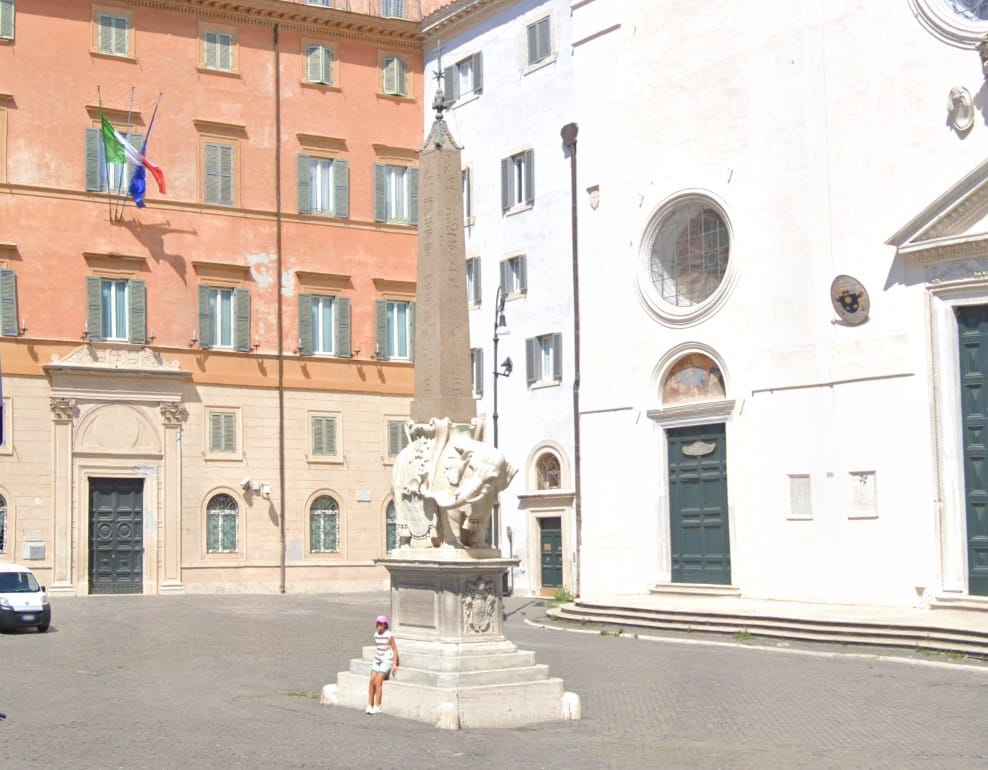
Have you ever wondered why Bernini’s little Elephant in Piazza della Minerva has its tail oddly shifted? The story begins when Bernini was designing the Obelisk of the Minerva. At first, the Dominican friars living right next to the site disagreed with his project. They believed the elephant looked too slender, awkward, and unstable, so they insisted on a modification: a solid supporting block under its belly.
As a result, Bernini had to accommodate their request. However, rather than fully surrendering to their demands, he reportedly decided to take a subtle form of revenge. Thus, he positioned the Elephant so that its backside faced directly toward the convent’s façade. Furthermore, he slightly shifted the tail, making sure that every time the friars stepped outside, they were confronted with the statue’s cheeky posture.
In other words, the unusual orientation of the Elephant, combined with the playful tail placement, created a humorous and slightly provocative statement — one that has fascinated visitors for centuries and helped fuel what is now known as the Elephant Revenge Legend.
This amusing anecdote is the basis of what is now known as the Elephant Revenge Legend.
Historical Background of the Monument
To understand the Elephant Revenge Legend more clearly, it helps to consider the context.
The monument — an Egyptian obelisk placed on the back of a marble elephant — was designed by Gian Lorenzo Bernini and carved by Ercole Ferrata in 1667. The obelisk had been discovered directly in the garden of the Dominican convent beside Santa Maria sopra Minerva.
However, the Dominican friars disliked Bernini’s original design. They argued that an obelisk could not stand on a hollow base, so they demanded that Bernini introduce a solid block hidden beneath the elephant’s drapery.
Bernini’s Alleged “Vendetta” Against the Friars
Consequently — and here the legend becomes more playful — Bernini supposedly decided to take symbolic revenge. According to the story, he oriented the elephant so that its rear end faced the convent, deliberately shifting the tail to reveal its backside in a humorous, slightly provocative manner.
Although historians agree that the positioning is more artistic than spiteful, Roman folklore insists that Bernini wanted the friars to see that “view” every single morning.
This is why today, many visitors still talk about the Elephant Revenge Legend with a smile.
From Myth to Modern Interpretation
Furthermore, as is common in Rome, legends grow where art meets irony. The unusual posture of the elephant, the tail, and the cheeky direction all contributed to creating a narrative that blends architecture with humor — a perfect mix for Rome’s storytelling tradition.
For visitors seeking to explore more about this monument and its history, here are some valuable external sources:
- Rome Tourist Board – Obelisk of the Minerva
https://www.turismoroma.it/en/places/obelisk-minerva
Santa Maria sopra Minerva Church Information
https://www.basilicasantamariasopraminerva.it
Gian Lorenzo Bernini Biography – Encyclopedia Britannica
https://www.britannica.com/biography/Gian-Lorenzo-Bernini
History of Roman Obelisks – World History Encyclopedia
https://www.worldhistory.org/obelisk
Conclusion
In conclusion, the monument in Piazza della Minerva represents a perfect blend of history, artistry, and humor. Whether Bernini truly intended to “mock” the friars remains uncertain, yet the legend persists because it enriches the charm of Rome. And indeed, the tale — the Elephant Revenge Legend — continues to captivate visitors from all over the world.