Introduction
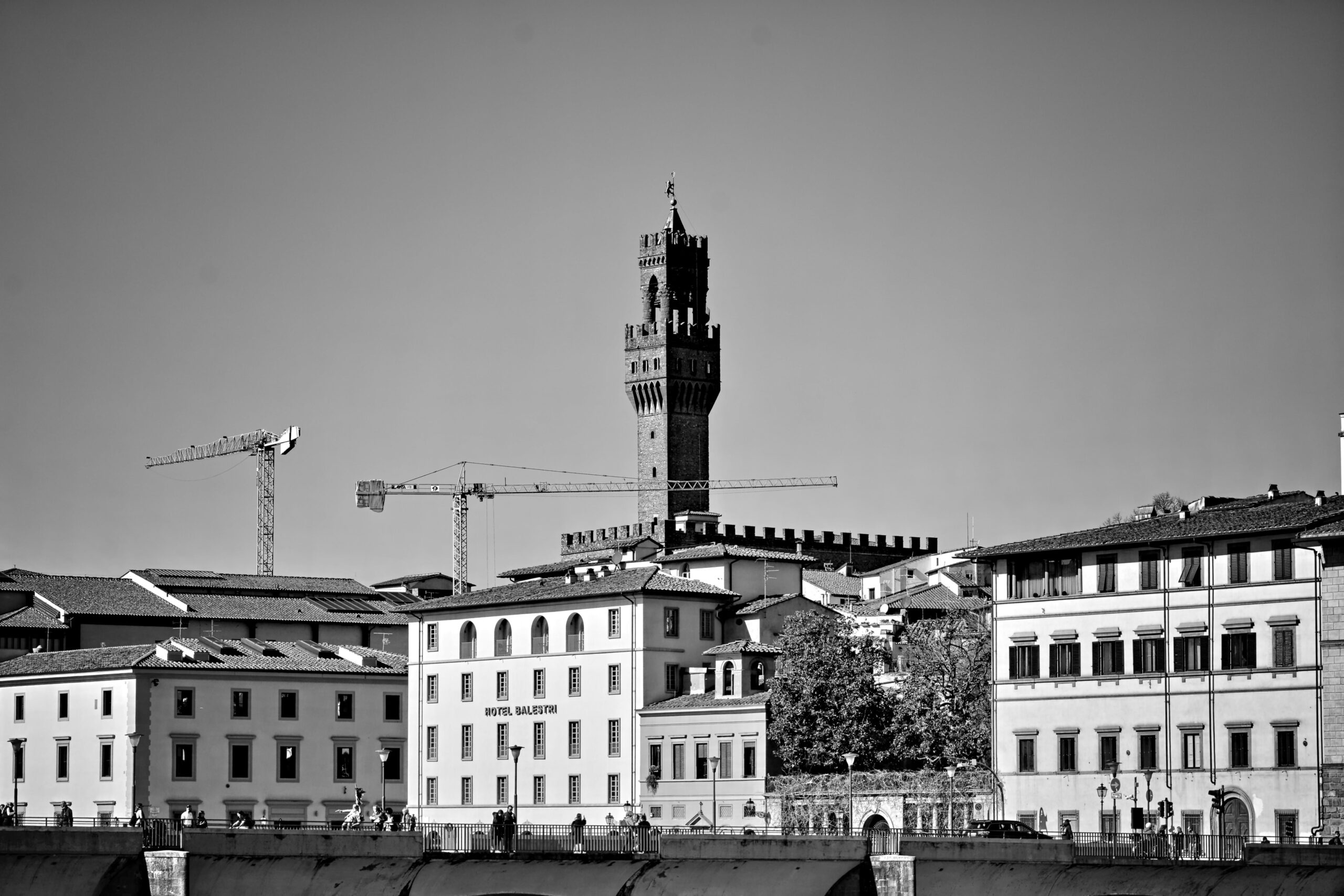
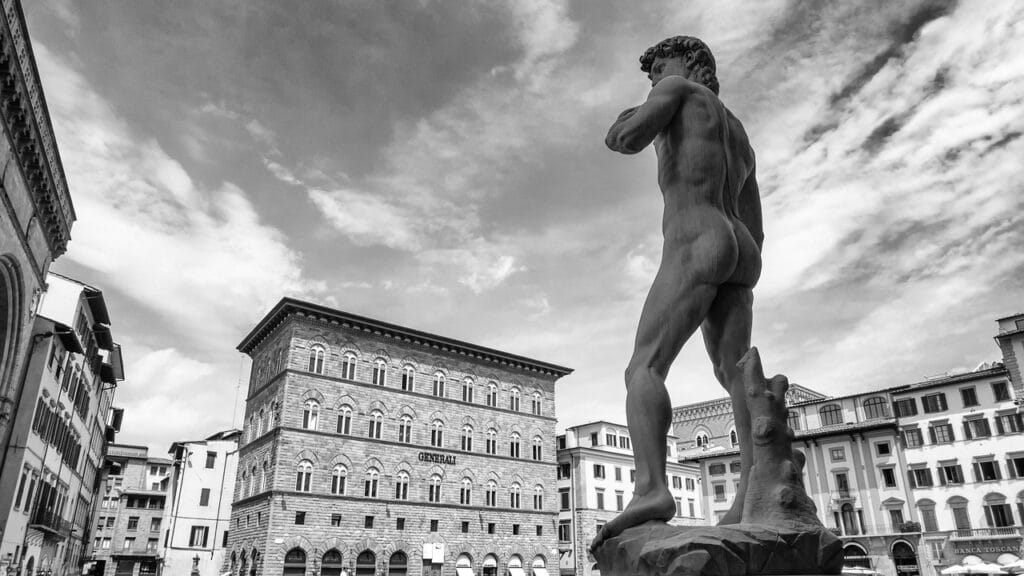
Hidden Layers of Florence is not just a poetic phrase—it perfectly describes what happens when you stop in Piazza della Signoria and look beyond the obvious. At first glance, this corner of the city feels modern and busy. However, if you lift your eyes toward the old Banca Toscana sign, something remarkable begins to emerge. Beneath the stone, the windows, and the noise of today lies a story built layer by layer, much like a geological core sample. In this article, we uncover how one small area became a crossroads of noble families, mercenaries, and religious life—revealing the hidden layers of Florence that most visitors walk past without ever noticing.
A Noble Beginning Beneath the Stones
To begin with, this part of Piazza della Signoria once belonged to the Rinuccini family, one of the powerful lineages that shaped medieval Florence’s social and urban landscape. Their houses formed a compact residential block that reflected the city’s tight-knit family politics.
Over time, as often happened in Florence through marriages, alliances, debts, and strategic deals, the property changed hands. It passed to the Guidacci family, who transformed the buildings into something surprisingly modern for the time—a kind of “condominium ante litteram,” where multiple households lived within a shared structure.
In other words, even in the Middle Ages, Florence was already experimenting with new ways of organizing urban life. This is one of the earliest examples of the Hidden Layers of Florence, where everyday buildings quietly preserve centuries of social change.
When Soldiers Became Neighbors
However, the real turning point came with Cosimo I de’ Medici. As he reshaped Florence into a true capital, he didn’t arrive alone. Alongside architects and officials came his feared and famous mercenaries: the Landsknechts (Lanzichenecchi)—German soldiers known for their discipline, colorful clothing, and loud celebrations.
Suddenly, the former Guidacci apartments became a small “German quarter” in the very heart of Florence. Soldiers, families, foreign languages, new cooking smells, and unfamiliar customs blended into daily Florentine life.
Moreover, even after Cosimo moved his court to Palazzo Pitti, the mercenaries stayed. This corner of the city had become their home. They remained until 1699, an astonishingly long time for a mercenary presence. Once again, we see the Hidden Layers of Florence: a place that transformed from noble residence to military neighborhood without ever changing its outward appearance.
If you’d like to explore more unexpected stories like this while walking the city, you can find excellent guided routes here:
👉 Internal link: https://www.bestfreetour.com/free-walking-tour-florence/
From Weapons to Silence: A Sacred Transformation
Eventually, history took another turn. When the soldiers finally left, the buildings were transferred to the Sisters of San Girolamo alla Costa. What had once been filled with marching boots, foreign songs, and military life became a space of silence, devotion, and prayer.
In contrast to the loud, multicultural past, the convent brought introspection and spiritual order. This dramatic shift—from weapons to worship—adds yet another chapter to the Hidden Layers of Florence. Few places in Europe can claim such radically different uses within the same walls over centuries.
Why This Corner Still Matters Today
Today, tourists crowd Piazza della Signoria for its statues, museums, and cafés. Yet very few realize that this “ordinary” corner once hosted a noble family compound, a German military enclave, and later a religious institution.
That is precisely what makes Hidden Layers of Florence such a powerful idea. The city is not only about famous landmarks—it is also about forgotten lives, cultural mixing, and quiet transformations hidden in plain sight.
To better understand the broader historical context, you might enjoy these trusted resources:
- Florence’s political transformation under the Medici:
https://www.britannica.com/place/Florence-Italy - Who the Landsknechts were:
https://en.wikipedia.org/wiki/Landsknecht - The history of Piazza della Signoria:
https://www.visitflorence.com/florence-squares/piazza-della-signoria.html - Cosimo I de’ Medici and his urban reforms:
https://www.uffizi.it/en/artworks/cosimo-i-de-medici
Final Thoughts
In conclusion, Florence is not just a museum city—it is a living archive. Every street, façade, and forgotten inscription contains stories waiting to be rediscovered. By paying attention to small details, like a faded bank sign or an unusual building layout, you begin to see the city differently.
And that is the true meaning of Hidden Layers of Florence: a reminder that history is not only behind glass in museums, but also beneath your feet, above your head, and all around you as you walk.