
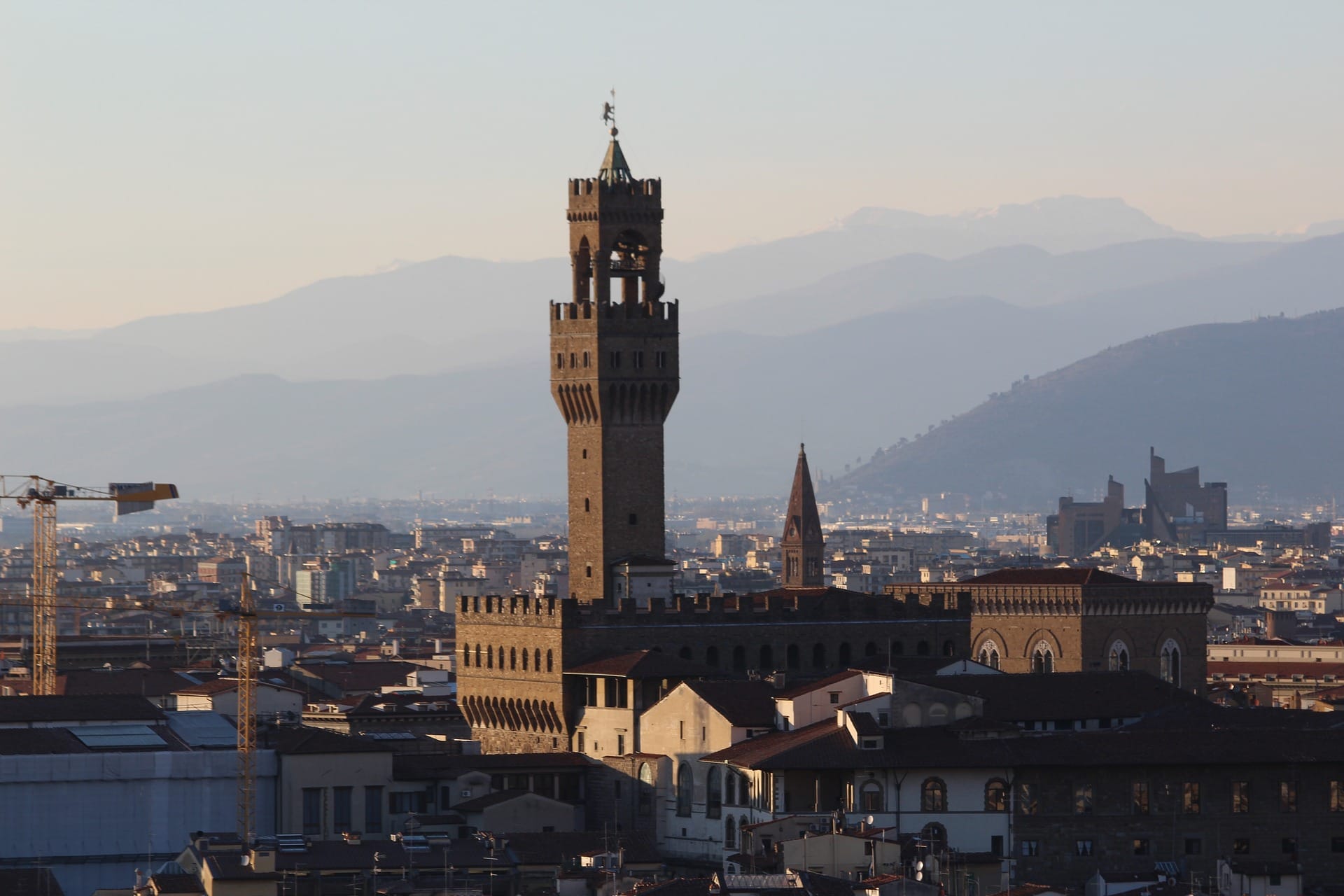
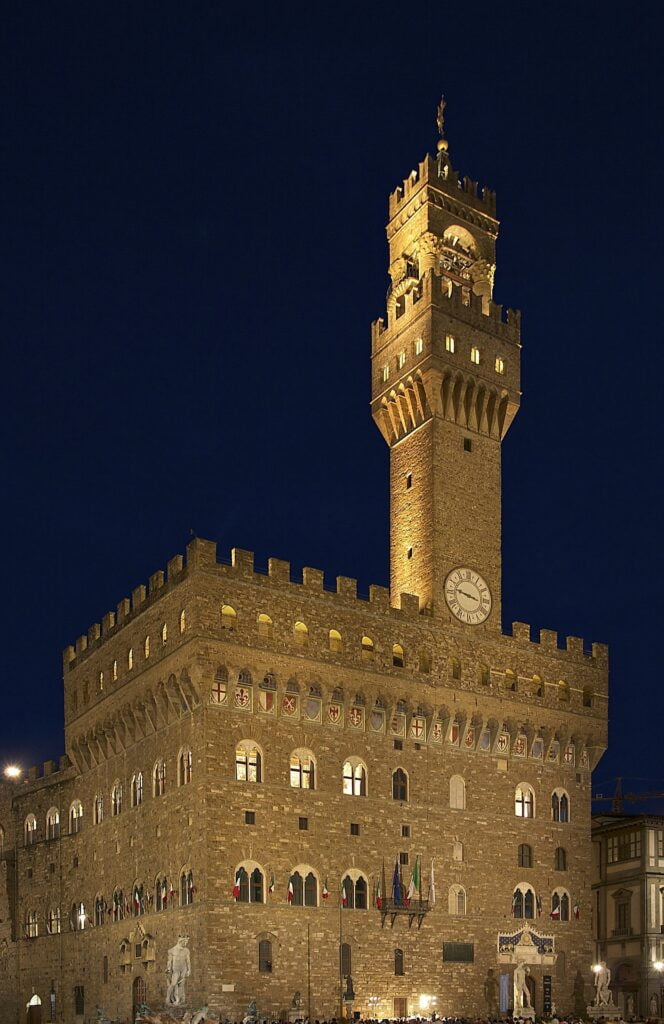
Florence always surprises visitors. Millions of people walk through Piazza della Signoria every year, admiring statues, palaces, and the famous Palazzo Vecchio. However, very few people know that beneath this square lies one of the most fascinating hidden stories of the city: the remains of an ancient Roman amphitheater.
In this article we explore the Secret Amphitheater Piazza Signoria, a story that connects modern Florence with its Roman origins and reveals a secret hidden under the stones of the city.
A Roman City Beneath Florence
First of all, it is important to remember that Florence was originally a Roman city called Florentia. Founded in the 1st century BCE, the city had all the typical Roman buildings: baths, temples, roads, and also an amphitheater where people gathered to watch spectacles and games.
Over time, however, the Roman city disappeared under centuries of construction. Palaces, churches, and medieval streets slowly covered the ancient structures.
As a result, the Secret Amphitheater Piazza Signoria remained hidden for hundreds of years.
If you want to understand how Roman Florence looked, you can also explore archaeological information from the Florence Archaeological Museum and historical studies available here:
https://www.museoarcheologicofirenze.it
Discoveries Under Palazzo Vecchio
The story became even more interesting in the 20th century. During archaeological research beneath Palazzo Vecchio, scholars discovered structures that suggested the presence of a large Roman entertainment building nearby.
Walls, curved foundations, and fragments of stone indicated the elliptical shape typical of Roman amphitheaters. In other words, the Secret Amphitheater Piazza Signoria was not just a legend—it was a real part of Florence’s ancient past.
Furthermore, historians believe the amphitheater was built between the 1st and 2nd centuries CE, when the Roman colony of Florentia was thriving.
You can read more about Roman amphitheaters and their architecture here:
https://www.britannica.com/art/amphitheatre-architecture
A Hidden Shape in the City
Interestingly, some traces of the amphitheater can still be seen today in the shape of nearby streets. Cities built over Roman ruins often preserve the ancient layout in subtle ways.
For example, a similar situation can be found in Piazza dell’Anfiteatro in Lucca, where medieval houses were built directly on top of the Roman arena.
You can explore the history of that famous square here:
https://www.turismo.lucca.it/piazza-anfiteatro
Because of this, many historians believe the Secret Amphitheater Piazza Signoria once occupied an important area close to the political heart of Florence.
Florence Before the Renaissance
Today, visitors often associate Florence with the Renaissance and artists like Michelangelo, Leonardo da Vinci, and Sandro Botticelli.
However, the city’s history is much older. Long before the Renaissance and long before the powerful Medici family, Florence was already a Roman colony with theaters, public squares, and amphitheaters.
Therefore, the Secret Amphitheater Piazza Signoria reminds us that Florence is built in layers—Roman, medieval, and Renaissance all mixed together.
If you want to explore more about the Roman origins of Florence, you can check this resource:
https://www.britannica.com/place/Florence-Italy
Discover Hidden Florence
In conclusion, Florence is a city full of secrets. Beneath its famous squares and palaces, ancient stories are still waiting to be discovered.
The Secret Amphitheater Piazza Signoria is a perfect example: a hidden piece of Roman history lying just under one of the most famous squares in Italy.
If you want to discover more hidden stories like this one, the best way is to explore the city with a local guide. On a walking tour you can learn about secret places, fascinating legends, and unexpected details most visitors never notice.
You can also check this walking tour here:
https://www.bestfreetour.com/florence-free-tour
Because in Florence, sometimes the most incredible stories are not in museums… they are hidden right under your feet.