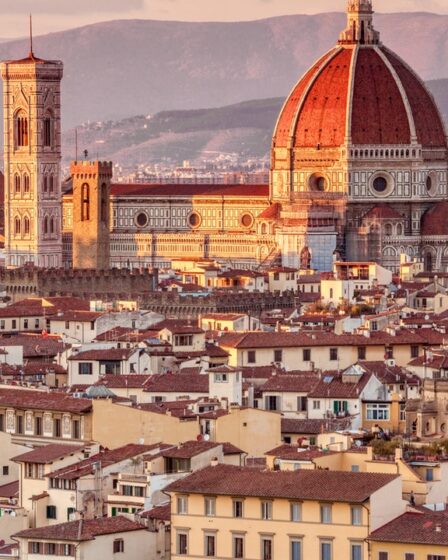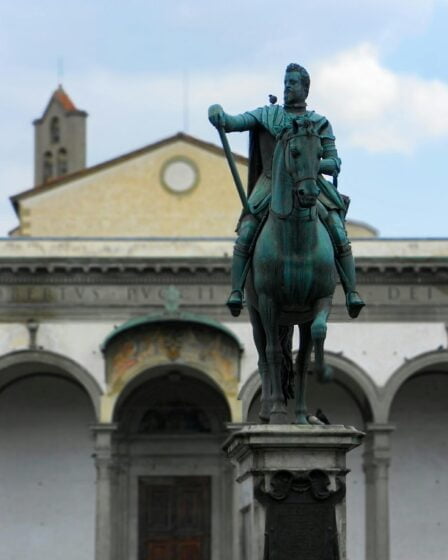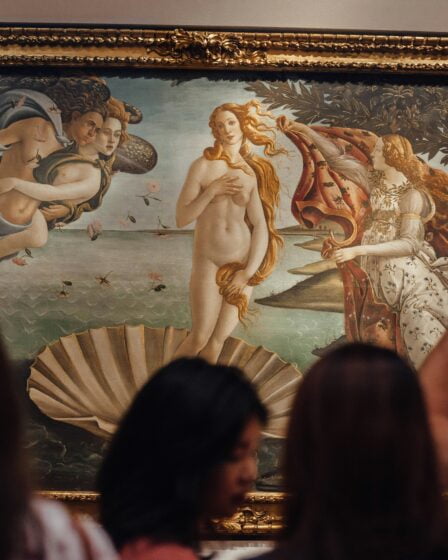
Galileo’s proclaimed heretical beliefs led to a report of his being brought before the Holy Office of the Inquisition in 1616. Galileo is persuaded to travel to Rome for his trial by the Grand Duke, who is also his great admirer and friend. The Grand Duke assures Galileo that he will be treated like a member of the Medici family and that he need not fear anything. When Galileo arrives in Rome, Piero Guicciardini, the Florentine ambassador, escorts him to the Holy Office.
Historic Tour
Free museums in Florence
On Sunday 7 April the appointment with the initiative of the Ministry of Culture returns which includes free admission on the first Sunday of each month in all monuments, museums, galleries, parks and monumental gardens of the state. Many of the places of state culture of the Regional Museums of Tuscany widespread throughout the regional territory will also be open free of charge with the temporary exhibitions still in progress, theme visits and initiatives.
The scandal of Leonardo da Vinci
The complaint was included in the “drum” (mailbox of the time) of Palazzo Vecchio. He bore accusations of sodomy towards the figure of Jacopo d’Andrea Salterelli goldsmith and also ….. “part of many miserable and consensus affairs to please people who require such evil from him”, and of four other people involved: the Sarto called Baccino, Leonardo da Vinci, the goldsmith Bartolomeo of Pasquino and the scion of the Patrizia Leonardo Tornabuoni family. All the accusations were rejected and stored, perhaps also for the person of the Tornabuoni for which the scandal was avoided in all the ways.
Museum Galileo Galilei in Florence
It was once called the Museum of History of Science and today Galileo Museum and is hosted in the Castellani Palace built on the vestiges of the Castello d’Altofronte. It is divided into two floors and is well usable thanks to an attractive setting, audiovisuals and downloadable online guide. It houses the Medici collections that were transferred to the Uffizi from Palazzo Vecchio and then to Pitti, to finish, in the Lorenese era, in the Imperial Regio Museum of Physics and Natural Sciences in the Torregiani Palace in via Romana. Of this institution desired by the Grand Duke Pietro Leopoldo, we will never stop talking about it.
Niccolo Machiavelli
Walking in the busy via Guicciardini main artery of the Oltrarno towards the city center, we can only focus on n.18 to think for a moment about the alleged residence of the great multipurpose character of the great political scene of the Italian Renaissance: Niccolò Machiavelli. What we currently see is a questionable building built after the war after the destruction of almost all buildings around the Vecchio Ponte, mined by the Germans during the retreat in ’44.
Baptistery of Florence
The Baptistery of Florence, known as the Baptistery of San Giovanni (Battistero di San Giovanni), is one of the oldest buildings in the city and a significant symbol of its rich history and artistic heritage. It is located in the Piazza del Duomo, just in front of the Florence Cathedral (Santa Maria del Fiore) and the Giotto’s Campanile.
I Carroccio
The Carroccio (Carrocch in Lombardo) was a large four -wheeled chariot bearing the city signs around which they gathered and fought the militias of medieval municipalities. It was particularly widespread among the Lombard, Tuscan and, more generally, of northern Italy. Later his use also spread out of Italy.
An American in Florence
Walking on the Lungarno Amerigo Vespucci, perhaps on the left sidewalk in the direction of Ponte alla Carraia, almost up to Piazza Ognissanti on the wall of the current Grand Hotel raising our heads we can see a small plaque on the wall of the aforementioned hotel. The plaque bears the following writing: “In the memory of Leland Stanford Jr. who died in this house on March 13, 1884 and in homage to the university that bears his name the undergraduates of the year 1907 place this memory”. But who was Leland Jr? He was the son of the US politician first governor and then Senator of California Leland Stanford.
Another Buonarroti
Michelangelo collected Etruscan works … Well yes, Michelangelo Buonarroti collected works from the Etruscan period, but it was not the famous Michelangelo that we all know, but the great -grandson that in the first decades of the seventeenth century, the preparation of the family home began in via Ghibellina in memory of the illustrious ancestor. In addition to making four rooms decorate from the best Florentine artists of the moment such as: Pietro da Cortona, Artemisia Gentileschi, Domenico Passignano, Cristofano Allori
Il Carroccio in Florence “II part”
Once deliberated to move against the enemy, the Florentine government used to order public prayers, and Martinella was played night and day, which was a bell, also called Bellifera for its connection with the war events, located in the arc of the door Saint Mary. This door, which gives its name to the current via Por Santa Maria, closed the first walls of Florence in the direction of the Ponte Vecchio, and was at the height of the current loggia of the new market (or Porcellino).